
Key facts: Canyon Crest
- Canyon Crest rises toward the Box Springs Mountains, whose higher ground is largely a county reserve [1].
- In common-interest developments, shared laterals are often the association's responsibility; unit drains are the owner's [2].
- Very steep laterals can let water outrun solids, which strand where the pipe flattens.
- Riverside's water averages about 12 grains per gallon of hardness, adding scale to shared kitchen stacks [3].
What homes in Canyon Crest are like
Canyon Crest lies on the eastern side of Riverside, rising toward the Box Springs Mountains, a range in north-west Riverside County whose higher ground is largely protected as the county's Box Springs Mountain Reserve [1]. The City of Riverside's neighbourhood material describes the area as including the Sycamore Highlands, which sits near Sycamore Canyon Park [4]. Compared with the historic core around downtown, Canyon Crest is a newer part of the city, built out with planned residential tracts, townhome and condominium complexes and some apartment communities.
The landscape is the defining feature. Streets curve around hills, lots step up and down slopes, and houses may sit well above or below the street. Most homes are slab-on-grade, some with split-level designs that put a lower floor into the hillside. Many neighbourhoods are governed by homeowner associations, which matters for drains because shared lines and common areas are often the association's responsibility rather than the individual owner's.
For a drain contractor, Canyon Crest calls for a different set of questions: Where does the sewer leave the house relative to the slope? Is the lateral shared? Is there a pump? Who owns which section?
Common problems
What drain contractors see most in Canyon Crest
Shared lines in townhomes and condos
Several units may drain into one lateral, so one household's habits affect neighbours.
Read moreSteep laterals that leave solids behind
On a very steep run, water outruns paper and solids, which can strand in the pipe.
Read moreGrease in kitchen stacks
Multi-storey condominium buildings share kitchen stacks that coat with fat.
Read moreSlab drains in split-level homes
Lower floors set into the hill have buried drains that are hard to reach.
Read more
How does a hillside lot change the way drains behave?
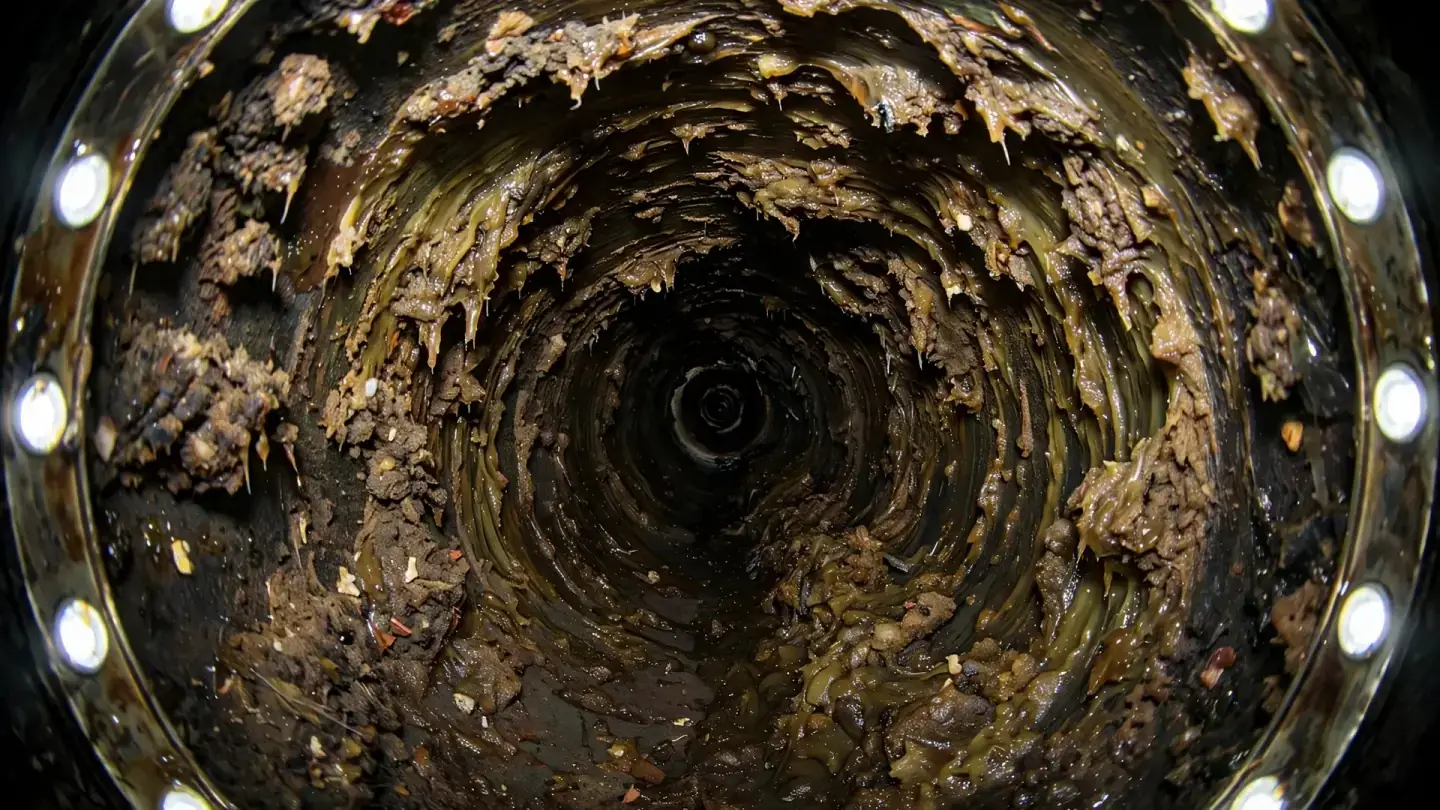
Drains work by gravity, and plumbing codes set minimum slopes so waste keeps moving. On hillside lots the issue can be the opposite: a lateral dropping steeply down a slope toward a street below. Very steep pipe can let water race ahead of paper and solids, leaving them stranded where the pipe flattens out again or at a bend. Over time those deposits build into a blockage at a predictable spot, often where the steep section meets a flatter run near the street.
Homes sited below the street face a different challenge. If the house's drains sit lower than the public sewer, wastewater may have to be pumped up to it with a sewage ejector pump. Ejector systems have their own failure points: a stuck float, a failed pump, a check valve that lets water drain back. If your house has a sump or ejector basin, usually a sealed tank in a garage or lower level, tell the contractor. A 'clog' in that house may be a pump problem.
Hillside homes and stepped lots
Condominium stacks and grease
Multi-storey condominium buildings stack kitchens above each other, and their sinks drain into a shared vertical stack. Grease from every kitchen coats that stack and the horizontal drain at its base. When the base narrows, ground-floor units see water rise in their sinks when upstairs neighbours run dishwashers. That's not a fault in the ground-floor unit's plumbing; it's a shared-line problem.
Jetting the stack from a cleanout at its base clears the full height, and associations often schedule it as preventative maintenance. Riverside's hard water, averaging about 12 grains per gallon [3], adds a mineral layer to the grease, which makes regular cleaning more useful.
Slab homes, split levels and buried drains
Canyon Crest houses are mostly slab-on-grade, with drain lines laid under the concrete before it was poured [6]. Split-level homes add a twist: part of the house sits on a slab cut into the hillside, often with a bathroom or laundry on that lower level. Those lower fixtures are the first to show a main-line backup, and their drains run deepest under the slab.
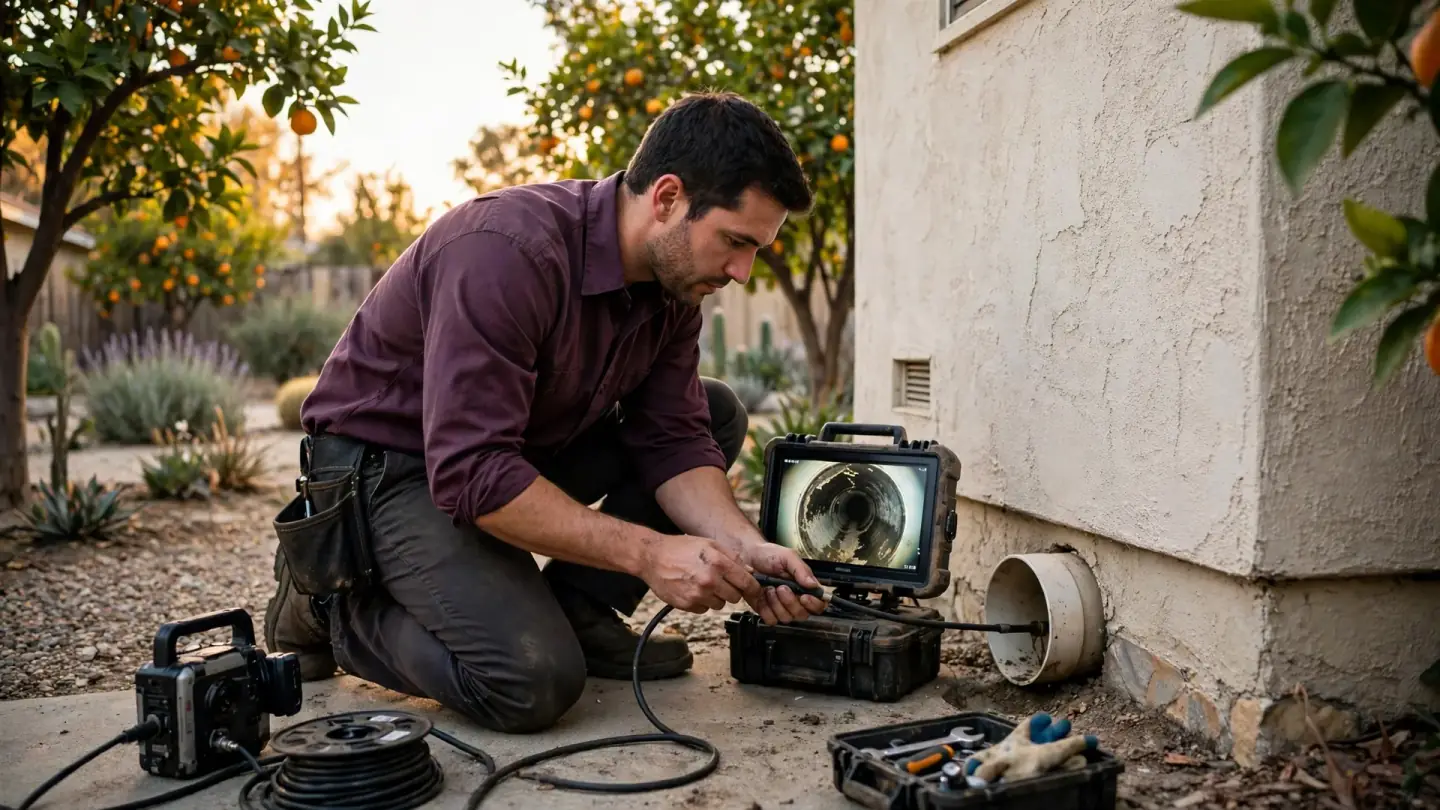
A contractor diagnosing slow drains on a lower level will usually start with a camera through the nearest cleanout or fixture, then locate any problem from above. Under-slab sags, which can develop as soil settles, hold water and solids and show up as recurring clogs on the lowest floor.
Landscaping, slopes and roots
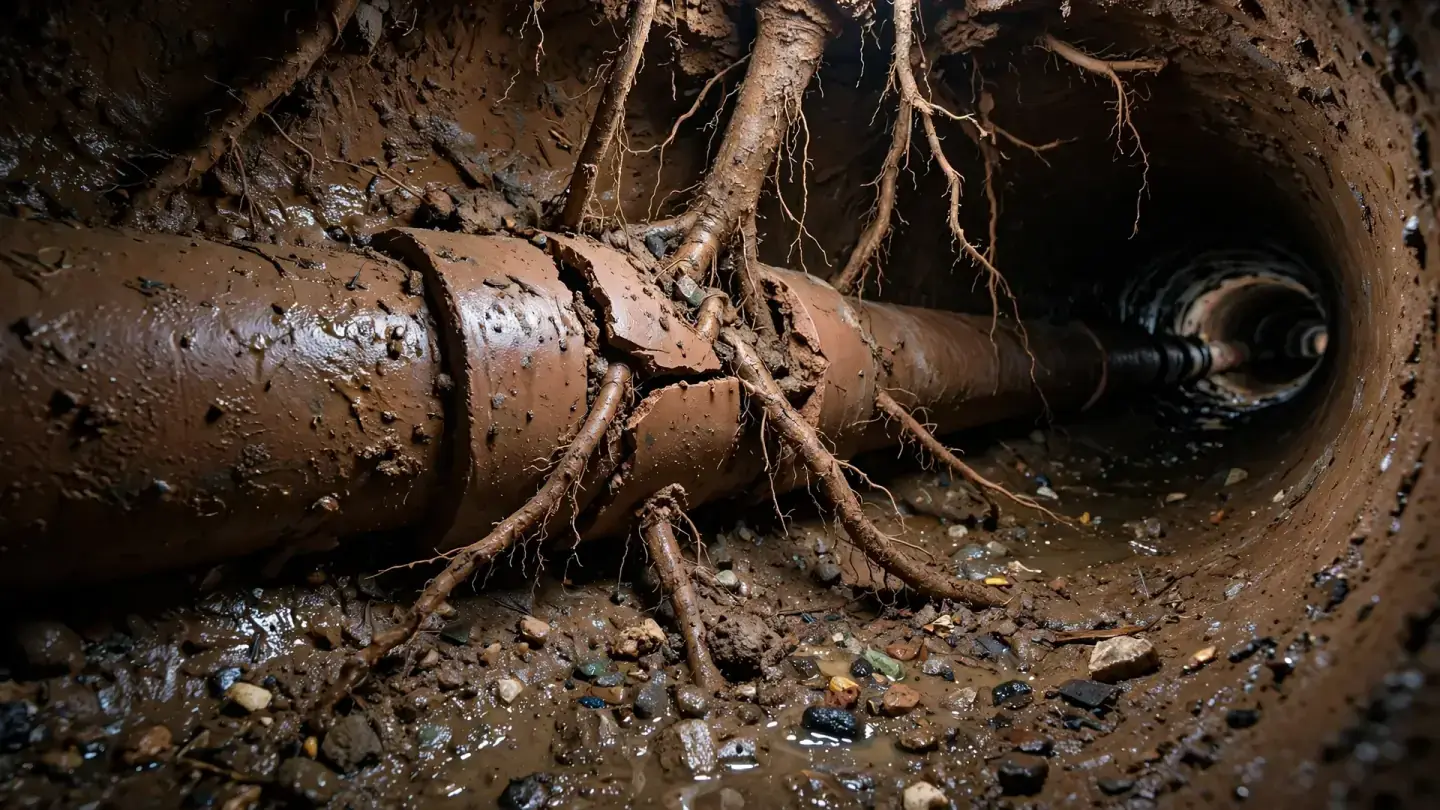
Slopes in Canyon Crest are typically landscaped and irrigated to hold the soil. Irrigation keeps the ground around shallow laterals moist, and shrubs and trees planted on slopes may be close to sewer lines. Root intrusion is less common in newer plastic laterals than in old clay, but it still occurs at fittings and cleanouts, especially where irrigation keeps roots nearby.
If a lateral on a sloped lot blocks repeatedly at the same distance from the cleanout, a camera inspection will show whether it's roots at a fitting, a sag where the slope changes or debris catching at a bend.
Planning a drain visit in Canyon Crest
Gated communities and condominium complexes need access arrangements: gate codes, parking for a work vehicle and sometimes advance notice to management. Cleanouts may be in common areas, behind locked utility doors or along landscaped slopes. Know where yours is, or ask the association before the visit.
On steep driveways and hillside lots, equipment access can be tricky. Mention if the cleanout is down a slope or up a flight of steps, so the contractor brings portable equipment. In multi-storey buildings, tell them which floor your unit is on and whether neighbours above or below have had drain problems recently.
Ejector pumps: what owners should know
If your home relies on a sewage ejector, it's worth knowing a little about it. The basin collects wastewater from lower fixtures; a float switch starts the pump when the level rises; the pump pushes waste up through a discharge pipe with a check valve to the gravity drain. An alarm, if fitted, sounds when the level gets too high. Wipes, grease and hair are hard on pumps, so the same habits that protect drains protect ejectors.
If the alarm sounds or lower fixtures stop draining, stop using water on that level. Don't open a sealed basin yourself; it contains sewage and gases. Tell the contractor about the pump when you call.
Rentals and student households
Parts of east Riverside have a high share of rental housing, including townhomes and apartments let to students and young professionals. Rentals with frequent turnover tend to see more grease and wipe-related clogs, simply because each new household brings its own habits. For landlords, simple guidance in each unit about the kitchen sink and toilet, and a scheduled cleaning of shared lines, reduces the number of emergency calls.
Tenants should report slow drains early rather than living with them. A slow kitchen sink in a ground-floor unit is often the first warning of a shared stack that is closing, and the sooner it is cleaned, the fewer households are affected.
Storm runoff, slopes and cleanouts
Hillside neighbourhoods shed a lot of water during storms, and that water has to go somewhere. Sewer cleanouts set low on a slope, or at the base of a driveway, can sit in the path of runoff. A cracked or missing cleanout cap lets rainwater and debris into the sewer lateral, adding volume and grit to a line that wasn't designed for it. Check that your cleanout cap is intact and seated, and that landscaping hasn't buried it.
Storm water belongs in the storm drain system, not the sewer. Downspouts and area drains should never be connected to a sewer cleanout, and if a contractor finds such a connection during a visit, they'll point it out.
After a heavy storm, if lower-floor drains in a hillside home suddenly slow or gurgle, mention the timing on the call. It can point to storm water entering the lateral through a damaged cleanout or a cracked section on the slope.
Pumps, power and backflow
Homes that depend on an ejector pump have one more consideration: electricity. If power is lost, the pump stops, and continued water use on the lower level fills the basin. During a power cut, limit water use on the lowest floor until power returns. A check valve on the discharge line prevents pumped sewage from draining back, but check valves wear and can stick. A contractor servicing the system will usually test the alarm, the float and the valve together.
Nearby, Orangecrest and Downtown Riverside have their own drain patterns; the service area overview lists every district covered. Canyon Crest calls often lead to hydro jetting for grease-heavy stacks or scheduled drain maintenance, and the slab drain guide covers lines buried under ground-floor units.
FAQ
Canyon Crest drain questions
My Canyon Crest condo drain is backing up. Do I call the HOA or a drain company?
In a Canyon Crest condo, call the association first if the backup involves a shared line, and handle it yourself if only your unit's fixtures are affected. Many common-interest developments make shared laterals the association's job while unit drains belong to the owner. Your CC&Rs say which applies, and a contractor can confirm where the blockage sits.
Can a sewer line on a Canyon Crest hillside be too steep?
A very steep lateral on a Canyon Crest hillside can let water race ahead of solids. Paper and waste then strand where the pipe flattens, often near the street or at a fitting. Owners usually notice repeat clogs at the same distance from the cleanout, and a camera run with a distance counter shows where the slope changes.
Why does the downstairs bathroom in my Canyon Crest townhome back up first?
The lowest fixture backs up first because sewage rises to the lowest open drain when the line below it is blocked. In stacked Canyon Crest townhomes and condos, that is often a ground-floor shower or toilet. Stop using water upstairs, avoid flushing, and have the main or shared line checked rather than only the fixture that overflowed.
Do the plastic sewer pipes in newer Canyon Crest homes still get tree roots?
Plastic laterals in Canyon Crest resist roots much better than clay, but roots can still enter through a loose joint, a cracked fitting or a poorly glued connection. Landscaped slopes with irrigated trees push roots toward any moisture. A camera inspection shows whether a recurring clog is roots, grease or a belly in the pipe.
Why does grease build up so fast in shared condo kitchen stacks?
Shared kitchen stacks collect grease from every unit above, so buildup grows faster than in a single house. Riverside's water is hard, averaging about 12 grains per gallon, and the scale it leaves gives grease a rough surface to grip. Jetting the stack on a schedule, arranged through the association, usually works better than snaking individual sinks.
What should I do if my Canyon Crest home has a sewage ejector pump that stops?
If an ejector pump stops, stop using every fixture that drains to its basin, because the basin can overflow quickly. Check whether the pump's breaker has tripped or its alarm is sounding. Then call to reach a contractor who can check the pump, float and discharge line, since a clogged discharge often looks like a failed pump.
Does a hillside home in Canyon Crest need a permit for sewer line repair?
Routine drain cleaning in Canyon Crest does not usually need a permit, but replacing or rerouting part of a sewer lateral normally does. Work that reaches the public right of way also involves Riverside Public Works. Ask the contractor you're connected with which permits apply before agreeing to any repair, and check their California licence first.
Sources and citations
- [1]Wikipedia: Box Springs Mountains
- [2]City of Riverside Wastewater Division: Home sewer line maintenance brochure
- [3]Riverside Public Utilities: 2025 Water Quality Report (hardness)
- [4]City of Riverside: At Home in Riverside, Canyon Crest
- [5]City of Riverside Public Works: Private sewer lateral policy
- [6]Fine Homebuilding: Plumbing under a concrete floor
- [7]Contractors State License Board: check a license