Key facts: Commercial Drain Cleaning
- Riverside's Environmental Compliance Section enforces grease rules for restaurants under Municipal Code Chapter 14.12 [1].
- Where an interceptor is required, the city's minimum size is 750 gallons, installed before the restaurant opens [1].
- Riverside prohibits enzymes and emulsifiers in grease interceptors and requires the full contents to be removed when cleaned [1].
- Public Works restaurant guidance calls for dry wiping and strainers to keep grease out of drains [2].
What makes commercial drains different
A commercial building's drain system is a scaled-up version of a house with three important differences. The loads are heavier: a restaurant kitchen sends more grease down its lines in a week than most households do in years. The users are many and anonymous: tenants, staff and customers don't know or care what a drain can handle. And the consequences of a stoppage are bigger: a backed-up floor sink can close a kitchen during service, and a blocked stack in an apartment building affects every unit above it.
That changes how drain work is planned. Commercial drain cleaning is usually scheduled around operating hours, uses heavier equipment such as larger jetters and sectional machines, and often runs on a maintenance cycle rather than waiting for failure. It also has to fit around regulation, because food service establishments in Riverside are subject to the city's fats, oils and grease controls.
The contractor you're connected with will ask about the type of business, the size of the building, which drains are involved and what your hours are, so the visit can be timed to cause the least disruption. Commercial work sits alongside residential jobs in the full list of drain services.
Problems
What drain problems do Riverside businesses run into most?
Kitchen line grease
Prep sinks, dish machines and floor sinks carry fat that coats the line to the interceptor.
Read moreFull or poorly maintained interceptor
An interceptor past its working capacity backs water into floor sinks and lets grease escape to the sewer.
Read moreRestroom stoppages
Public restrooms collect paper towels, wipes and products that domestic toilets rarely see.
Read moreStack backups in multi-unit buildings
A stoppage low in a shared stack sends water out of the lowest units' fixtures.
Read moreFloor drains in shops and warehouses
Grit, sand and residue settle in deep traps.
Read more
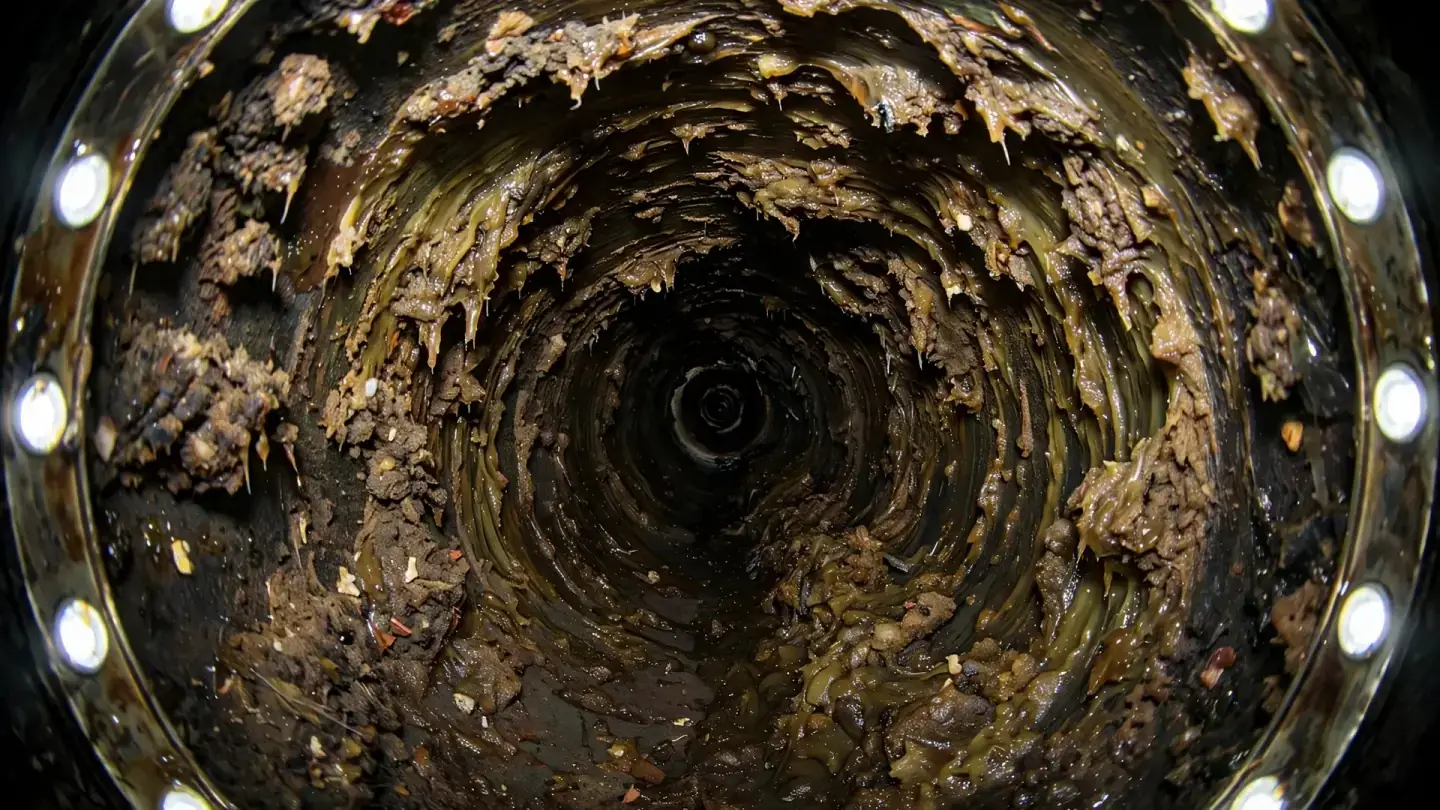
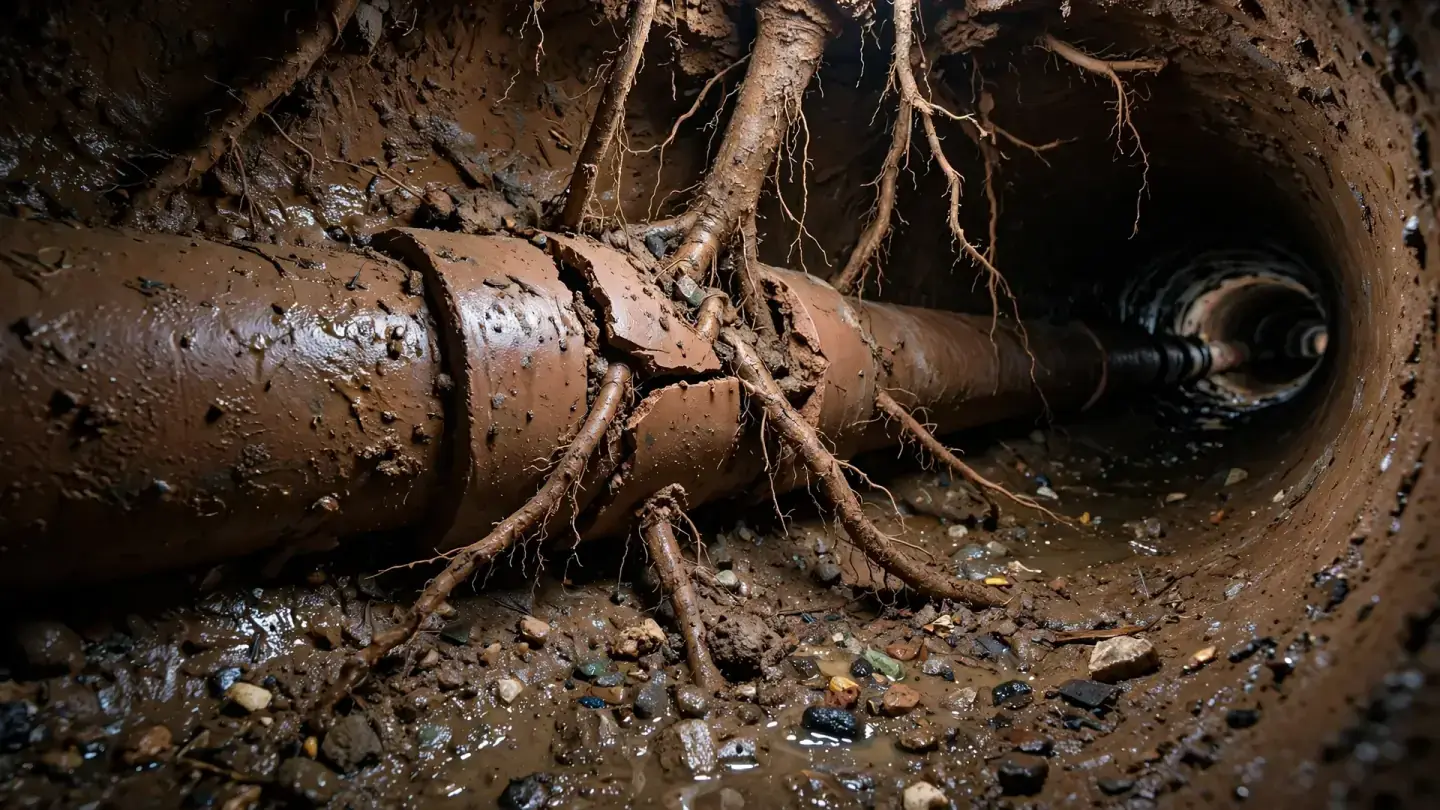
Where a restaurant's grease problem starts
Planning
How a commercial drain visit is planned
- 1
Schedule around the business
Kitchens are often cleaned before opening or after close; offices and retail may prefer early mornings.
- 2
Identify the system
The contractor asks for any building plans or knowledge of cleanout locations, interceptor location and how many floors share each stack.
- 3
Open stoppages first
Any active backup is relieved with a cable machine so the building can operate.
- 4
Jet the grease lines
Kitchen branches to the interceptor are jetted to bare pipe; floor sinks and their outlets are cleaned.
- 5
Check the interceptor
The contractor looks at the interceptor's condition and fill level and advises whether it needs pumping by a licensed hauler.
- 6
Camera and record
Lines that block often are filmed, and findings are recorded for the facility's maintenance file.
FOG rules
Riverside grease rules at a glance
These points summarise the city's published restaurant survey and requirements [1]. Always check current requirements with the Environmental Compliance Section.
| Requirement | What it means for the business |
|---|---|
| Determination by Environmental Compliance | Restaurants must get a determination from the city's Environmental Compliance Section on whether a grease interceptor is required, based on a wastewater discharge survey |
| Minimum interceptor size | Where required, the city calls for a minimum 750-gallon interceptor, sized by drainage fixture units |
| Installed before opening | The interceptor must be in place before the restaurant opens for business |
| Maintenance standard | An interceptor is not properly maintained if its working capacity is reduced by more than 25 percent by accumulated material |
| No enzymes or emulsifiers | Additives that dissolve grease and send it downstream are not allowed in the interceptor |
| Full pump-outs | Cleaning must remove the entire contents, not just the top layer |
| Records kept on site | Pump receipts and waste manifests are kept in a binder for at least three years |
Best practice
Kitchen practices that keep lines clear
- Dry-wipe pans, plates and utensils into the trash before washing; the city's restaurant guidance stresses this [2].
- Fit strainers on prep sinks and floor sinks and empty them into the trash, not the drain.
- Collect fryer oil and other liquid fats in a waste oil container for recycling, never the drain.
- Train staff on what goes down which drain; turnover means training is ongoing.
- Don't use hot water or degreasers to 'flush' grease through. It sets again downstream or in the sewer.
- Keep the interceptor maintenance log current; inspectors review it [1].
Riverside's FOG programme and why it exists
The City of Riverside runs a federally approved pretreatment inspection programme through the Environmental Compliance Section at 5950 Acorn Street, enforcing Riverside Municipal Code Chapter 14.12 [1]. Inspectors visit food service establishments and check drains, grease interceptors, waste oil containers and records.
The reason is the public sewer. Grease that escapes a restaurant hardens in city mains, where it combines with wipes and debris into blockages that cause sewer overflows. The city's Sewer System Management Plan addresses fats, oils and grease as part of preventing those overflows [3]. Wastewater from Riverside and several neighbouring service districts travels through more than 800 miles of public sewer to the Regional Water Quality Control Plant [4].
For a business, the practical point is that drain cleaning and interceptor maintenance are linked. Jetting a kitchen line moves grease toward the interceptor, which is where it should be captured. If the interceptor is already full, cleaning the line can push grease straight through. A good contractor will look at both.
Who maintains the grease interceptor, the trap and the line?
A grease interceptor is a large in-ground tank, usually outside the building, that slows kitchen wastewater so fats float and solids settle before the water continues to the sewer. Smaller under-sink grease traps do the same job at a single fixture. Both need emptying, and in Riverside the interceptor is pumped by a hauler who issues a receipt and waste manifest the business keeps on file.
Drain cleaning contractors work on the lines feeding the interceptor and the line leaving it. They can tell you when the interceptor looks overdue, when its baffles or tees are damaged, and when grease is escaping past it. Keeping both trades on a coordinated schedule, pumping first and line jetting immediately after, gives the cleanest result.
Downtown and older commercial buildings
Downtown Riverside mixes historic buildings with newer infill. The Main Street pedestrian mall was planned in the late 1950s and opened in the 1960s [5], and the Mission Inn, built in phases in the early twentieth century, anchors the district [6]. Older commercial buildings often have cast iron stacks and clay laterals, sometimes shared with neighbouring units, and cleanouts that are hard to reach.
When a restaurant moves into an older space, the existing drain system may not have been designed for a commercial kitchen's grease load. The interceptor determination process exists partly for that reason. The Downtown Riverside area page covers those buildings in more detail.
Multi-unit residential buildings
Apartment and condominium buildings combine residential habits with commercial scale. Kitchen stacks collect grease from every unit above; a stoppage at the base of the stack sends wastewater out of the ground-floor sinks. Property managers usually benefit from scheduled jetting of kitchen stacks and the building drain, timed so tenants can be notified in advance.
Where several units share a lateral, a stoppage affects everyone, and responsibility often sits with the owner or association rather than individual tenants. Riverside places lateral maintenance from the building to the property line on the property owner [7].
Retail, offices and medical suites
Not every commercial building has a kitchen. Offices, shops, salons, gyms and clinics have their own drain patterns. Salons send hair and chemical residues down shampoo bowls; gyms see heavy shower use and hair; dental and medical suites run sinks constantly and may have specialised traps. Break-room sinks in offices collect coffee grounds and food scraps from people who never think about where they go.
Restrooms are the common thread. Public restrooms receive paper towels, wipes and hygiene products that domestic plumbing rarely sees, and their stoppages tend to appear at the worst possible time. Signage, proper bins in every stall and a scheduled cleaning of restroom branch lines prevent most of them. A contractor who understands a building's use can suggest which lines to put on a schedule and which can be left alone.
Access, safety and working in occupied buildings
Commercial drain work often happens around customers, staff or tenants. Cleanouts may sit in a dining room floor, a corridor, a ceiling space or behind a stockroom shelf. Jetting hoses run across floors and machines make noise. A well-planned visit sets out where equipment will go, which areas will be closed off, and how wastewater from the cleanout will be contained.
Building managers can make visits faster by keeping a simple drain map: where each cleanout is, which fixtures feed which line, where the interceptor sits and when it was last pumped. Contractors arriving with that information spend their time cleaning, not searching.
Before the call
What to have ready before a commercial call
- The business type and the building's age, if known.
- Which drains are affected: kitchen, restroom, floor sinks, a whole floor or the whole building.
- Where the cleanouts and the grease interceptor are, and when the interceptor was last pumped.
- Your hours and the windows when work can happen without disrupting service.
- Any recent inspection notes from the city's Environmental Compliance Section.
- Who has authority to approve work on the building, if you're a tenant.
FAQ
Commercial drain questions
Does a restaurant in Riverside need a grease interceptor?
Many Riverside food businesses do, and the City decides case by case through its Environmental Compliance Section under Municipal Code Chapter 14.12. Where an interceptor is required, the City sets a 750-gallon minimum, installed before the business opens. Ask the City's compliance staff early when planning a new or remodelled kitchen.
Can we put enzyme treatments in our grease interceptor to keep it clean?
Riverside prohibits enzymes and emulsifiers in grease interceptors. These products break grease into smaller droplets that pass through and set again further down the sewer. The City requires the full contents to be removed when the interceptor is cleaned, so regular pumping and good kitchen habits are the approved approach.
How long should a restaurant keep its grease interceptor pumping records?
Keep grease interceptor pumping and maintenance records for as long as the City of Riverside requires, and check the current period with the Environmental Compliance Section. Inspectors may ask to see them. Keeping receipts with dates, volumes removed and hauler details in one binder or folder makes inspections and troubleshooting much easier.
What should our restaurant do first if the grease interceptor overflows?
Stop sending water to the interceptor, keep the overflow away from storm drains and contact the City of Riverside's sewer staff, who handle overflows affecting the public system. Then call to be connected with a drain contractor and a pumping company. Write down times and actions; regulators may ask how the spill was contained.
Can commercial drain cleaning be scheduled outside our business hours?
Many commercial drain contractors can work before opening or after closing, but availability varies by company. Ask about off-hours scheduling on the call. Planning maintenance jetting for a quiet period avoids shutting the kitchen line during service and gives the crew room to set up hoses and protect floors.
Why do floor sinks in a commercial kitchen back up during the dinner rush?
Floor sinks back up during peak service because the kitchen line is partly narrowed by grease and food solids. At low flow the water squeezes past; at peak flow, dishwashers, prep sinks and mop water arrive together and exceed what the narrowed pipe can carry. Wall-to-wall cleaning and strainers address the cause.
Who is responsible for a blocked shared drain in a multi-tenant building?
Responsibility for a shared drain in a multi-tenant building is usually set by the lease or the owners' association documents. The landlord or association often handles common lines, while tenants handle their own fixtures. Agree who calls and who authorises work before a backup, so a blocked line isn't left waiting.
Sources and citations
- [1]City of Riverside Environmental Compliance Section: Restaurant wastewater discharge survey and grease interceptor requirements
- [2]City of Riverside Public Works: Best management practices for restaurants and food service
- [3]City of Riverside Public Works: Sewer System Management Plan (2025)
- [4]City of Riverside Public Works: Regional Water Quality Control Plant
- [5]Wikipedia: Main Street Pedestrian Mall (Riverside, California)
- [6]Wikipedia: Mission Inn
- [7]City of Riverside Wastewater Division: Home sewer line maintenance brochure