
Key facts: La Sierra
- La Sierra takes its name from Rancho La Sierra, a land grant of more than 17,000 acres made in 1846 [1].
- Much of La Sierra stayed under county jurisdiction until it was annexed into Riverside in 1964 [2].
- Postwar slab homes have drains buried under the concrete, often original cast iron [3].
- Riverside guidance makes installing a property-line maintenance cleanout the owner's responsibility where none exists [4].
What homes in La Sierra are like
La Sierra takes its name from Rancho La Sierra, a Mexican land grant of more than 17,000 acres made in 1846 [1]. Part of the land was later bought by the Seventh-day Adventist Church, which opened La Sierra Academy, the forerunner of today's La Sierra University [5]. The area remained under county jurisdiction until 1964, when it was annexed into the City of Riverside [2].
Much of La Sierra's housing is postwar: single-storey homes on slabs, built in subdivisions as Southern California's population grew, with later tracts, apartments and commercial centres added over the following decades. Many original houses are now sixty years old or more, which puts their drain systems, often cast iron under the slab and clay or early plastic laterals, at an age where problems become more common.
La Sierra's neighbours include Arlanza, which joined the city in 1961 [2], and Riverside's western city boundary. As always in west Riverside, check whether an address is inside city limits; nearby communities may be separate cities.
Common problems
What drain contractors see most in La Sierra
Corroded cast iron under slabs
Original postwar drains corrode along the bottom where water has run for decades.
Read moreClay and early plastic laterals
Older joints admit roots; early plastic can crack or separate.
Read moreGrease and wipes in rentals
Areas near the university include rental housing with frequent turnover.
Read moreScale in laundry and kitchen branches
Hard water and aging metal pipe combine to narrow small lines.
Read more
Why are postwar La Sierra drains starting to fail?
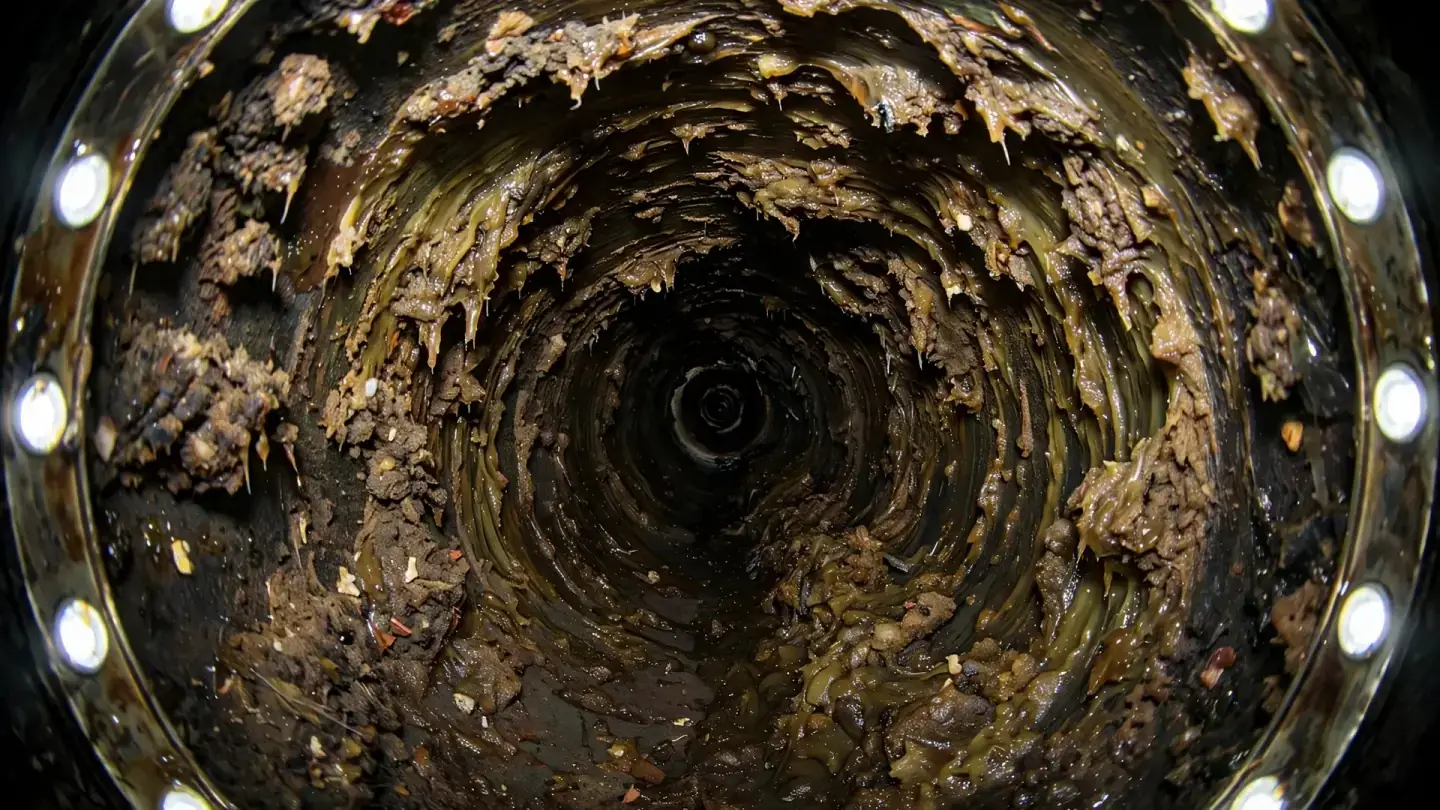
Slab-on-grade construction became the norm in postwar Southern California tracts. Drains were laid in trenches in the soil and the floor was poured over them [3]. In La Sierra's original subdivisions, those buried drains were frequently cast iron. Cast iron is strong, but after sixty years of carrying water it often shows channel corrosion along the bottom of the pipe, scaling that narrows the bore and, in some cases, cracks or holes.
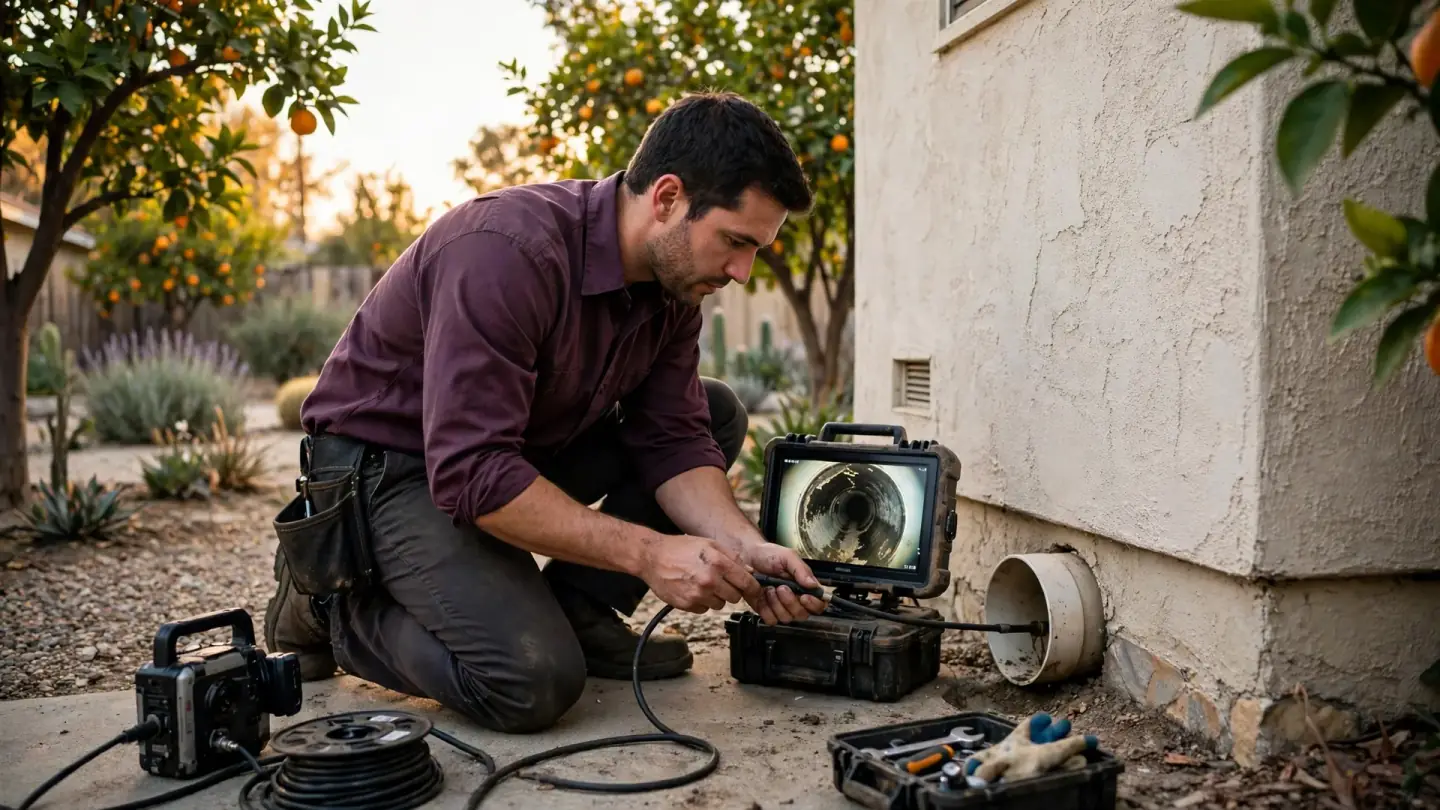
The symptoms are familiar: one bathroom group draining slowly, recurring kitchen clogs, a faint sewer smell with no obvious source, or damp flooring near a bathroom. Because there's no crawlspace, the way to see the problem is a camera through a cleanout or fixture, with a locator marking the spot from above. The drain camera inspection page explains the process.
Not every old slab drain is failing, and many are in serviceable condition. The point is to know, especially before a remodel or a sale.
Does La Sierra's county-era construction affect its drains?
Because much of La Sierra was developed before the 1964 annexation [2], many houses were built under county jurisdiction rather than the city's. That doesn't change today's rules: properties inside city limits follow City of Riverside requirements, including the owner's responsibility for the lateral and cleanout running out to the property boundary [4]. It can affect records, though. Original permits and plans for older houses may be held by different agencies, and some laterals were installed without a property-line cleanout.
Riverside's guidance makes installing a property-line maintenance cleanout the owner's responsibility where none exists [4]. Where one is present, the city maintains the lateral from there to the main [6]. If your La Sierra house has only a cleanout near the foundation, or none at all, ask the contractor about access options.
A postwar slab home in west Riverside
University-area rentals
La Sierra University sits within the community, and surrounding streets include rental houses, apartments and shared housing. Rental properties with changing occupants see a steady flow of drain problems that have less to do with the pipe and more to do with habits: grease poured down kitchen sinks, wipes flushed, hair in shared bathrooms. Owners of rental properties in the area benefit from clear guidance for tenants and, where problems repeat, scheduled cleaning of kitchen lines and laterals.
When a rental's drain blocks, tenants should report it promptly rather than reaching for chemical openers, which make the work hazardous for whoever clears the line.
Hard water and aging metal pipe
Riverside Public Utilities' 2025 report gives average hardness of 197 milligrams per litre, about 12 grains per gallon [7]. In La Sierra's older homes, galvanised steel and cast iron branches combine rust with mineral scale. Laundry lines, which carry a lot of water and lint, and kitchen lines, which carry grease, narrow the fastest. A contractor will often find a hard, gritty lining that a cutting head only partly removes and a rotating jetting nozzle clears properly.
Remodels and partial replacements
Many La Sierra homes have had kitchens and bathrooms remodelled at least once. Remodels often replaced visible piping with plastic while leaving the buried cast iron under the slab untouched. The joins between new plastic and old iron can create ledges or slight misalignments where debris catches. On camera, these transitions are easy to spot and often explain why a newly remodelled bathroom drains worse than expected.
Permits and boundaries
La Sierra permits, cleanouts and city limits
- In La Sierra, as citywide, the homeowner looks after the lateral and its cleanout up to the lot line [4].
- If a cleanout sits at the lot line, the city takes over from that fitting to the public main [6].
- Where no property-line cleanout exists, Riverside guidance makes installing one the owner's responsibility [4].
- Repairs to slab drains or laterals usually need permits; ask the contractor what applies.
- Rental property owners should clarify with tenants how drain problems are reported.
- Check any contractor's licence with the Contractors State License Board [8].
- La Sierra lies along Riverside's western edge, close to neighbouring cities such as Norco and Corona that run their own building departments; check which city your parcel is in.
Planning a drain visit in La Sierra
Most La Sierra homes are on standard suburban lots with driveways, so access is usually simple. The main cleanout is typically near the front or side of the house where the building drain exits; on some older homes it may be hidden under landscaping or behind an added room. If you've never seen yours, look along the wall facing the street for a capped pipe stub.
Tell the contractor roughly when the house was built, whether it has been remodelled and whether any drain work has been done before. If you rent, let the owner or manager know before work begins on anything beyond the fixture.
Selling or buying a postwar La Sierra house
A sixty-year-old drain system is a reasonable topic for a buyer to ask about. A camera inspection of the lateral and the main building drain under the slab gives a clear picture of corrosion, scale, roots and sags. For sellers, knowing the condition in advance helps avoid surprises later. For buyers, it informs decisions before closing. Ask for the footage and keep it with the house documents.
The Adventist and university heritage
La Sierra's identity is closely tied to its institutions. The Seventh-day Adventist Church's purchase of rancho land led to La Sierra Academy, which became La Sierra College, was accredited as a four-year college in 1946 and today operates as La Sierra University [5]. Campus buildings, churches and schools mean the area includes larger institutional drain systems alongside homes, though those are maintained by the institutions themselves.
For residents, the practical effect is a mix of long-term owner-occupied homes and rentals serving the campus community. Both share the same postwar infrastructure underneath.
Long-term owners often know their house's drain history well: the year a bathroom was redone, the time roots were cut from the lateral, the kitchen line that has always been temperamental. Sharing that history on the call saves the contractor time and helps them judge whether a problem is new or a familiar one returning.
Newer owners, including those who bought older homes recently, often have no history at all. For them, a baseline camera inspection of the lateral and the main building drain is a sensible first step, giving a reference point for any future problems and showing whether the pipes under the slab are original cast iron or have been replaced.
Preparation
Before calling about a La Sierra drain
- Note which fixtures are affected and whether they're on one side of the house.
- Find the main cleanout, usually near the wall facing the street.
- Know roughly when the house was built and whether bathrooms or the kitchen were remodelled.
- Mention any garage laundry or converted garage space.
- If renting, let the owner or manager know you're arranging a visit.
- Tell the contractor about any chemical products already used.
Laundry rooms and garage conversions
Many postwar La Sierra homes have laundry hookups in the garage, connected to a drain that runs under the garage slab to join the house's building drain. Lint and hard-water scale narrow these lines, and when a garage has been converted into living space the laundry drain may have been extended or rerouted. Each change adds fittings where debris can catch.
If the washer's standpipe overflows at the end of the spin cycle, the laundry line is restricted. If water appears at a garage floor drain or a nearby tub when the washer drains, the restriction is further downstream. Telling the contractor which of those you're seeing helps them start in the right place.
Trees, irrigation and older lawns
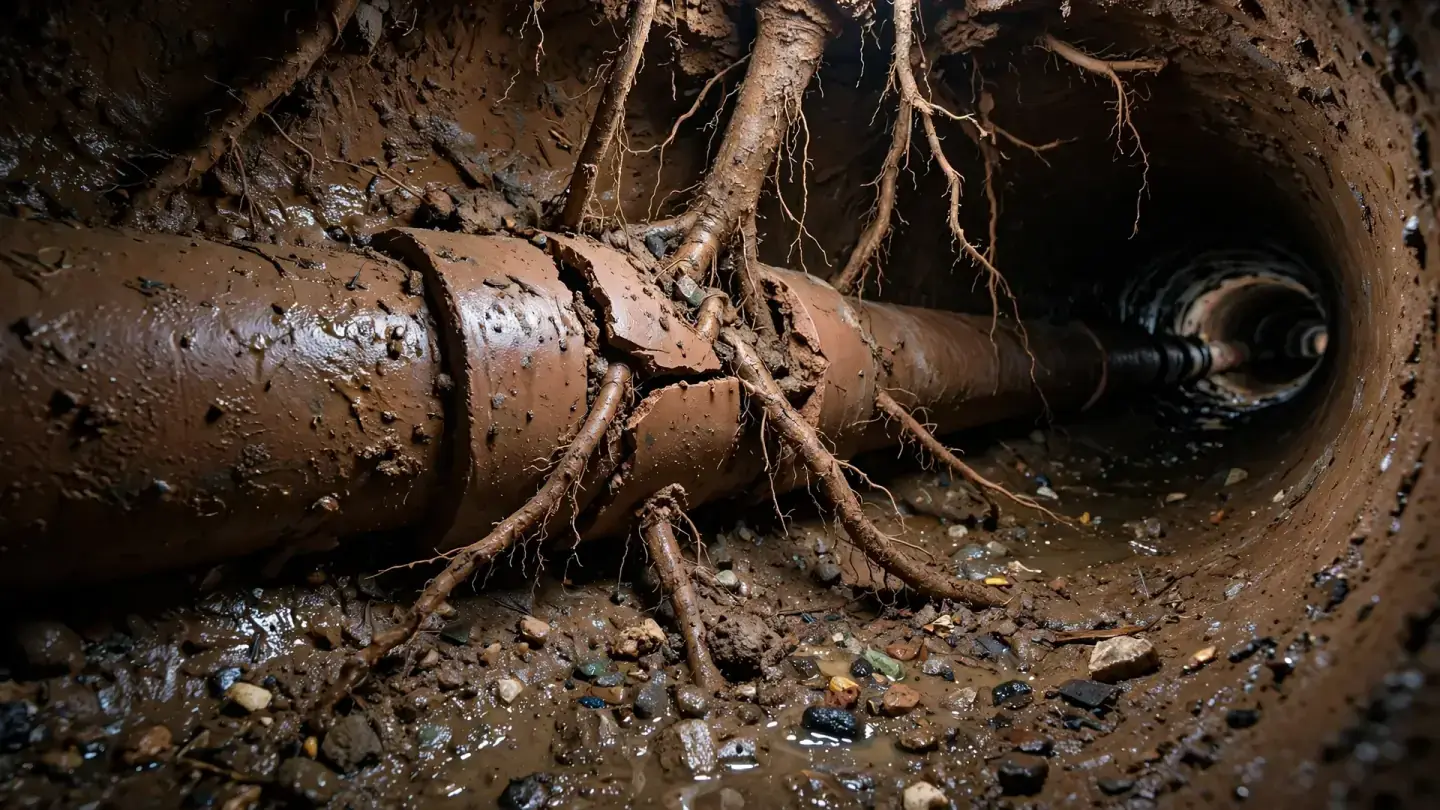
Established postwar neighbourhoods have mature trees planted decades ago, often in front yards directly over the lateral's path to the street. Combined with lawn irrigation that keeps the soil moist, those trees are a steady source of root intrusion in clay and early plastic laterals. If you are planting new trees, keep them well away from the line between the house and the street; a contractor's locator can mark the route for you.
Where an existing tree already sits over the lateral, removing it is rarely necessary just for the drains. Regular root cutting, or repairing the specific joints the roots use, usually resolves the conflict while keeping the shade that makes these streets comfortable in the inland heat.
La Sierra borders Arlington, and owners comparing older districts may also read about Canyon Crest; the full list of areas is on the hub. The most relevant services here are drain camera work and clearing clogs that keep returning, and the under-slab clog guide explains why postwar floors complicate access.
FAQ
La Sierra drain questions
When did La Sierra become part of the City of Riverside?
La Sierra was annexed into the City of Riverside in 1964. Before that, much of the area developed under county jurisdiction, so some older homes were built to county rules of the time. Today La Sierra homes use Riverside's public sewer, and the city's lateral policy applies to them like any other Riverside property.
Is the cast iron drain under my La Sierra house wearing out?
Cast iron drains under postwar La Sierra slabs are often original and now well over fifty years old. Cast iron corrodes along the bottom where water runs, leaving rough channels that catch waste and eventually crack. Repeated slow drains, sewer smells or wet spots on the floor are reasons to ask for a camera inspection.
My La Sierra home has no cleanout near the street. Does that cause problems?
A missing property-line cleanout makes main-line work harder in La Sierra, because the contractor must enter through a roof vent, a pulled toilet or an inside cleanout. Riverside guidance makes installing a property-line maintenance cleanout the owner's responsibility where none exists, and it also marks the point where the city's part begins.
Why do rental houses near La Sierra University clog more often?
Rental houses near La Sierra University often have more occupants and more turnover, which means more grease, wipes and hair entering drains that were sized for one family. Older slab plumbing adds to the strain. Landlords can cut repeat calls with sink strainers, clear house rules about wipes and a periodic check of the main line.
What does old cast iron pipe look like on a sewer camera?
On camera, old cast iron shows rust scale, rough nodules and a channel worn along the pipe bottom. Advanced cases show cracks, missing sections or soil below the pipe. A contractor reviewing La Sierra footage usually notes the distance of each defect from the cleanout so the location can be marked on the slab or yard.
Should I clean or replace the drains in my 1950s La Sierra house?
Cleaning makes sense for a 1950s La Sierra house when the pipe is intact and the problem is buildup. Replacement or lining becomes the topic when a camera shows cracks, collapsed sections or deep corrosion. Ask to see the footage before deciding, and get a second opinion for any major repair under the slab.
Why does my La Sierra laundry room drain back up into the garage?
A laundry drain backing up into a La Sierra garage usually points to lint and soap buildup in the standpipe or branch line, or a restriction further down the main. Washers discharge water fast, so a partly narrowed pipe overflows during the drain cycle. A lint trap on the hose helps, and cleaning the branch clears most cases.
Sources and citations
- [1]Wikipedia: Rancho La Sierra
- [2]City of Riverside: At Home in Riverside, La Sierra
- [3]Fine Homebuilding: Plumbing under a concrete floor
- [4]City of Riverside Wastewater Division: Home sewer line maintenance brochure
- [5]Wikipedia: La Sierra University
- [6]City of Riverside Public Works: Private sewer lateral policy
- [7]Riverside Public Utilities: 2025 Water Quality Report (hardness)
- [8]Contractors State License Board: check a license