Key facts: Emergency Bathroom Drain
- Close the shower or tub valve first; if it won't close, shut the main water valve.
- Water from an upstairs bathroom can reach the ceiling below within minutes; switch off nearby light circuits from a dry spot.
- Riverside's hard water, about 12 grains per gallon, stiffens the hair-and-scum mats that block bath drains [1].
- Dirty water rising into a clean tub means a shared line or the main is blocked.
Why bathroom backups do so much damage
A shower head delivers a steady stream of water for as long as it runs. If the drain beneath it has closed, that water has two places to go: over the curb or tub rim onto the floor, or through gaps around the drain body into the subfloor. In a single-storey slab home, the damage is mostly to flooring and baseboards. In a two-storey home, water from an upstairs bathroom reaches the ceiling below within minutes and shows up as a stain, a sag or a drip from a light fixture.
Most bathroom drain emergencies start with the same slow process: hair and soap scum narrowing the shower or tub drain over weeks. Riverside's hard water, around 12 grains per gallon [1], stiffens that scum. The day the drain finally closes is often just the day someone took a longer shower.
Signs
Which bathroom drain problems are urgent?
Water over the shower curb
The drain can no longer keep up with the shower head.
Ceiling stain or drip below a bathroom
Water has already escaped into the floor structure.
Tub water rising when the toilet flushes
The shared bathroom branch or the main line is blocked.
Read moreVanity cabinet floor wet
A trap joint or tailpiece has failed under a full basin.
Water around the toilet base after use of the tub
A blocked branch is forcing water out at the weakest seal.
Read more
Do this now
Immediate steps for a flooding bathroom
- 1
Turn the water off at the fixture
Close the shower or tub valve. If it won't close, shut the main water valve.
- 2
Stop other water use
If more than one bathroom fixture is affected, stop all water use in the house until the cause is known.
- 3
Mop and soak up
Towels along the threshold stop water spreading into hallways and bedrooms.
- 4
Check the room below
In a two-storey home, look at the ceiling under the bathroom. If water is dripping near a light fixture, switch off that circuit at the panel and stay clear.
- 5
Pull the strainer
With the water off, lift out the shower strainer or tub stopper and remove visible hair; sometimes that is enough to start draining.
- 6
Skip chemicals
A tub full of caustic opener is a hazard for everyone, and it can damage enamel and acrylic finishes.
A tub that has stopped draining
When to call
Call promptly when
Call to check emergency availability. You are connected with an independent local drain contractor who speaks with you on the same call.
- Water has gone through a floor or ceiling.
- More than one bathroom fixture is backing up.
- Dirty water is coming up into a clean tub or shower.
- The bathroom is the only one in the home.
- Clearing the strainer made no difference.
How is a flooded bathroom drain cleared?
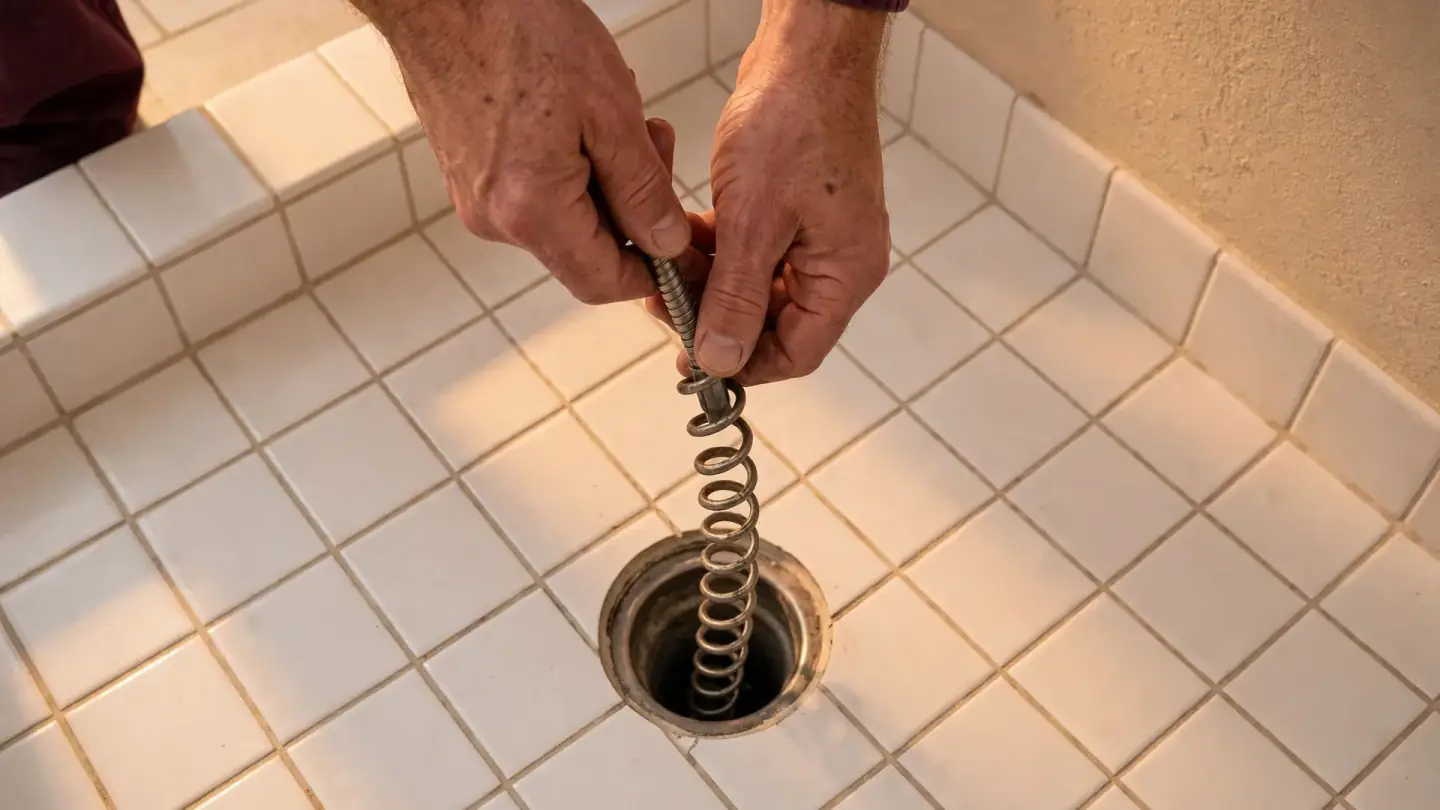
The contractor checks first whether the problem is the fixture or something further downstream. If only one shower or tub is affected, hair is pulled from the strainer area and a small drum auger is run through the overflow or drain into the trap. If the tub has a drum trap, common in older houses, its cover is located and the trap cleaned directly. If several fixtures are involved, the work moves to the branch line or the main cleanout.
Once draining, the fixture is run at full flow for several minutes and watched. The contractor may point out signs of leaks at the drain body or overflow gasket, which is useful if water reached the ceiling. The longer-term picture for these drains is covered on the shower and bathtub drain cleaning page and the bathroom drain cleaning page.
Riverside bathrooms in an emergency
Most Riverside homes built since the war sit on concrete slabs, with tub and shower traps in a box-out in the slab [2]. Water that escapes there tends to spread across the floor rather than downward. In older pre-war houses, such as those in the Wood Streets [3], bathrooms may sit over raised wood floors, and a leaking drain wets the framing beneath. Either way, drying the area properly after the drain is cleared matters as much as the clearing itself.
Two-storey tract homes in neighbourhoods like Orangecrest, part of a master-planned community begun in the 1980s [4], often have bathrooms directly above kitchens or living rooms. That makes stopping the water quickly the priority.
Drying out after a bathroom overflow
Once the drain is running, dry the room thoroughly. Lift bath mats, run the exhaust fan, open windows and use a fan on wet flooring. Water that reached under vinyl or laminate, behind baseboards or into a ceiling cavity can stay trapped and lead to swelling, stains and mould. If a ceiling below was soaked, it may need to be opened to dry; a sagging drywall ceiling should not be pushed or poked.
Take photos of any water damage before cleanup, in case you decide to talk to your insurer. Bathroom overflows from a clogged drain are a different situation from a burst pipe, and policies treat them differently.
Vanity sinks that overflow
A bathroom sink rarely floods a room the way a shower does, because its tap is usually turned off by the person standing at it. The exceptions are a tap left running into a stopped basin, a child's game, or a sink whose overflow channel is packed with soap. Water then spills over the counter edge and into the vanity, soaking the cabinet base, which is often particleboard that swells permanently when wet.
If a vanity overflowed, empty the cabinet, dry it with towels and leave the doors open with a fan on it. Then look at the trap and supply connections for drips before using the sink again, since a basin full of water puts strain on slip joints that may already be loose.
FAQ
Bathroom overflow questions
Why does my shower fill with dirty water when I flush the toilet?
A shower filling with dirty water after a flush means the drain line shared by the toilet and shower is blocked further downstream. The shower drain is usually the lowest opening, so wastewater backs up there first. Stop flushing and stop all water use; this pattern often points to the main line rather than the shower trap.
Water came through my ceiling from the upstairs bathroom. What should I do first?
Turn off the water feeding the upstairs bathroom first, then switch off power to any light fixture near the wet ceiling. Poke a small hole at the lowest point of a sagging ceiling with a bucket underneath to relieve the weight. Photograph everything. Then call to have the drain cleared and the source confirmed before using that bathroom again.
Is it safe to use the other bathroom while one shower is backed up?
Using the other bathroom is safe only when that bathroom is on a separate branch and its drains work normally. Run a little water and watch the blocked shower. If the shower water rises or bubbles, the branches share the blockage and you should stop using water anywhere in the house until it is cleared.
How long can I leave standing water in a clogged bathtub?
Standing water in a clogged bathtub can wait a few hours if it is not rising, though the longer it sits, the more it seeps past worn caulk and grout. Bail it into the toilet only if the toilet drains normally. Don't add chemicals to standing water, because the contractor will have to work through it.
Can a tub overflow drain stop my bathtub from flooding the floor?
A tub overflow drain handles a slowly rising tap but cannot keep up with a full-pressure faucet or water backing up from the main drain. The overflow empties into the same pipe as the tub drain, so if that pipe is blocked, the overflow is blocked too. Turn the tap off rather than relying on it.
Will clearing my shower drain mean breaking tile?
Clearing a shower drain almost never needs tile removal. The contractor usually works through the drain grate, a removed tub overflow plate, or a roof vent or cleanout. Breaking tile becomes a question only if a camera finds a broken pipe under the floor, and that is a repair decision you would discuss first.
Why do bathroom drains back up after a houseful of guests?
Bathroom drains back up after a busy weekend because heavy use pushes more paper, hair and soap through lines that were already narrowed. A partial blockage that coped with normal use can close under that load. If it happens after every gathering, a camera inspection can show whether roots, scale or a sag is the cause.