Key facts: Toilet Drain Clearing
- Most toilet clogs lodge at the top of the trapway, the S-shaped channel cast into the porcelain.
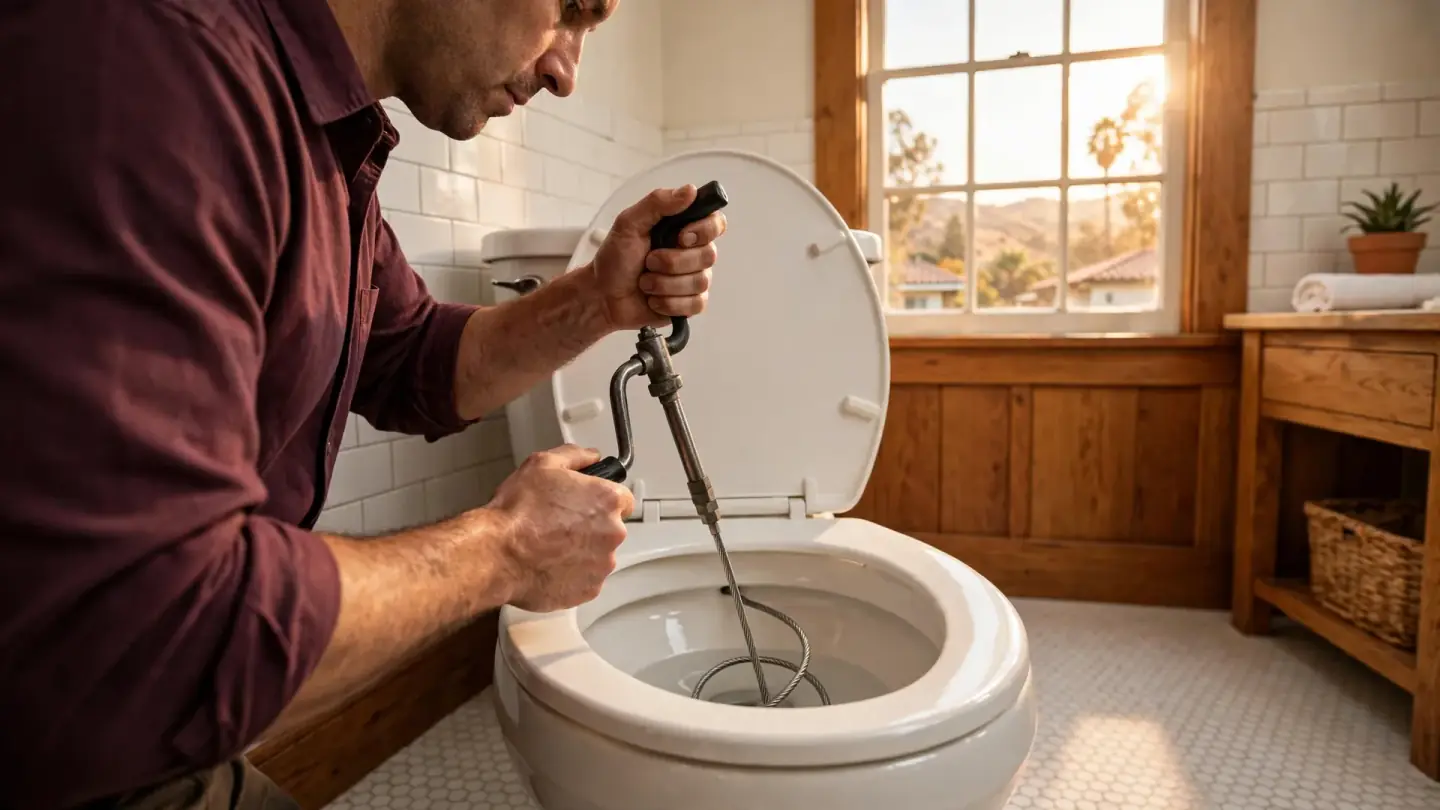
- A closet auger has a sleeve that protects porcelain while its cable hooks or breaks up a clog.
- Riverside's public system includes more than 800 miles of sewers feeding the Regional Water Quality Control Plant [1].
- Water rising in a tub or shower when you flush points to a building drain or lateral stoppage, not the toilet.
Where toilet clogs actually sit
A toilet bowl empties through a trapway cast into the porcelain: a tight S-shaped channel about two inches across that loops up behind the bowl and down into the floor flange. Most clogs lodge at the top of that loop, where the channel turns sharply. Below the toilet, the waste passes through the wax ring and flange into a three- or four-inch closet bend and on to the branch or building drain.
That geometry explains the usual pattern. Too much paper, a so-called flushable wipe, a cotton pad or a child's toy catches in the trapway. A plunger with a flange that seals into the outlet can often move paper. It rarely moves a solid object, and pushing hard may wedge it further into the bend. Wipes are a special case: they don't break down like paper, so they form tangled mats in the trapway or downstream in the main line.
Riverside's hard water plays a smaller role here than in sinks, but it is not absent. Mineral deposits from water averaging around 12 grains per gallon [2] collect in the rim jets and the siphon jet at the bottom of the bowl, weakening the flush. A weak flush leaves more waste in the trapway and makes clogs more frequent. Toilets are listed with every other fixture on the Riverside services hub.
Diagnose it
Is my clog in the toilet or in the sewer line?
Bowl rises, then slowly drains
A partial clog in the trapway or just below it. The bowl empties eventually but the flush lacks force.
Bowl rises and stays full
A full blockage in the toilet or immediately beneath it. Stop flushing.
Read moreWeak flush, no clog
Scale in the rim and siphon jets, a low tank water level or a worn flapper. The drain may be fine.
Read moreToilet gurgles when the shower runs
Air moving through the toilet trap means the shared branch is restricted or under-vented.
Read moreWater comes up in the shower when you flush
The blockage is downstream of the bathroom, in the building drain or lateral, not in the toilet.
Read more
The right plunger for a toilet
Procedure
The toilet clearing sequence
- 1
Shut off the toilet supply
The supply valve behind the toilet is closed so a test flush can't overflow, and the floor is protected.
- 2
Plunge with a flange
A flanged plunger is seated in the outlet and worked firmly with the bowl at normal level. Paper clogs usually yield here.
- 3
Use a closet auger
A closet auger has a protective sleeve that keeps its cable from scratching the porcelain. It is fed through the trapway and cranked to hook or break up the obstruction.
- 4
Pull the toilet if needed
When an object is lodged or the auger can't pass, the toilet is lifted off the flange so the trapway can be cleared from below and the closet bend checked.
- 5
Reset with a new seal
A new wax ring or a waxless seal is fitted, the flange is checked for damage, and the toilet is bolted down level.
- 6
Test under load
Several flushes, then a flush while a nearby tub or shower drains, confirm the line downstream is clear.
Components
Toilet parts that affect drainage
| Component | Role | Fault that looks like a clog |
|---|---|---|
| Rim jets | Wash the bowl and start the siphon | Scale reduces flow and weakens the flush |
| Siphon jet | Drives water into the trapway | Mineral blockage leaves waste behind |
| Flapper and fill valve | Release and refill tank water | Low tank level gives a short, weak flush |
| Trapway | Holds the seal and carries waste | Paper, wipes or objects lodge at the top of the loop |
| Wax ring and flange | Seal the toilet to the drain | A displaced ring can partly block the outlet |
| Closet bend | Turns waste into the branch line | Wipes and objects caught at the bend |
Your part
What you can do, and where to stop
- Close the supply valve behind the toilet before trying a second flush.
- Use a flange plunger, not a sink plunger, and keep the bowl about half full so the plunger is under water.
- If you know a solid object went in, don't plunge. It pushes the item deeper. Call and describe it.
- Clean scale from the rim jets with a small brush or mirror to see underneath; a strong flush prevents many clogs.
- Stop if water appears in a tub, shower or floor drain when you flush. That is a main-line problem and plunging won't help.
- Don't pour chemical openers into a toilet. They sit in the bowl and are hazardous when someone later plunges or augers.
Riverside toilet specifics
Wipes are the leading cause of downstream trouble, and they become a city problem when they reach the public sewer. The City of Riverside's Public Works department operates more than 800 miles of public sewers carrying wastewater to the Regional Water Quality Control Plant on Acorn Street [1]. Material that doesn't break down in a toilet doesn't break down in those pipes either.
On the private side, Riverside owners are responsible for the lateral from the house to the property line, including its cleanout [3]. If a toilet clog turns out to be a lateral stoppage, that responsibility applies. Older homes in districts such as the Wood Streets, built mainly before the Second World War [4], often have cast iron closet bends that narrow internally with scale over decades, which makes clogs from normal use more likely.
Toilets on slab floors, the norm in postwar and newer Riverside housing, connect to closet bends cast into the concrete [5]. Pulling the toilet is the only way to reach that bend from above, so a contractor will usually try the closet auger first.
Why does my toilet keep clogging?
Frequent clogs with normal use point to one of three things: a low-flush toilet with a weak siphon, scale in the jets, or a restriction downstream. Older low-flow models from the early years of low-consumption rules were known for weak flushes; some newer high-efficiency designs perform much better. A contractor can tell you whether the toilet itself is the weak link.
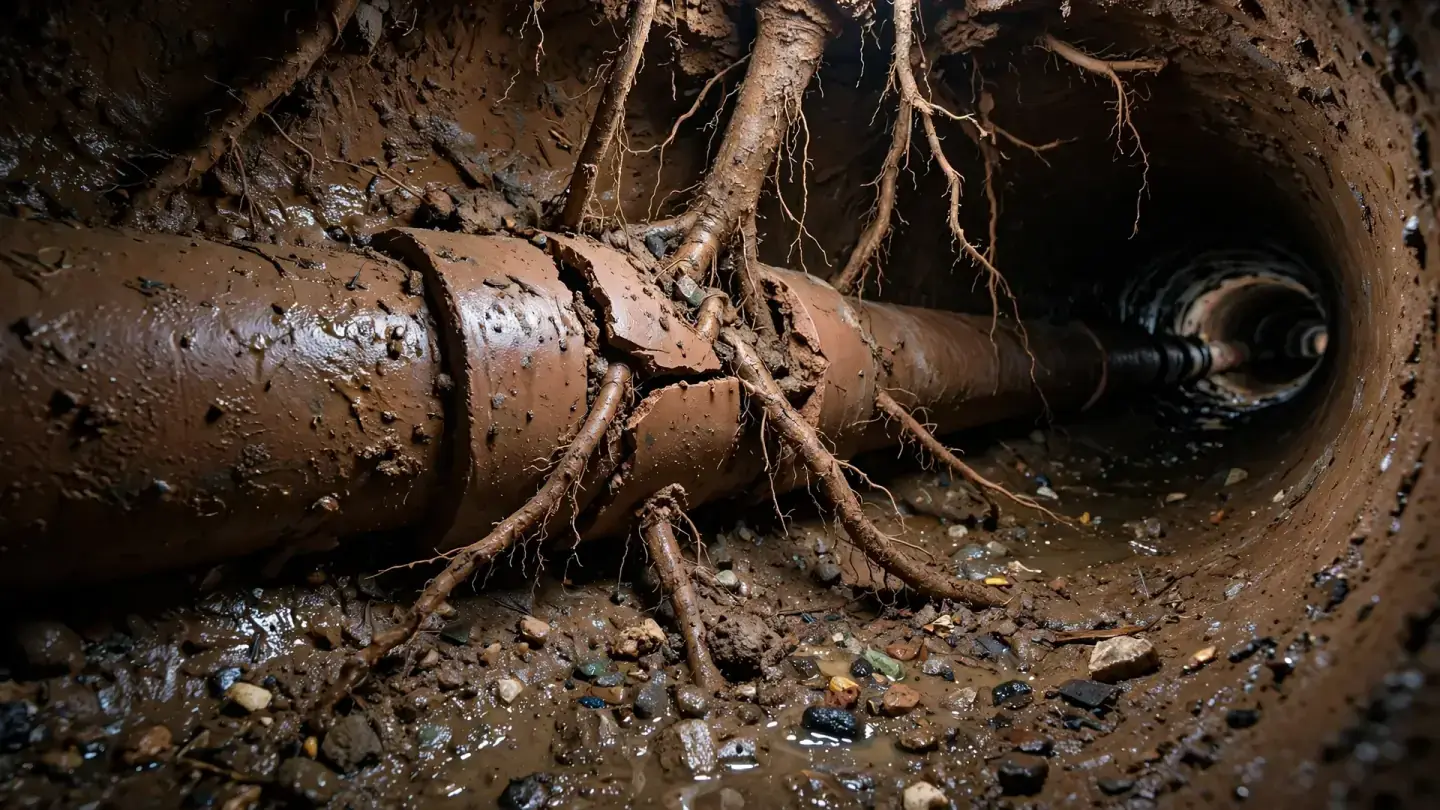
If the toilet is sound and the clogs keep coming, a camera through the closet bend, or through the nearest cleanout, will show whether paper is catching on a ledge, a root intrusion or a sag in the line. That is the point to look at the drain camera inspection page rather than plunging again.
Objects that need retrieval, not pushing
Phones, toothbrushes, toy figures, pill bottles and hair clips all turn up in toilets. A solid object usually wedges at the top of the trapway, where the channel turns. Plunging and augering both tend to drive it further, into a spot where it catches every flush that follows. If you know something solid went in, tell the contractor before anything is done.
Retrieval usually means lifting the toilet off the flange and working the item back out from the outlet side, where the trapway is wider. It is also the moment to check the flange and the closet bend for damage. The toilet goes back on a fresh seal, which is why the contractor asks how old the existing wax ring is and whether the toilet has ever rocked.
Upper-floor toilets and ceilings below
A toilet on the second floor of a two-storey Riverside home sits above a ceiling, often a kitchen or living room. Overflow from a clogged upper toilet travels through the floor quickly and shows up as a stain or drip below. Closing the supply valve at the first sign of a rising bowl protects the ceiling more than anything else you can do.
Pulled upper-floor toilets also need a careful reset. The flange may be mounted on a wood subfloor rather than concrete, and a damaged or loose flange there can let water seep into the framing on every flush. When a contractor lifts an upstairs toilet, ask them to tell you what condition the flange and subfloor are in.
Toilets that run, rock or seep
A few toilet faults are easy to confuse with drain trouble. A toilet that rocks on the floor has usually crushed or shifted its wax ring, and every flush can push a little water out under the base. Over time that stains flooring and smells like a sewer leak. A contractor resetting a rocking toilet checks for a cracked flange or a floor that has softened around it.
A toilet that runs constantly isn't clogged; its flapper or fill valve is failing. It wastes water but doesn't affect the drain. A slow drip from the tank-to-bowl bolts is a supply-side leak. Separating these from a real clog avoids running a cable through a drain that was never blocked.
On the call
What to tell the contractor about a toilet
- Whether the bowl drains slowly or not at all, and whether more than one toilet is affected.
- Whether anything solid went in, and roughly what it was.
- Whether other fixtures gurgle or rise when the toilet is flushed.
- The toilet's approximate age, and whether it is a low-flow or high-efficiency model.
- Whether the toilet is on a slab or an upper floor.
FAQ
Toilet clearing questions
Are flushable wipes actually safe to flush in Riverside?
Flushable wipes do not break down the way toilet paper does and can snag in toilets, laterals and the City's sewers. Riverside's wastewater system carries flows to the Regional Water Quality Control Plant, where wipes cause problems too. Put wipes in the bin, even when the package says flushable.
Why does my toilet clog when I only use normal amounts of toilet paper?
A toilet that clogs with normal use often has a partly blocked trapway, a low-flow bowl with weak flush, a vent problem or a restriction further down the line. Mineral scale in the rim jets can weaken the flush too. A closet auger often finds a hidden object or buildup.
Can I use an ordinary sink plunger on a clogged toilet?
An ordinary cup plunger works poorly on a toilet because it cannot seal the curved outlet. A flange plunger, with a soft extension that fits into the drain opening, is the right tool. Push gently first to remove air, then plunge firmly with the bowl partly full of water.
Do I need a new wax ring if the toilet has to be pulled up?
A new wax ring is needed whenever a toilet is lifted off the floor, because the old seal deforms and will not reseal properly. A failed ring can leak water and sewer gas under the floor. The contractor normally replaces it when the toilet is reset.
Why does water come up in my shower when I flush the toilet?
Water rising in the shower when you flush means the building drain or lateral is blocked downstream of both fixtures. The toilet's surge has nowhere to go and backs up into the lowest nearby drain. Stop using water and call for main line clearing.
Is it normal for a toilet to drain slowly after it's been unclogged?
A slow-draining toilet after unclogging usually means part of the blockage remains in the trapway or line beyond. It is not normal and tends to worsen. A closet auger clears most trapway leftovers; if that fails, the contractor may check the line beyond the toilet.
How do I stop my toilet from overflowing right now?
Lift the tank lid and push the flapper down to stop more water entering the bowl, then turn off the shut-off valve behind the toilet clockwise. Do not flush again. Once the water stops rising, you can plunge or call for help without making the overflow worse.
Sources and citations
- [1]City of Riverside Public Works: Regional Water Quality Control Plant
- [2]Riverside Public Utilities: 2025 Water Quality Report (hardness)
- [3]City of Riverside Wastewater Division: Home sewer line maintenance brochure
- [4]City of Riverside Housing and Human Services: Wood Streets neighborhood
- [5]Fine Homebuilding: Plumbing under a concrete floor