Key facts: Clogged Drain Repair
- Riverside Public Utilities reports average water hardness near 12 grains per gallon, which leaves scale that helps grease and soap cling inside drains [1].
- Riverside property owners maintain the sewer lateral and its cleanout from the house to the property line [2].
- Where a property-line cleanout exists, the City of Riverside maintains the lateral from that point to the main [3].
- Repeat clogs usually mean the first clearing bored a hole rather than removing grease, scale or roots from the pipe wall.
Why does the same drain keep clogging?
Most drains that block a second time were never fully opened the first time. A small cable pushed through a sink or tub punches a hole in the obstruction, water starts moving, and everyone moves on. The fatty ring, the hair mat or the mineral shelf that caused the stoppage is still lining the pipe, and it catches debris again within weeks. Clogged drain repair done properly means finding out what the obstruction is made of and choosing a tool that removes it wall to wall, not just restoring flow for the afternoon.
In Riverside there is an extra layer to that diagnosis. Riverside Public Utilities reports average water hardness of about 12 grains per gallon [1], which counts as hard water. Calcium and magnesium carbonate leave scale inside fixtures and drains, and that rough lining gives grease and soap something to grab. A clog in a Riverside kitchen line is often a layered thing: scale underneath, fat on top, food fibre caught in both.
Location matters as much as material. A stoppage in a single fixture's trap is a five-minute fix; the same symptom caused by a blocked branch line under a slab, or by a root mass in the yard lateral, needs different equipment and a very different conversation. The first job on any visit is to work out which of those you have. Every clog type has its own page in the complete Riverside services menu.
Warning signs
How can I tell a clog is deeper than the trap?
Two fixtures backing up together
When a tub fills while the toilet flushes, the obstruction is downstream of both, in a shared branch or the building drain. Plunging either fixture won't reach it.
Read moreWater rising in the lowest drain
The floor drain or shower on the lowest level is usually the first to show a main-line stoppage, because sewage takes the lowest open exit.
Read moreGurgling after a fixture empties
Air pulled through a trap means water is struggling past a partial blockage or the vent is restricted. It often comes days before a full stoppage.
Read moreA smell that comes and goes
Decaying organic material in a partly blocked line releases sewer gas when flow disturbs it. A dry trap can cause the same smell, so both get checked.
Read moreClogs that return within a month
A repeat stoppage almost always means the first visit opened a hole rather than clearing the pipe. A camera look usually explains why.
Read more
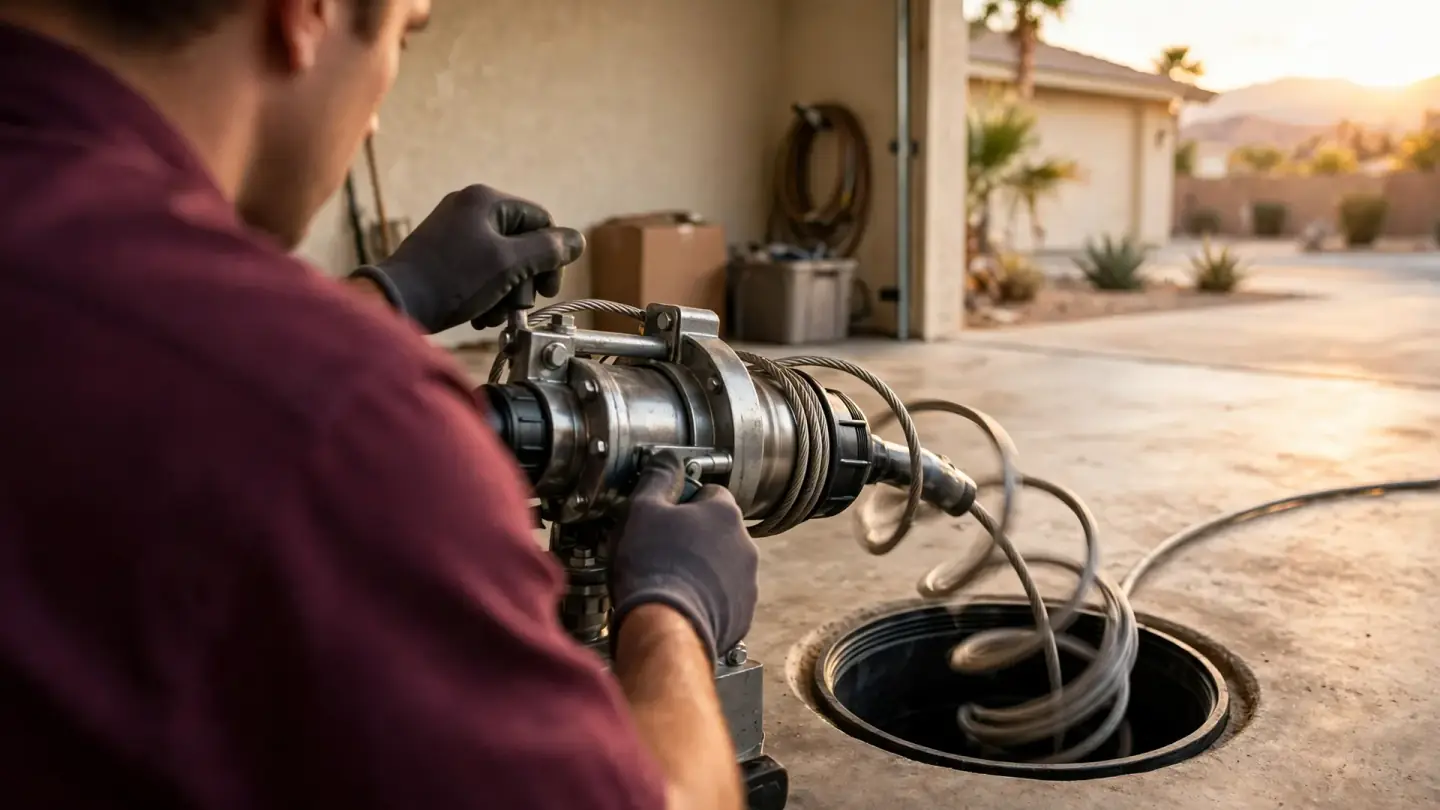
The drum machine behind most clog repairs
The visit
How a clogged drain repair visit runs
- 1
Questions before tools
The contractor asks which fixtures are affected, how fast the problem developed, what went down the drain recently and whether the house is on a slab. Those answers narrow the location before anything is opened.
- 2
Locating the access point
The closest practical access is chosen: the fixture trap, a wall cleanout, a roof vent or the exterior cleanout. Going in close to the blockage keeps the cable short and the cutter under control.
- 3
Choosing the head and the machine
A drop-head or drum machine with a small cable suits a lavatory line; a sectional machine with a root saw suits a four-inch lateral. Grease responds better to water jetting than to a cutter.
- 4
Clearing and retrieving
The cutter or jet is run through the blockage and past it, then pulled back slowly so the debris it brings up can be inspected. What comes back on the head is evidence: hair, grease, scale, wipes or roots.
- 5
Flow testing
Fixtures are run together at volume to load the line, not just one at a time. A drain that keeps pace with a full tub and a flushing toilet is genuinely open.
- 6
Recommending the next step
If the debris suggests roots, broken pipe or heavy scale, a camera inspection is offered so the cause can be seen rather than guessed.
Equipment guide
Matching the tool to the clog
| Clog material | Where it forms | Usual tool | Why |
|---|---|---|---|
| Hair and soap | Bathroom sinks, showers, tubs | Hand auger or small drum machine | Hair wraps around a cable head and comes out in one piece |
| Kitchen grease and food | Kitchen branch line | Hydro jetting or large drum machine with a scraper | Grease coats the whole circumference; a cutter only bores a hole |
| Mineral scale | Older galvanised and cast iron lines | Descaling heads or jetting nozzles | Scale is hard and bonded; it needs abrasion or high pressure |
| Wipes and paper products | Toilet outlets and main lines | Closet auger or sectional machine | Fibrous mats catch on a corkscrew or grabber head |
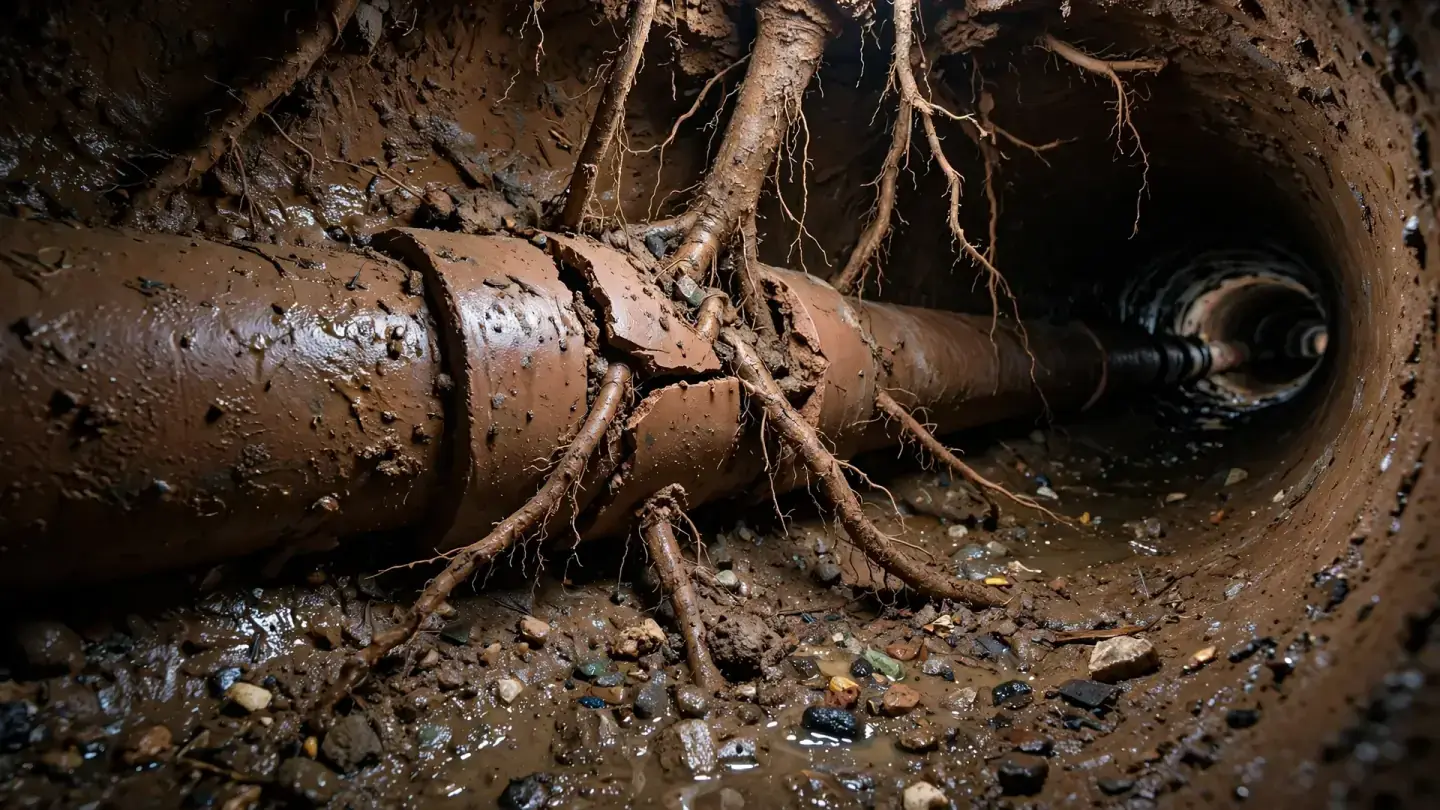
| Tree roots | Yard lateral, older clay joints | Sectional machine with root saw, then camera | Roots must be cut back; the joint they entered through stays a weak point |
| Foreign objects | Toilets and traps | Retrieval tools or removing the fixture | Pushing a toy or tool further down creates a harder clog |
Your part
What you can safely try before calling
- Stop running water into the affected drains. Every extra gallon adds to whatever is backing up.
- Plunge a single blocked sink, tub or toilet with the right plunger: a flange plunger for toilets, a flat cup for sinks. Seal the overflow on a tub or double sink so pressure goes down, not out.
- Pull and clean a pop-up stopper or shower strainer. Many bathroom 'clogs' are a hair mat sitting a few inches below the opening.
- Leave chemical drain openers on the shelf. They rarely clear a full stoppage, they sit in the pipe and the fixture, and they make the work dangerous for whoever opens the line next.
- Never mix products. Combining an acid opener with a bleach-based cleaner can release toxic gas.
- If more than one fixture is affected, stop. A shared stoppage won't respond to plunging and pushing water at it risks an overflow at the lowest drain.
Riverside specifics that change the repair
Responsibility for the line outside matters in Riverside. The City of Riverside Public Works Wastewater Division puts care and maintenance of the sewer lateral and its cleanout, from the house to the property line, on the property owner [2]. Where a cleanout has been installed at the property line, the city owns and maintains the section from that point to the public main [3]. If a stoppage is downstream of a property-line cleanout, the contractor will tell you, and the city is the next call.
Housing age is the second factor. Riverside's older neighbourhoods, such as the Wood Streets, were almost entirely built before the Second World War [4], and homes from that period commonly have cast iron and clay drainage that collects scale and admits roots. Newer tracts in the south of the city were built with plastic drain piping, which is smoother inside but still collects grease. The contractor's tool choice should reflect what the pipe is made of.
Most Riverside homes built since the postwar years sit on concrete slabs, with drain lines buried in the soil under the floor before the concrete was poured [5]. That means there is no crawlspace to reach a branch line from below; access has to come from fixtures, cleanouts or the roof vent, and a blocked under-slab line is cleaned from the inside.
When clearing is enough and when it isn't
A single clog with a clear cause, such as a hair mat in a lavatory or a wipe in a toilet outlet, is fully repaired by clearing it. There is nothing to fix afterwards except the habit that caused it.
Repeat clogs in the same line deserve a closer look. If debris on the cable shows root fibre, rust flakes or pieces of clay, the pipe itself is part of the problem, and a camera inspection will show whether there is an offset joint, a belly that holds water or a crack. Cleaning a damaged pipe again and again buys time without solving anything; the contractor can explain what repair options exist once the defect is visible.
Heavy grease in a kitchen line is in between. Jetting removes it thoroughly, and changes at the sink keep it from returning. Many households in older Riverside homes find that a scheduled cleaning, combined with the kitchen habits described on the kitchen drain cleaning page, is the steady state they need.
What the call itself sounds like
When you call, the line connects you to an independent local drain contractor who talks with you on that same call. Expect questions about which fixtures are slow, whether anything is overflowing, the age of the house and whether you know where the outdoor cleanout is. Those questions aren't a formality: they decide which machine comes off the truck.
Have a rough timeline ready. A drain that slowed over months points to buildup; one that stopped overnight points to a single object or a sudden root break-through. If you have photos of the debris you pulled out, or of water around a cleanout cap, mention it. Anything you arrange after that is agreed directly between you and the contractor on the call.
FAQ
Clogged drain questions from Riverside callers
Can a slow, clogged drain clear up on its own if I just wait?
A slow drain rarely clears itself for good. Hot water and use may push a soft clog a little further, but grease, hair and scale keep collecting at the same narrow point. Waiting usually turns a partial restriction into a full stoppage, often at an inconvenient moment, so early clearing is the safer choice.
Why did my drain clog again just a few weeks after it was cleared?
A drain that clogs again within weeks usually had only a hole punched through the blockage, leaving pipe walls coated. Roots, scale or a sag in the line can also hold debris. Ask whether the line was cleaned wall to wall, and consider a camera look to find the cause instead of repeating the clearing.
Is Riverside's hard water really a reason my drains keep clogging?
Riverside's hard water is a contributing factor. Riverside Public Utilities reports average hardness near 12 grains per gallon, and the scale it leaves gives grease, soap and hair a rough surface to cling to. Scale rarely causes a clog by itself, but it shortens the time between blockages, especially in older metal pipe.
Should I pour a chemical drain opener down before the contractor gets there?
Avoid pouring chemical drain opener before the contractor works on the line. Caustic product sitting in a blocked pipe can burn skin and eyes when the trap is opened or a cable splashes. If you have already used one, say so on the call so the contractor can take precautions and choose a safer method.
Who is responsible if my clog turns out to be in the sewer near the street?
In Riverside, the property owner maintains the lateral and cleanout between the building and the property boundary. Where a property-line cleanout exists, the City maintains the lateral from that point to the main. A camera inspection can show which side of that point the blockage sits on before any repair is discussed.
Is it normal for a toilet to gurgle when the bathroom sink drains?
A toilet that gurgles when a nearby sink drains is a common sign of a restriction or venting problem in the shared line. Air pushed ahead of the water escapes through the toilet's trap. Occasional gurgling is worth watching; frequent gurgling with slow drains suggests the branch or main needs clearing.
What is the difference between a clogged drain repair and a full sewer cleaning?
A clogged drain repair clears one fixture or branch line, while a sewer cleaning runs through the main building drain and lateral. If only one sink or tub is slow, the branch is the likely target. If several fixtures back up, especially the lowest ones first, the main line needs attention.
Sources and citations
- [1]Riverside Public Utilities: 2025 Water Quality Report (hardness)
- [2]City of Riverside Wastewater Division: Home sewer line maintenance brochure
- [3]City of Riverside Public Works: Private sewer lateral policy
- [4]City of Riverside Housing and Human Services: Wood Streets neighborhood
- [5]Fine Homebuilding: Plumbing under a concrete floor