Key facts: Emergency Drain Cleaning
- A backup is most serious when several drains are affected, starting with the lowest; that signals a main-line stoppage.
- Stop all water use first, then close the supply valve behind any rising toilet.
- Riverside owners maintain the lateral to the property line; beyond a property-line cleanout, the city does [1][2].
- Never pour chemical openers into a backed-up fixture or mix drain products.
Is it actually an emergency?
Not every stopped drain is urgent. A single slow lavatory in a house with three bathrooms can wait for a normal appointment. What turns a clog into an emergency is one of three things: wastewater is escaping or about to escape the plumbing, the only toilet or the main line is out of action, or sewage is involved. Any of those needs prompt attention because the damage and the health risk grow by the hour.
The quickest test is to ask how many drains are affected. One fixture means a local clog you can usually contain by not using it. Several fixtures, especially the lowest ones in the house, mean the building drain or lateral is blocked and every gallon used anywhere will come out somewhere. That second case is the real emergency.
Red flags
Which drain problems can't wait until morning?
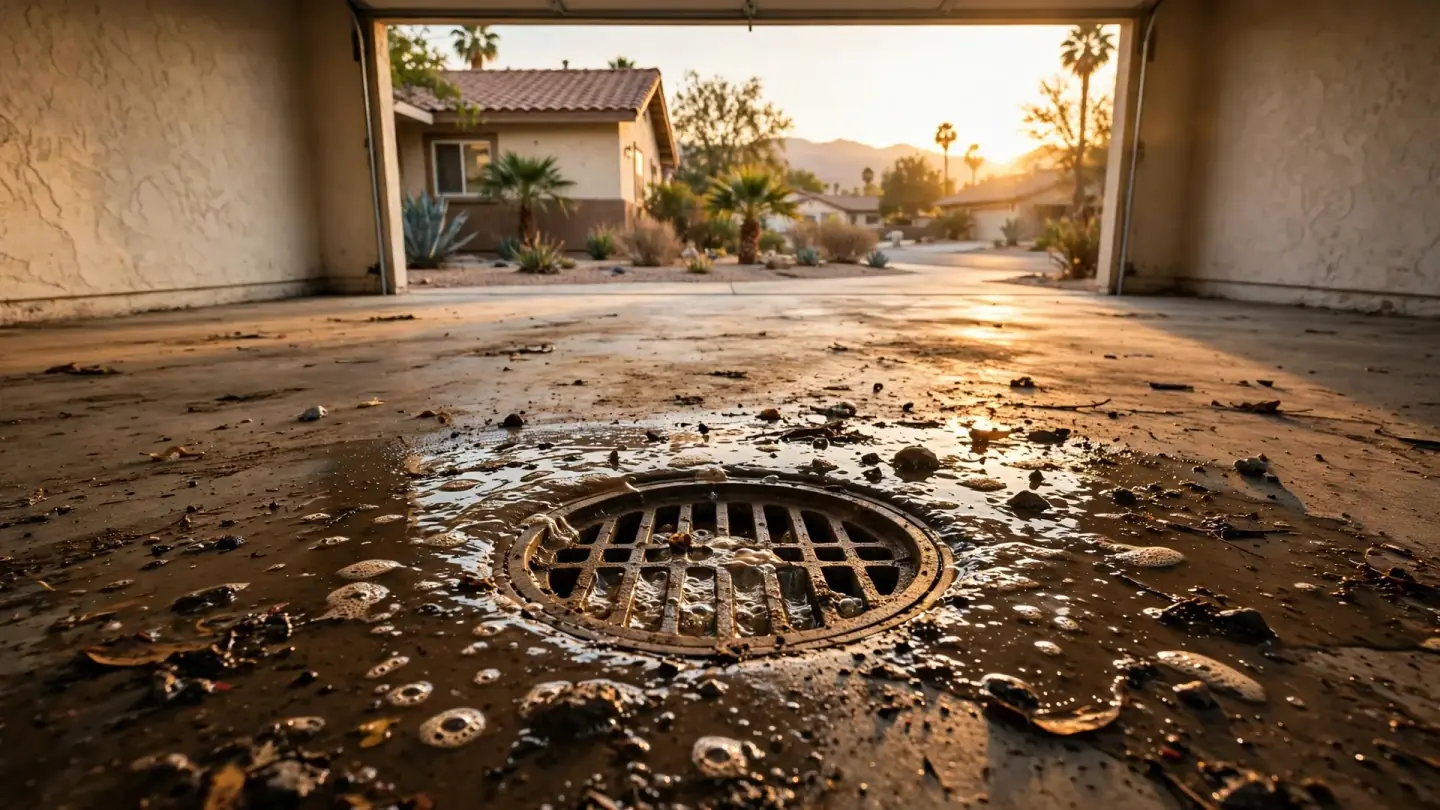
Sewage in a tub, shower or floor drain
Wastewater rising from the lowest drains means the main line is blocked.
Read moreToilet bowl rising toward the rim
Close the supply valve behind it now; a second flush will overflow.
Read moreWater spreading from under a cabinet
A trap or drain connection may have failed under pressure from a clog.
Outdoor cleanout cap lifted or weeping
The line beyond it is full and pressurised.
Every drain slow at once
A building-wide slowdown is a main-line blockage in progress.
Read more
Immediate steps
The first ten minutes
- 1
Stop all water use
Tell everyone in the house: no flushing, no showers, no dishwasher or washing machine. Turn off an irrigation system if it feeds a drain.
- 2
Close fixture valves
Shut the angle stop behind any toilet that is rising, and close valves on any appliance that is running.
- 3
Shut the main if water is escaping
If a supply pipe or fitting is leaking, close the main shutoff, usually near the front hose bib or at the meter box.
- 4
Protect people and power
Keep children and pets away from wastewater. If water is near outlets, extension cords or appliances, keep clear and switch off the circuit at the panel only if you can reach it from a dry place.
- 5
Don't add chemicals
Never pour drain openers into a backed-up fixture, and never mix products. The person clearing the line will be working in that water.
- 6
Note what you see
Which drains, what kind of water, where it came from, when it started. Those details shape the response.
Containing a backup before help arrives
Calling
When to call, and what to say
Call to check emergency availability. When you call, you are connected to an independent local drain contractor who speaks with you on that call. These details help them judge urgency and what equipment to bring.
- Call promptly if sewage or grey water is in the house, if the only toilet is unusable, or if water is spreading.
- Say how many drains are affected and which are lowest in the house.
- Say whether the water is clean, grey or sewage.
- Say whether the house is on a slab, and roughly how old it is.
- Say where the outdoor cleanout is, if you know.
- Say what you've already tried, including any chemical products.
What happens when the drain contractor gets there?
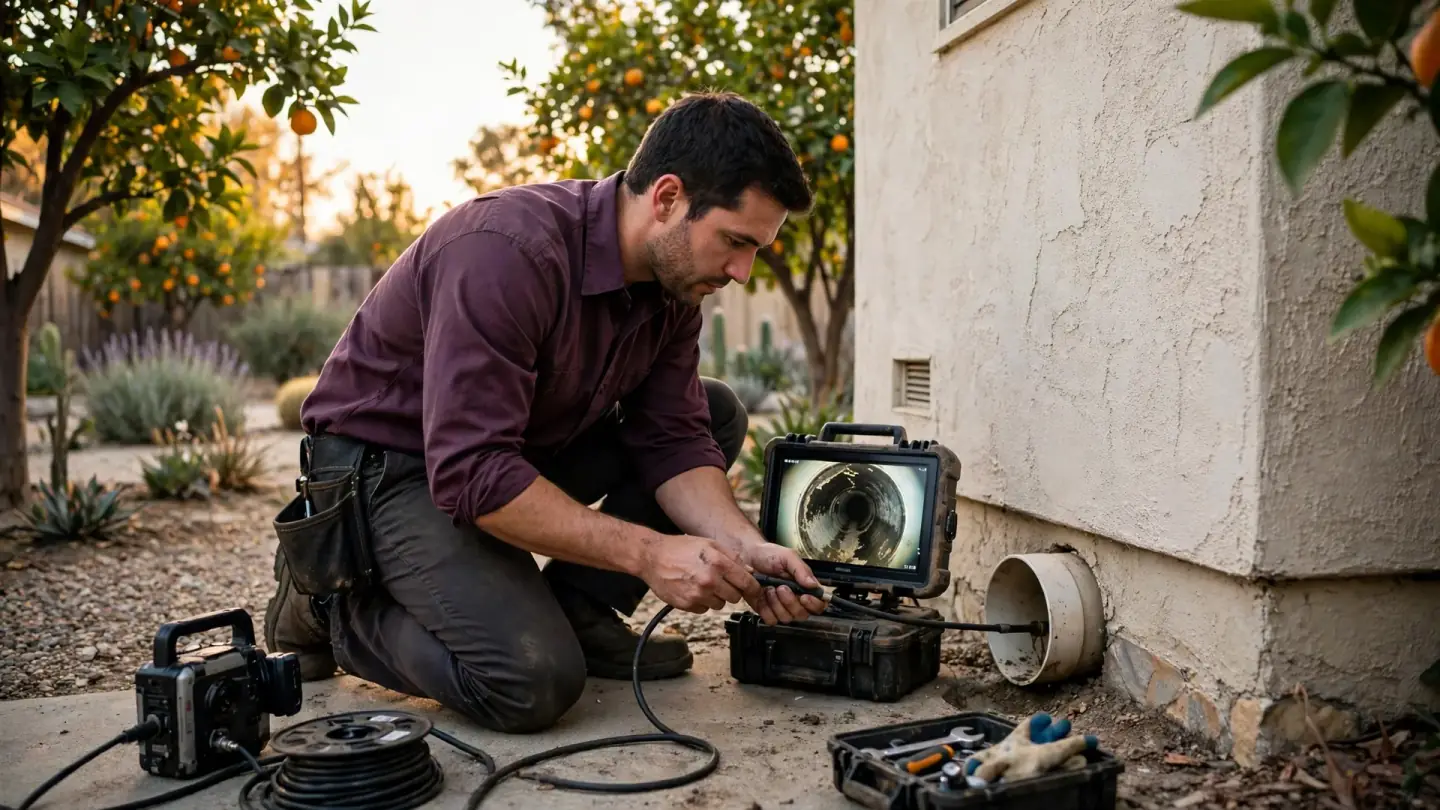
The contractor's first job is to relieve the backup. On a main-line stoppage that means opening the exterior cleanout, carefully because it may be under pressure, and running a sectional or drum machine to open a channel so the standing water drains away. On a single fixture it means clearing that fixture's trap or outlet. Relief comes first, because it stops the damage.
Once water is moving, the full clearing follows: a cutter sized to the pipe run the full length, retrieval of the debris and a flow test with several fixtures running. If the debris shows roots, broken pipe or heavy grease, the contractor will usually recommend a camera inspection, sometimes at the same visit and sometimes as a follow-up once the house is usable again. Anything you arrange after the call is agreed between you and the contractor.
Riverside details that matter in a hurry
Know your side of the line. In Riverside the property owner maintains the lateral and cleanout running from the home to the lot line [1]. Where a cleanout exists at the property line, the city owns and maintains the section from there to the public main [2]. If sewage is surfacing at the street, or several neighbours are affected at once, the public sewer may be the problem; the City of Riverside Public Works sewer pages list how to report it [3].
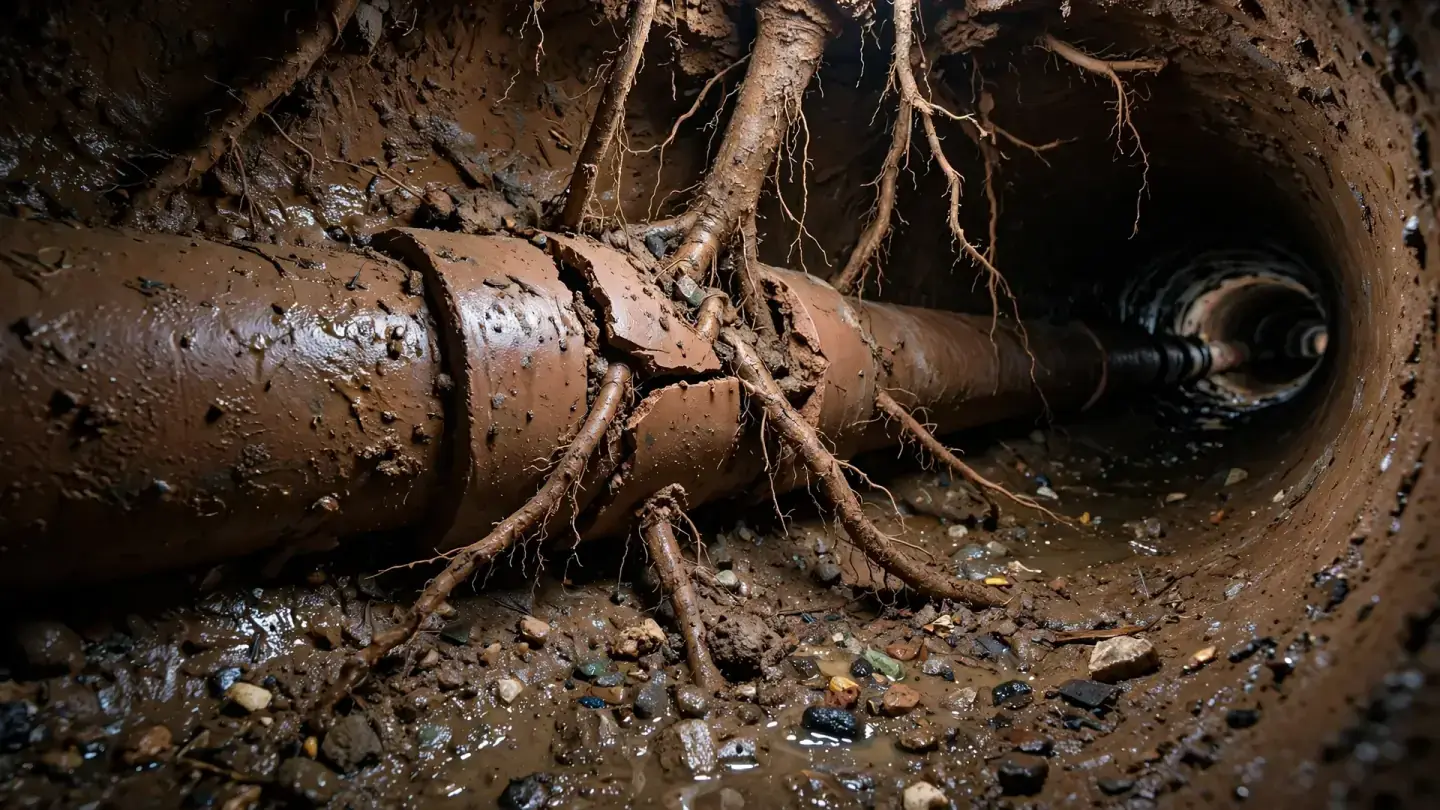
Know your house. Postwar and newer Riverside homes are mostly slab-on-grade, with drains buried beneath the floor [4], so the outdoor cleanout is usually the key access point. Older homes in districts like the Wood Streets [5] may have clay laterals that roots have entered, which is the most common cause of a sudden main-line stoppage there.
After the emergency
Once the line is open, think about why it blocked. A one-off object is a one-off. Roots, grease or a sag will cause the next stoppage too. The drain cleaning overview on the homepage and the guides on tree roots and gurgling drains explain the common causes. Water damage from sewage is a sanitation issue; porous materials it soaked usually need professional cleanup or disposal.
Why no promises about timing appear here
This site does not promise arrival times or round-the-clock service, because the independent contractors who take calls set their own availability. When you call, the contractor will tell you directly what they can do and when. If they can't help soon enough, you are free to call someone else. That honesty matters more in an emergency than a slogan does.
FAQ
Emergency drain questions
Who do I call when my drains back up in the middle of the night in Riverside?
Call this line to be connected with an independent local drain company and ask whether emergency help is available right now. Availability depends on the company and the hour, so nothing is promised before the call. If sewage is coming up in the street or at several neighbours' homes, the city's public sewer may be the cause, and Riverside Public Works handles its own mains.
How do I know if a clogged drain is actually an emergency?
A clogged drain is an emergency when water or sewage is rising out of a fixture, more than one drain is backing up, or you have no working toilet. A single slow sink can usually wait. Look at the lowest fixtures first, such as a shower or floor drain: dirty water there points to the main line rather than one trap.
Should I shut off the main water if drains are overflowing?
Shutting off the main water valve is worth doing when you can't stop the flow at the fixture or someone keeps using water by habit. Most overflows stop once the tap, toilet valve, washer or dishwasher is off. Learn where your main shutoff is before you need it, and check that it turns freely.
Is it safe to clean up sewage from a backed-up drain myself?
Small spills of clear sink water are fine to mop up, but sewage needs more care. Wear gloves and boots, keep children and pets away, and throw out soaked porous items such as rugs and cardboard. Large sewage spills are best left to a professional cleanup firm, because sewage carries bacteria and viruses that can make people sick.
How long does an emergency drain cleaning visit usually take?
An emergency drain clearing often takes one to a few hours once the contractor is on site, but that depends on access and what is in the line. Finding a buried cleanout, pulling a toilet or running a camera adds time. Ask the company on the call how they plan to approach your situation; the timing is theirs to estimate, not this site's.
Can I keep using my dishwasher and washing machine during a drain backup?
No, stop the dishwasher and washing machine as soon as any drain backs up. Both appliances dump a lot of water at once into the same drain lines, and that water has to go somewhere. In a slab-built Riverside home it usually reappears in the shower or tub, which is often the lowest opening in the house.
Will my homeowners insurance pay for damage from a drain backup?
Insurance coverage for drain and sewer backups depends entirely on your policy, and many standard policies need a separate water backup endorsement. Take photos before cleanup, keep any damaged items until an adjuster says otherwise, and ask the drain contractor for a written description of what caused the blockage. Call your insurer directly; this site can't advise on claims.
Sources and citations
- [1]City of Riverside Wastewater Division: Home sewer line maintenance brochure
- [2]City of Riverside Public Works: Private sewer lateral policy
- [3]City of Riverside Public Works: Sewer FAQ
- [4]Fine Homebuilding: Plumbing under a concrete floor
- [5]City of Riverside Housing and Human Services: Wood Streets neighborhood