Key facts: Downtown Riverside
- The Mission Inn was built in phases in the early twentieth century, and the Main Street mall opened in the 1960s [1][2].
- Riverside restaurants need an Environmental Compliance determination on whether a grease interceptor is required; the minimum size is 750 gallons [3].
- Riverside prohibits enzymes and emulsifiers in grease interceptors and requires full pump-outs [3].
- The city's public sewer runs more than 800 miles to the Regional Water Quality Control Plant [4].
What buildings downtown are like
Downtown Riverside is the city's historic centre. Its best-known landmark, the Mission Inn, was built by Frank Miller in a series of phases in the early twentieth century [1]. The Main Street pedestrian mall was envisioned in a downtown master plan in the late 1950s and opened in the 1960s, and it has since been renovated as part of later downtown revitalisation [2]. The city's neighbourhood material describes downtown as a mix of historic and newer buildings, with residences, offices, shops, restaurants and civic uses [5].
For drains, that mix means very different systems within a few blocks. Older commercial buildings often have cast iron stacks and building drains, sometimes with clay sewers beneath the street frontage. Newer infill and residential buildings use plastic drains and modern cleanouts. Many older buildings have been subdivided, refitted for restaurants or converted to new uses several times, and their drain systems carry the marks of each change.
Downtown is also where the city's restaurant grease rules come into sharpest focus, simply because so many food businesses operate close together.
Common problems
What drain contractors see most downtown
Restaurant grease in kitchen lines
Busy kitchens coat lines between the prep sinks and the interceptor.
Read moreInterceptors reaching capacity
An interceptor past its working capacity backs up floor sinks and lets grease escape.
Read moreOld cast iron stacks
Decades of corrosion and scale narrow vertical stacks in historic buildings.
Read moreShared laterals and unclear ownership
Subdivided and adjoining buildings sometimes share sewer connections.
Read more
What grease rules apply to downtown Riverside restaurants?
Every food business in Riverside works within the city's fats, oils and grease controls. The Environmental Compliance Section, based at 5950 Acorn Street, enforces Municipal Code Chapter 14.12 through a federally approved pretreatment inspection programme [3]. Restaurants need a determination from the section on whether a grease interceptor is required, based on a wastewater discharge survey; where one is, the city's minimum is 750 gallons, and it must be installed before opening [3].
Maintenance standards are specific. An interceptor whose working capacity has been reduced by more than 25 percent by accumulated grease and solids isn't considered properly maintained; enzymes and emulsifiers are prohibited; cleaning must remove the entire contents; and pump receipts and manifests are kept on site for at least three years [3]. The city's restaurant guidance adds the kitchen practices that keep grease out of drains in the first place, such as dry wiping and strainers [6].
For a downtown restaurant, drain cleaning and interceptor service go together. Jetting the kitchen line moves grease to the interceptor; if the interceptor is full, cleaning the line just pushes grease onward.
Can drains in a historic downtown building be cleaned safely?
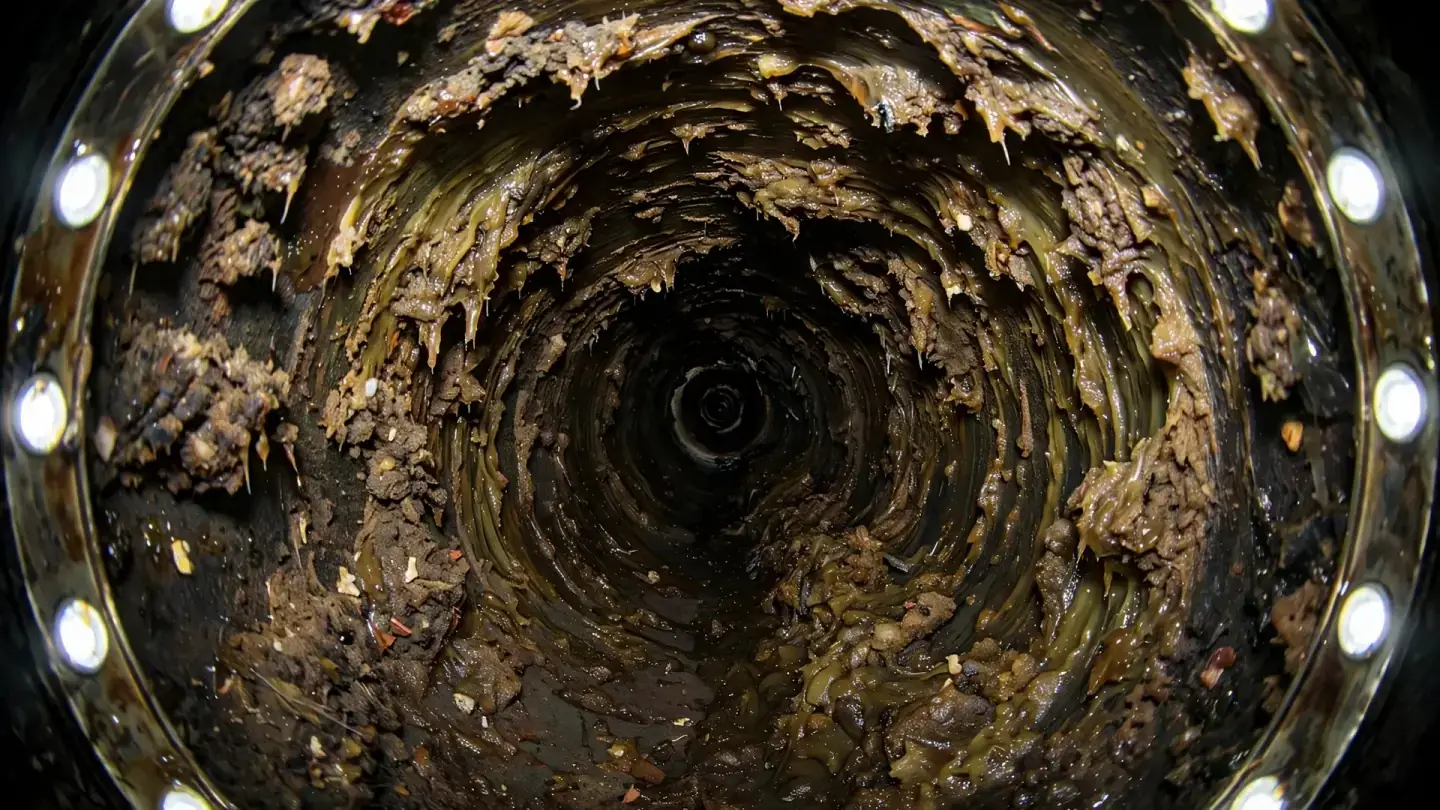
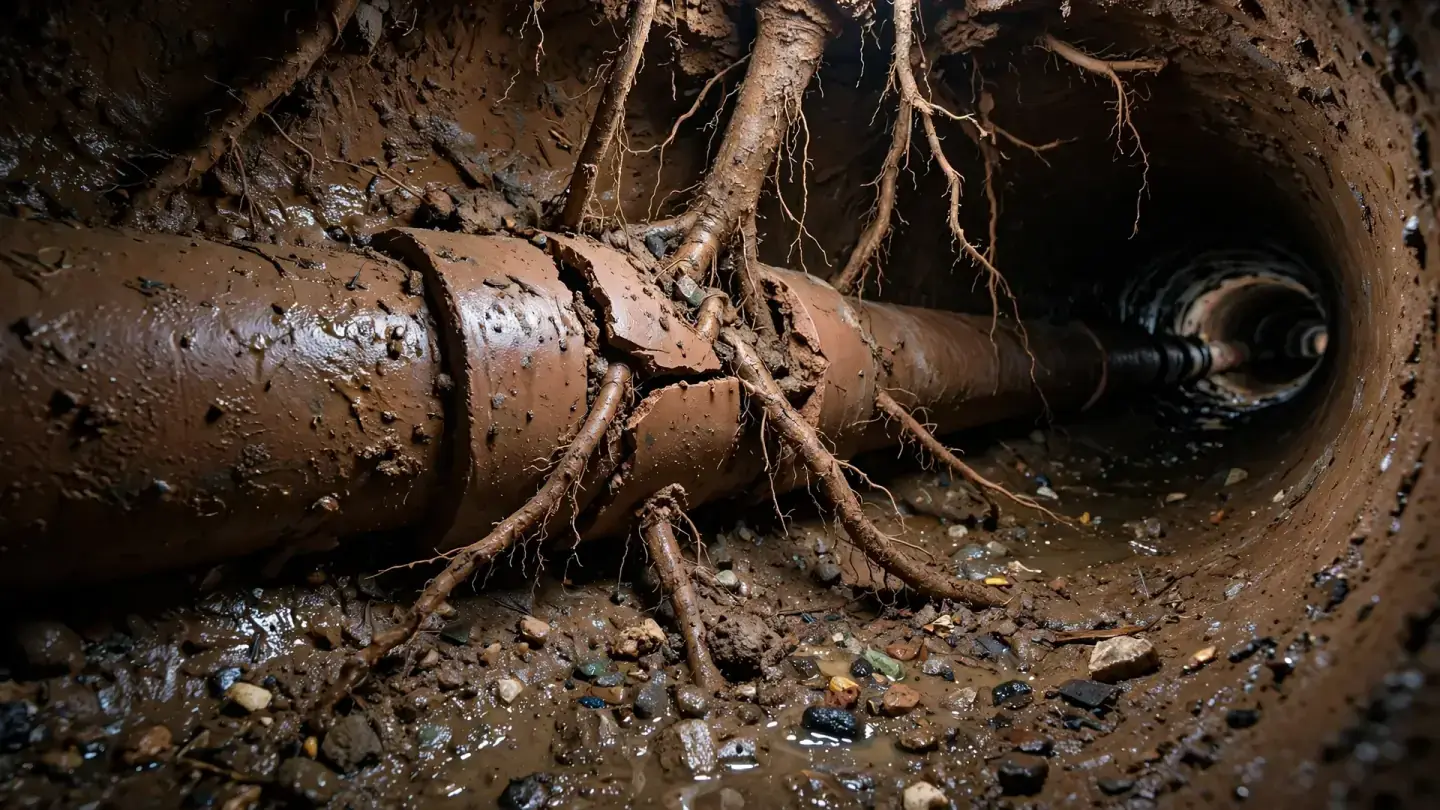
Older downtown buildings were plumbed with heavy cast iron stacks and building drains. Over a century, cast iron develops internal rust nodules and scale that narrow the bore, and Riverside's hard water, averaging around 12 grains per gallon [7], adds mineral layers. A historic building converted to a restaurant puts a modern grease load onto that old pipe, which is one reason the interceptor determination process exists.
Work in historic buildings calls for care. Cleanouts may be in basements, behind finished walls or in tenant spaces. Old cast iron can be thin enough to crack under aggressive cutting, so jetting at suitable pressure, or descaling heads, are often preferred, and a camera look first is wise. Where a building is a designated landmark, any repair that alters historic fabric may need review; drain cleaning itself generally doesn't.
A downtown restaurant kitchen's drains
Mixed-use and residential downtown
Downtown also includes apartments, lofts and condominiums, some in converted historic buildings and some newly built. In mixed-use buildings, residential stacks may share a building drain with ground-floor restaurants or shops. A grease problem from a restaurant can affect residents, and a wipes problem from apartments can affect a restaurant. Clear building records of what drains where, and who maintains which section, prevent disputes when something blocks.
Riverside places the lateral from the building to the property line on the property owner [8], so in a multi-tenant building that is usually the building owner or association. Tenants should report problems to management promptly.
The public sewer beneath downtown
Beneath downtown streets, the city's public sewer collects wastewater from homes and businesses and conveys it through more than 800 miles of public pipe to the Regional Water Quality Control Plant [4]. Grease that escapes downtown restaurants hardens in those mains, and the city's Sewer System Management Plan identifies fats, oils and grease as a cause of blockages and overflows [9]. Keeping grease in the interceptor protects the private lines and the public system alike.
If sewage is surfacing in a downtown street, alley or manhole, report it to Public Works; that's the city's system to clear. Problems inside a building or its lateral are the owner's.
Permits and boundaries
Downtown rules, permits and who handles what
- Restaurants need an Environmental Compliance determination on whether a grease interceptor is required [3].
- Where an interceptor is required, the city minimum is 750 gallons, installed before opening [3].
- Interceptor overflows are reported to the Environmental Compliance Section; check the city's current contact details.
- Building owners maintain the lateral and cleanout to the property line; beyond a property-line cleanout, the city maintains it [8][10].
- Repairs to historic fabric may need preservation review; cleaning generally doesn't.
- Verify any contractor's licence with the Contractors State License Board [11].
- Downtown is the city's historic core, so City of Riverside rules apply; owners of older buildings should still confirm parcel lines and any shared sewer connections with neighbours.
Planning drain work downtown
Parking and access are the first practical issues. Downtown streets, the pedestrian mall and alleys limit where a work vehicle can sit, and some cleanouts are reachable only from an alley or a rear loading area. Building managers should know where the cleanouts and interceptor are and arrange access, including keys to basements or utility rooms.
Timing matters for businesses. Restaurant drain work is usually scheduled before opening or after close, and jetting runs best when the kitchen isn't sending water down the same lines. Offices and shops may prefer early mornings. Tell the contractor on the call what windows work for your business.
Floor sinks and indirect waste in older spaces
Commercial kitchens send dishwashers, ice machines, steam tables and prep sinks to floor sinks through air gaps, so contamination from the drain can't travel back into equipment. In a historic building fitted out as a restaurant, those floor sinks may have been added into an old slab or wood floor and connected to whatever line was nearest. If several floor sinks are slow together, the line they share is restricted; if only one is slow, its own basket, outlet or trap is the likelier problem.
Floor sink baskets emptied at every shift change, and outlets checked when the kitchen is quiet, keep these drains from becoming the first sign of a larger backup. When a contractor jets the kitchen line, they will usually clear each floor sink's outlet as part of the same visit.
Preparation
What downtown managers can prepare
- A simple drain map: cleanouts, interceptor, which tenants feed which lines.
- The interceptor pumping log and the hauler's contact details.
- Keys or codes for basements, utility rooms and rear gates.
- Preferred work windows that avoid service hours.
- Notes from any recent Environmental Compliance inspection.
- Contact details for neighbouring owners where lines may be shared.
Upper floors, lofts and residential conversions
Converted lofts and apartments in older downtown buildings often run new plastic branch drains into original cast iron stacks. The joint between them is a common catch point, and a stack that was sized for a few office restrooms now carries kitchens, showers and laundry from several homes. Residents in these buildings may notice slow drains or gurgling that has nothing to do with their own unit.
When a residential unit in a mixed-use building reports a slow drain, the contractor will usually check whether neighbouring units on the same stack are affected before cleaning a single fixture. A stack cleaned from its base cleanout often fixes several units at once.
Events, crowds and restroom loads
Downtown hosts events that bring crowds to the mall, the Mission Inn area and surrounding streets. Restaurants and venues see peak loads in their kitchens and restrooms during those times. Scheduling kitchen line jetting and interceptor pumping ahead of busy periods, and checking restroom supplies and bins, reduces the chance of a backup when it matters most.
After a big event, if drains are slower than usual, deal with it early. A partly restricted kitchen line will close completely under the next busy service.
Tenant fit-outs and changes of use
Downtown storefronts change hands and uses regularly. A retail shop becomes a café, an office becomes a bar, a gallery becomes a restaurant. Each change of use can change the drain requirements, particularly when a food business moves into a space that was never designed for one. Riverside's process requires food businesses to obtain the Environmental Compliance determination on grease interceptors [3], which is easier to address during the fit-out than after opening.
Before signing a lease for a food business in an older building, it's worth having the existing drains inspected: where the kitchen lines would run, whether there's an existing interceptor and its condition, and how the building connects to the public sewer. A camera inspection gives the tenant and landlord the same picture before commitments are made.
FAQ
Downtown Riverside drain questions
Does my downtown Riverside restaurant need a grease interceptor?
A downtown Riverside restaurant needs a grease interceptor if the city's Environmental Compliance staff decide one is required for the kitchen. Where one is required, the minimum size is 750 gallons. Older downtown buildings may have limited space for one, so check with the city before signing a lease or changing the menu to heavier frying.
Are enzyme treatments allowed in grease interceptors downtown?
Enzyme and emulsifier products are not allowed in Riverside grease interceptors. These products break grease into smaller droplets that pass the interceptor and then solidify further down the sewer, where they block public lines. Riverside expects full pump-outs instead, so the safest routine is regular pumping plus scraping plates and pans before washing.
Who pays when the shared sewer line under a downtown building clogs?
For a shared sewer line under a downtown building, responsibility usually rests with the property owner, and the lease decides how tenants share the work. The public sewer beyond the property-line cleanout is the city's. Building managers should know where the cleanouts are and which units feed each branch before calling, since that speeds up diagnosis.
Is drain cleaning allowed inside a historic building near the Mission Inn?
Drain cleaning is allowed in historic downtown buildings, and it does not normally change the building's fabric. Repairs that open walls, floors or historic finishes may need extra review, so ask before any replacement work. Old cast iron stacks call for careful cable sizing or controlled jetting pressure, which the contractor should choose after a camera look.
Sewage is coming up in the alley behind our downtown business. What do we do?
Sewage in a downtown alley should be kept out of storm drains and reported to Riverside Public Works, because it may come from the public main. Stop using fixtures if your own building is backing up. Keep staff and customers away from the spill, and call to check whether a contractor can clear your private line while the city investigates.
Can our downtown restaurant get drains cleaned after closing time?
Many contractors can schedule restaurant drain cleaning outside opening hours, but availability varies by company and day. Mention your closing time when you call so the contractor you're connected with can say what is possible. After-hours work lets jetting and camera runs happen without customers present, which suits busy downtown kitchens.
Why do downtown loft conversions have so many slow drains?
Downtown loft conversions often tie new bathrooms and kitchens into old cast iron stacks that were sized for different uses. Scale and corrosion narrow the old pipe while added fixtures send more water through it. Slow drains on several floors at once suggest a stack problem, which a camera inspection from the roof vent or a cleanout can confirm.
Sources and citations
- [1]Wikipedia: Mission Inn
- [2]Wikipedia: Main Street Pedestrian Mall (Riverside, California)
- [3]City of Riverside Environmental Compliance Section: Restaurant wastewater discharge survey and grease interceptor requirements
- [4]City of Riverside Public Works: Regional Water Quality Control Plant
- [5]City of Riverside: At Home in Riverside, Downtown
- [6]City of Riverside Public Works: Best management practices for restaurants and food service
- [7]Riverside Public Utilities: 2025 Water Quality Report (hardness)
- [8]City of Riverside Wastewater Division: Home sewer line maintenance brochure
- [9]City of Riverside Public Works: Sewer System Management Plan (2025)
- [10]City of Riverside Public Works: Private sewer lateral policy
- [11]Contractors State License Board: check a license