
Key facts: Orangecrest
- Orangecrest is a master-planned community on former citrus land; development began in 1984 [1].
- Newer Orangecrest homes typically have plastic drains, so grease, wipes and layout cause more problems than pipe age.
- Slab drain trenches can settle over time, creating sags that clog repeatedly at the same spot [2].
- Riverside's water averages about 12 grains per gallon of hardness, so scale forms even on plastic pipe [3].
What homes in Orangecrest are like
Orangecrest lies in south Riverside, roughly ten miles from downtown, on land that was covered in citrus groves until the 1980s; the city's neighbourhood guide notes that development of the master-planned community began in 1984 [1]. The city describes it as a planned community combining housing with commercial, school and park uses, and its amenities include Orange Terrace Community Park with a community centre and library [1].
Most homes are detached single-family houses from the late twentieth and early twenty-first centuries, many of them two storeys, on slabs, in tracts with homeowner associations. Compared with pre-war or postwar Riverside, the plumbing here is generally plastic: ABS or PVC drains under the slab and inside walls, and plastic sewer laterals with fewer, tighter joints than old clay.
That changes what goes wrong. Orangecrest drains rarely suffer from corroded cast iron or roots in mortar joints. They block from what goes into them, from the way two-storey houses are plumbed, and from the occasional construction defect that only shows up years later.
Common problems
What drain contractors see most in Orangecrest
Kitchen grease in plastic lines
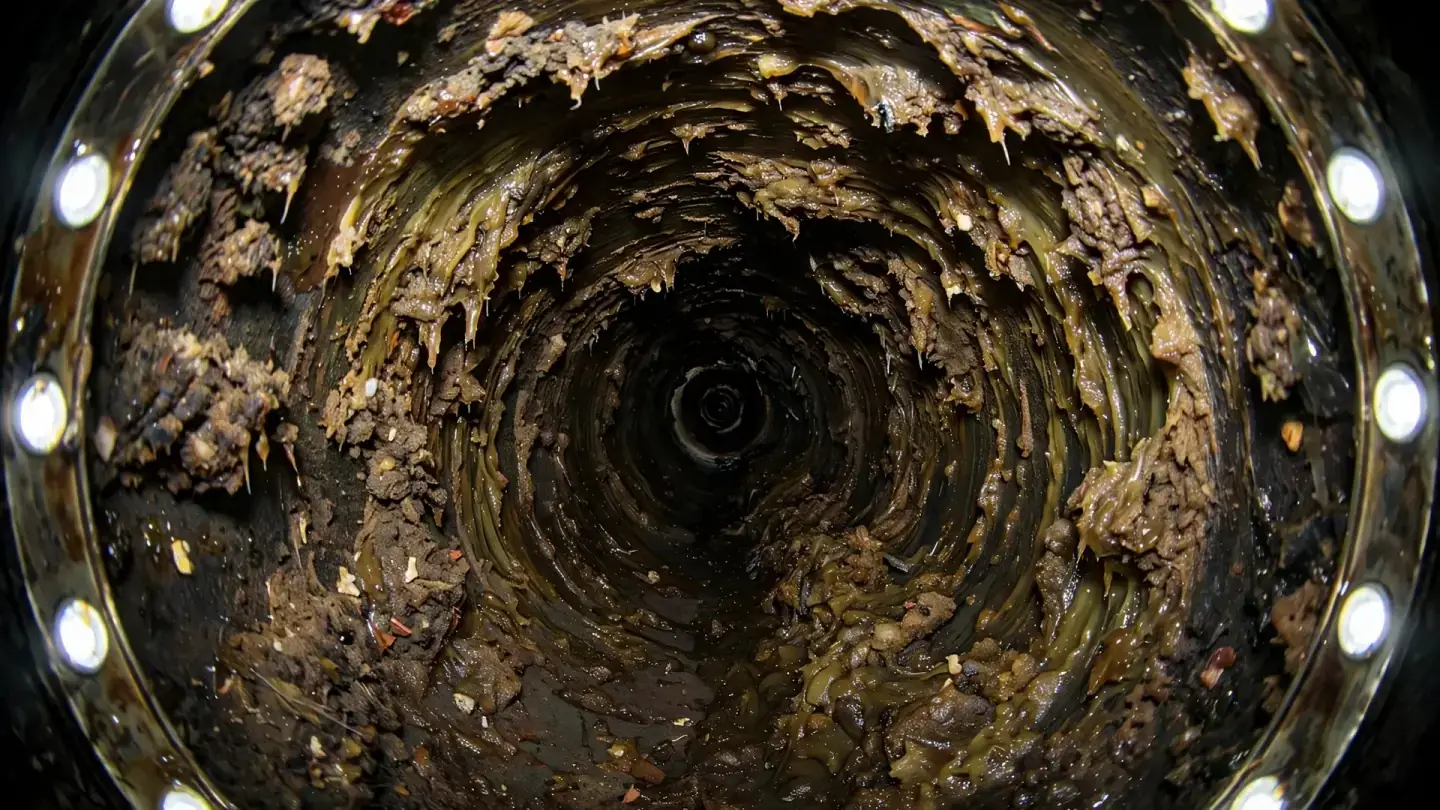
Smooth pipe still collects fat; busy family kitchens fill lines over years.
Read moreWipes in toilets and laterals
Wipes don't break down and snag at fittings and the lateral.
Read moreUpstairs bathrooms over living space
Two-storey layouts put bathroom drains above ceilings, raising the stakes of any overflow.
Read moreSags and construction debris
Settled trenches under slabs or yards, or debris left during construction, cause recurring clogs.
Read more
Do plastic drains in Orangecrest homes still clog?
Plastic drain pipe is smooth inside, resists corrosion and is joined with solvent-welded fittings that roots struggle to enter. That's a real advantage over clay and cast iron. It doesn't make the drains immune. Grease sets on plastic exactly as it does on iron, especially in a cool section of pipe under the slab. Hair and soap scum build in bathroom lines. Wipes snag at every fitting.
Riverside's hard water still matters, too. With average hardness around 12 grains per gallon [3], mineral film forms on plastic pipe and gives grease something to cling to. In Orangecrest kitchens, a line that has served a busy household for twenty years can be surprisingly narrow, even though the pipe itself is in perfect condition.
The upside is that cleaning works well. Jetting a plastic kitchen line removes grease and scale back to the original bore without the concerns that come with fragile old pipe.
Why do bathrooms in two-storey Orangecrest homes back up?
Many Orangecrest homes put bedrooms and bathrooms upstairs, above the kitchen, family room or garage. Bathroom drains run down through walls to the slab, and vents rise to the roof. That arrangement is efficient, but it means an upstairs overflow reaches the ceiling below quickly, and a slow upstairs shower can quietly leak around its drain body into the floor structure.
Upstairs fixtures are also the furthest from the main cleanout. If an upstairs tub or shower drains slowly while downstairs fixtures are fine, the issue is usually local to that bathroom's branch or trap. If upstairs and downstairs fixtures are both slow, the problem is further down, in the building drain under the slab or in the lateral.
A two-storey planned-community home
Settlement, trenches and construction leftovers
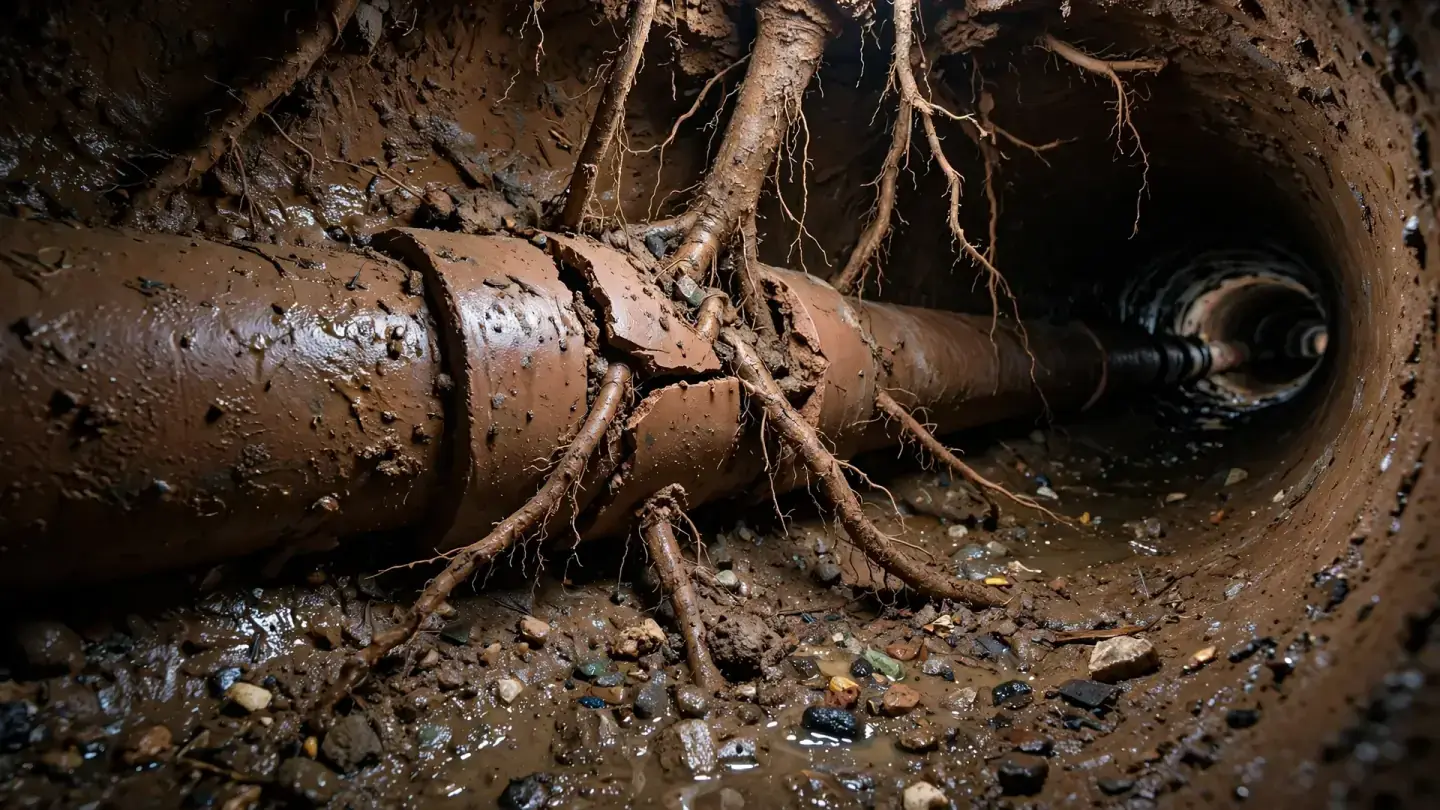
Every slab house has drain lines laid in trenches before the concrete was poured [2]. If the backfill in those trenches wasn't compacted well, it can settle over the years, allowing a section of pipe to sag. The same is true of the lateral trench in the front yard. A sag holds water and solids and shows up as a drain that clogs in the same place repeatedly, often months apart.
Construction debris is another newer-house issue. Stray grout, drywall mud, construction adhesive or a piece of pipe offcut can end up inside a drain during building or a later remodel. These problems often surface early in a house's life but can lurk for years. A camera inspection identifies both sags and debris, and a locator shows where they sit.
Homeowner associations and landscaping
Many Orangecrest tracts have associations with rules about exterior work, landscaping and common areas. Drain cleaning inside a home doesn't usually involve the association. Excavating a front yard to repair a lateral, or working in a common landscaped area, may need association approval in addition to any city permits. Check your association's rules before scheduling major work.
Front-yard landscaping is often planted over the lateral's route. Trees in newer neighbourhoods are younger and their roots less extensive than in older districts, and plastic laterals resist intrusion, but roots can still enter at cleanouts, damaged sections or poorly sealed connections as the trees mature.
Permits and boundaries
Orangecrest permits, HOAs and lateral ownership
- Orangecrest owners care for their own lateral and cleanout as far as the lot line [4].
- Past a lot-line cleanout, the City of Riverside is responsible for the run to the main [5].
- Lateral repairs and excavation usually need permits; HOA approval may also be needed for exterior work.
- Common-area drains in associations are generally the association's to maintain.
- Verify any contractor's licence with the Contractors State License Board [6].
- Orangecrest is in the south of the city near neighbouring jurisdictions, including Moreno Valley to the east; confirm your parcel is within Riverside before relying on city rules.
Planning a drain visit in Orangecrest
Newer houses usually have accessible cleanouts: often a two-way cleanout near the front of the house and sometimes interior cleanouts in the garage or under sinks. Find yours before the visit if you can. In gated tracts, arrange gate access. Park vehicles away from the cleanout area so equipment can reach it.
If the problem is upstairs, mention which bathroom and whether there's a ceiling below it. If a washer is upstairs, as in some newer layouts, tell the contractor; an upstairs laundry drain that overflows is a particular risk to the rooms below.
Garages, kitchens and the main cleanout
In most Orangecrest tract homes, the kitchen sits at the back or centre of the ground floor, and its branch runs under the slab to join the building drain before it leaves the house toward the street. The main cleanout is usually outside near the front or side wall, sometimes paired with a second cleanout in the garage. Knowing both locations makes a main-line visit faster and avoids the need to pull a toilet for access.
Garages in these homes often hold the water heater, a laundry sink or a water softener, and the softener's regeneration discharge typically drains to a nearby standpipe or floor drain. A softener that discharges into a restricted line can cause unexpected overflows during its cycle, usually at night. If water appears in the garage with no fixture running, check the softener's timing before assuming a drain clog.
What changes as Orangecrest homes age
The oldest Orangecrest houses are now several decades old. Plastic pipe ages slowly, but the things around it change: trees planted at construction are now large, irrigation systems have been modified, driveways and patios have been added over lateral routes, and kitchens and bathrooms have been remodelled. Each change can affect the drains. A front-yard tree that was a sapling when the house was new may now have roots reaching a cleanout or a lateral fitting.
For owners who have been in their homes since they were built, a camera look at the lateral at this stage gives a useful baseline. Problems found early, like a root at a cleanout or a small sag, are far easier to deal with than the same problems after another decade.
Habits that matter most in newer homes
Because the pipe is sound, what goes into it decides how often Orangecrest drains need attention. The biggest gains come from keeping fat out of the kitchen sink, using strainers, keeping wipes and hygiene products out of toilets and cleaning hair from shower strainers. Busy households with children and multiple bathrooms put a lot through their drains, and a little care at each fixture goes a long way.
Water softeners are common in newer Riverside homes. A softener reduces scale on fixtures and in drains, though softened water doesn't remove grease or hair. Whether to add one is a choice for you and a water treatment specialist; the drains will benefit either way from the habits above.
Upstairs laundry rooms
Some newer two-storey plans put the laundry upstairs near the bedrooms. It's convenient, but a washer's discharge is fast and heavy, and if the laundry branch narrows with lint and scale, the standpipe can overflow onto an upstairs floor. Most upstairs laundries should have a drain pan beneath the washer; check that it exists and that its drain isn't blocked.
If an upstairs standpipe overflows, stop the washer and soak up the water quickly to protect the ceiling below. A contractor can clear the laundry branch and check whether the standpipe and trap are sized correctly for a modern high-capacity washer.
Parks, schools and community buildings
Orangecrest's master plan mixed homes with schools, parks and shopping, and the community's public buildings and commercial centres have their own drains maintained by their owners. If a sewer problem seems to involve a park, school or street rather than your house, it's a matter for the relevant owner or the city, not for your lateral. Knowing where your property line is, and whether there is a city-side cleanout, helps sort that out quickly.
Selling or refinancing a newer home
Buyers of newer homes sometimes skip a sewer inspection on the assumption that recent construction means sound pipe. Usually that's true, but a short camera run of the lateral and main can rule out sags, construction debris or root entry at a cleanout before they become the new owner's surprise. For sellers, a clean recording is a simple way to answer questions about the drains during negotiations.
Next to Orangecrest, Canyon Crest and La Sierra show how older housing changes the picture; the Riverside coverage page has every area. Orangecrest homeowners most often book kitchen sink line cleaning or toilet clog clearing, and the gurgling drains guide helps sort a vent issue from a clog.
FAQ
Orangecrest drain questions
Do newer Orangecrest homes still get drain clogs?
Newer Orangecrest homes do get drain clogs, even though their plastic pipe is younger than the city's older housing. Grease, wipes, hair and food waste cause most blockages, and two-storey layouts send several bathrooms into one line. Development in Orangecrest began in 1984, so many homes are now old enough for habits to show up in the drains.
Why does the same drain in my Orangecrest house clog every few months?
A drain that clogs every few months in an Orangecrest house usually has one fixed cause at one spot. Common culprits are a sag where trench soil settled under the slab, a bad fitting or grease building on the same stretch. Snaking pokes a hole through it without fixing the cause. A camera run finds the spot and shows whether jetting or repair is needed.
Do I need HOA permission to have my Orangecrest drains cleaned?
Ordinary drain cleaning inside your Orangecrest home rarely needs HOA permission. Work that digs in the yard, affects shared landscaping or touches common areas may need association approval first. Check your HOA rules before any excavation, and tell the contractor about access limits such as gated entries or parking restrictions.
Can tree roots break into the plastic sewer lines in Orangecrest?
Tree roots rarely break into sound plastic sewer lines in Orangecrest, but they can enter at a loose joint or cracked fitting. Irrigated trees planted close to the lateral raise the risk. If a camera shows fine roots at a joint, cutting them and fixing the joint stops repeat growth better than chemical root killers.
Is hydro jetting safe for PVC and ABS drain pipes?
Hydro jetting is generally safe for PVC and ABS drain pipes in good condition when the contractor uses a suitable nozzle and pressure. The risk rises where pipe is cracked, poorly joined or sagging. A camera look first shows the pipe's condition, so jetting is chosen for grease and sludge rather than used blindly.
Why does my upstairs laundry make the downstairs toilet gurgle in Orangecrest?
An upstairs washer can make a downstairs toilet gurgle because the fast discharge pushes air through a shared drain that is partly restricted or poorly vented. The air escapes through the nearest trap, which is often the toilet. Lint buildup in the branch is common, and the gurgling should stop once the restriction is cleared.
Should I have the drains checked before selling my Orangecrest home?
A drain check before selling an Orangecrest home can head off surprises during the buyer's inspection. A sewer camera run shows sags, roots at joints or construction debris in the line. If the footage is clean, a copy reassures buyers; if not, you can fix the issue on your own schedule rather than mid-escrow.
Sources and citations
- [1]City of Riverside: At Home in Riverside, Orangecrest
- [2]Fine Homebuilding: Plumbing under a concrete floor
- [3]Riverside Public Utilities: 2025 Water Quality Report (hardness)
- [4]City of Riverside Wastewater Division: Home sewer line maintenance brochure
- [5]City of Riverside Public Works: Private sewer lateral policy
- [6]Contractors State License Board: check a license