Key facts: Hydro Jetting
- A jetting nozzle's rear-facing jets pull the hose forward and scour the full pipe circumference.
- Riverside water hardness averages about 197 mg/L, or roughly 12 grains per gallon, so scale and grease form a hard crust in drains [1].
- A jetter needs a drain path, so fully stopped lines are usually opened with a cable first.
- Riverside food businesses fall under grease rules in Municipal Code Chapter 14.12, enforced by Environmental Compliance [2].
How a jetter cleans a pipe
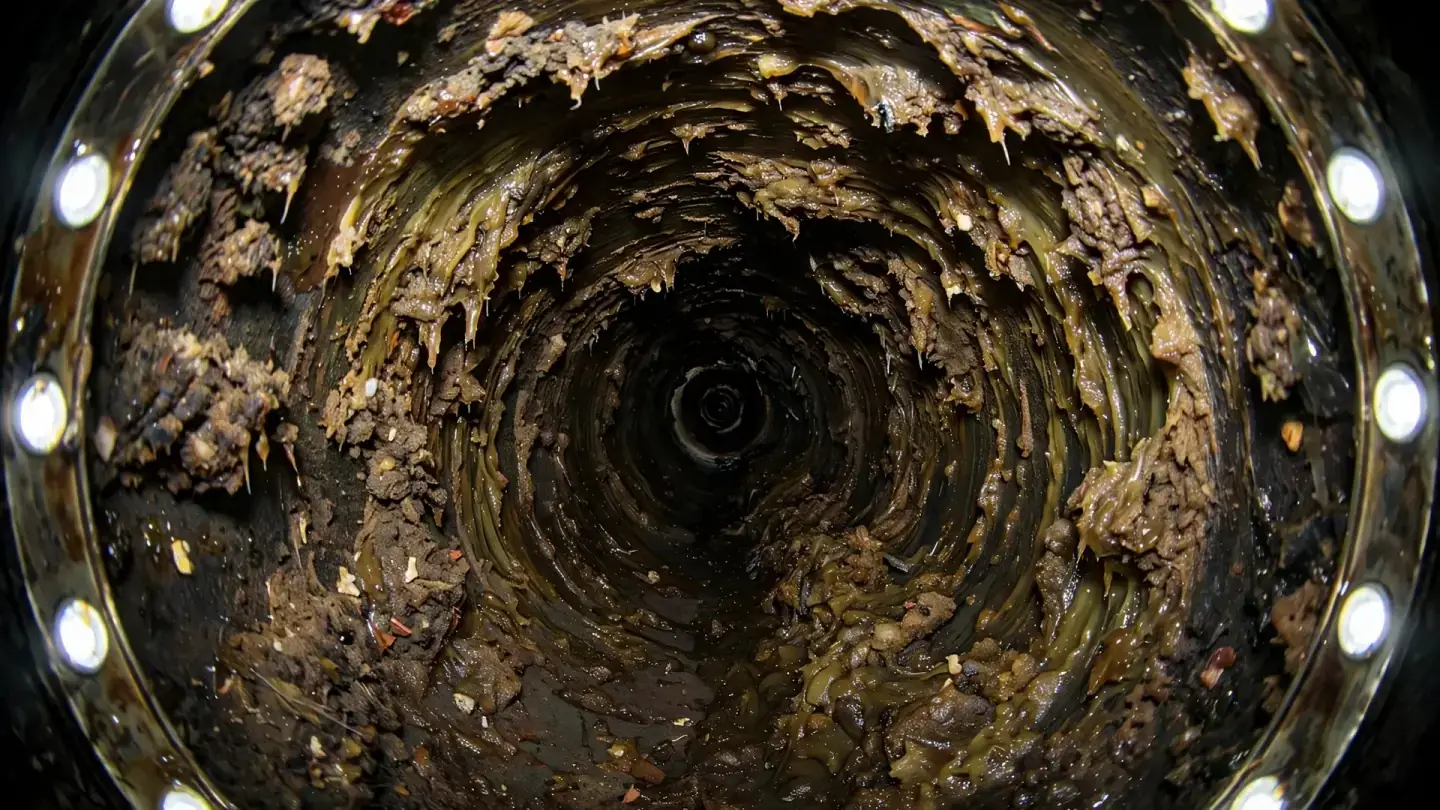
A jetter is a pump that pushes water through a flexible hose at high pressure. On the end of the hose sits a nozzle with small orifices. Most of them point backwards at an angle, and the reaction to those rear jets pulls the hose forward into the pipe. As it travels, the jets strike the pipe wall all the way around, peeling off grease, soap, mineral film and sludge, and the flow of water carries the loosened material downstream toward the sewer.
That is the key difference from a cable machine. A cutter on a cable cleans where it touches, and on a four-inch line a three-inch head leaves an untouched band of buildup around the edges. A jet nozzle reaches the full circumference. When the job is to restore the pipe's original bore rather than open a channel, jetting is the more complete tool.
It is not a universal answer. A jetter needs a drain path for its water; it is not the right first tool for a line that is fully stopped and holding sewage. It also needs a pipe that can handle the pressure. A careful contractor treats jetting as one part of a plan that may start with a cable and end with a camera. Jetting is one option on the full Riverside service list.
Good uses
When is hydro jetting the right choice?
Kitchen lines coated in grease
Fat lines the whole pipe; jetting removes it instead of boring through it.
Read moreRestaurant and commercial drains
High grease loads and long runs suit jetting, often on a schedule.
Read moreMineral scale in older pipe
Specialised nozzles abrade hard-water deposits that cable heads skate over.
Read moreFine roots after cutting
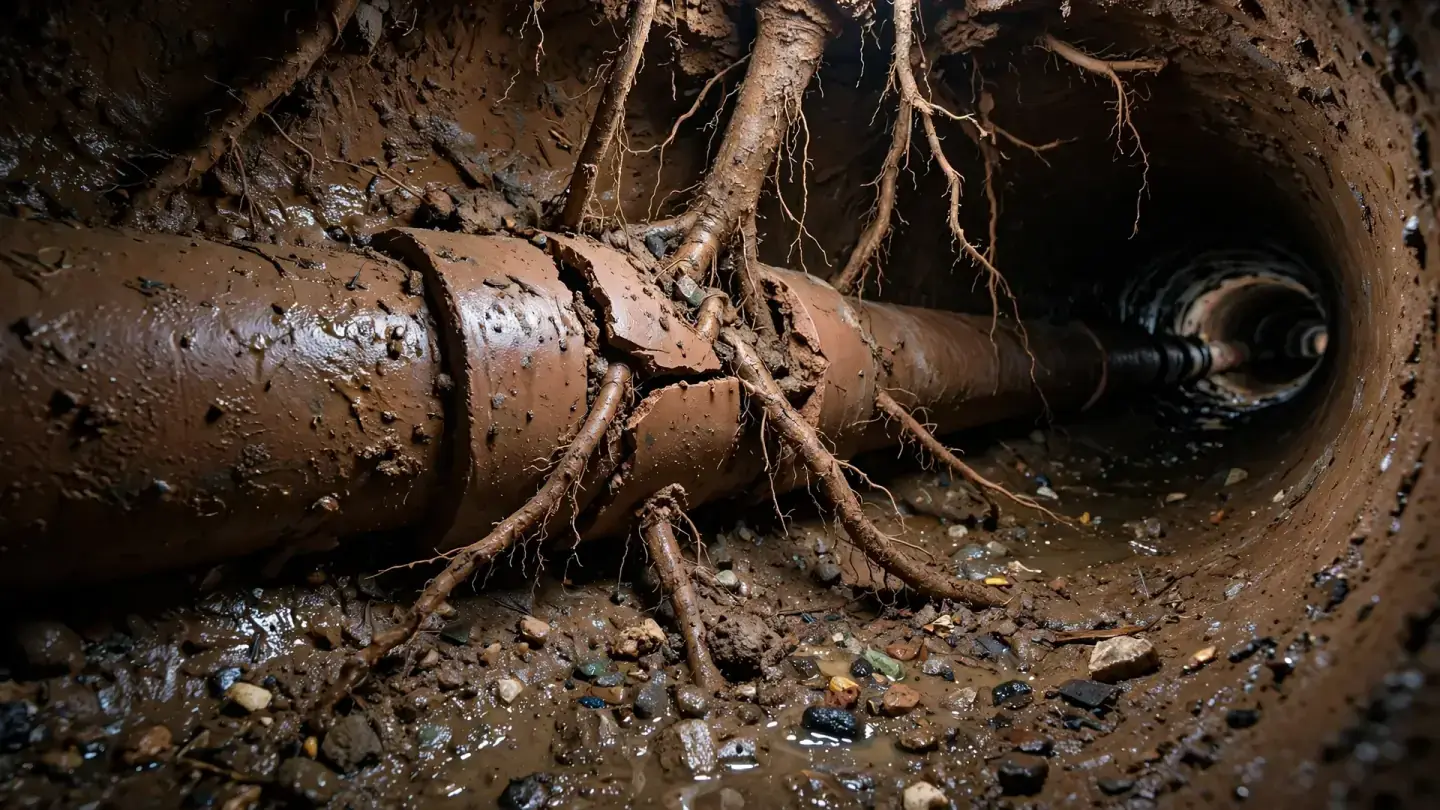
Once a saw has removed the main root mass, jetting flushes out the fine fibres left at the joint.
Read moreBefore a camera inspection
A jetted line shows its true condition on camera, without a film of sludge hiding cracks.
Read more
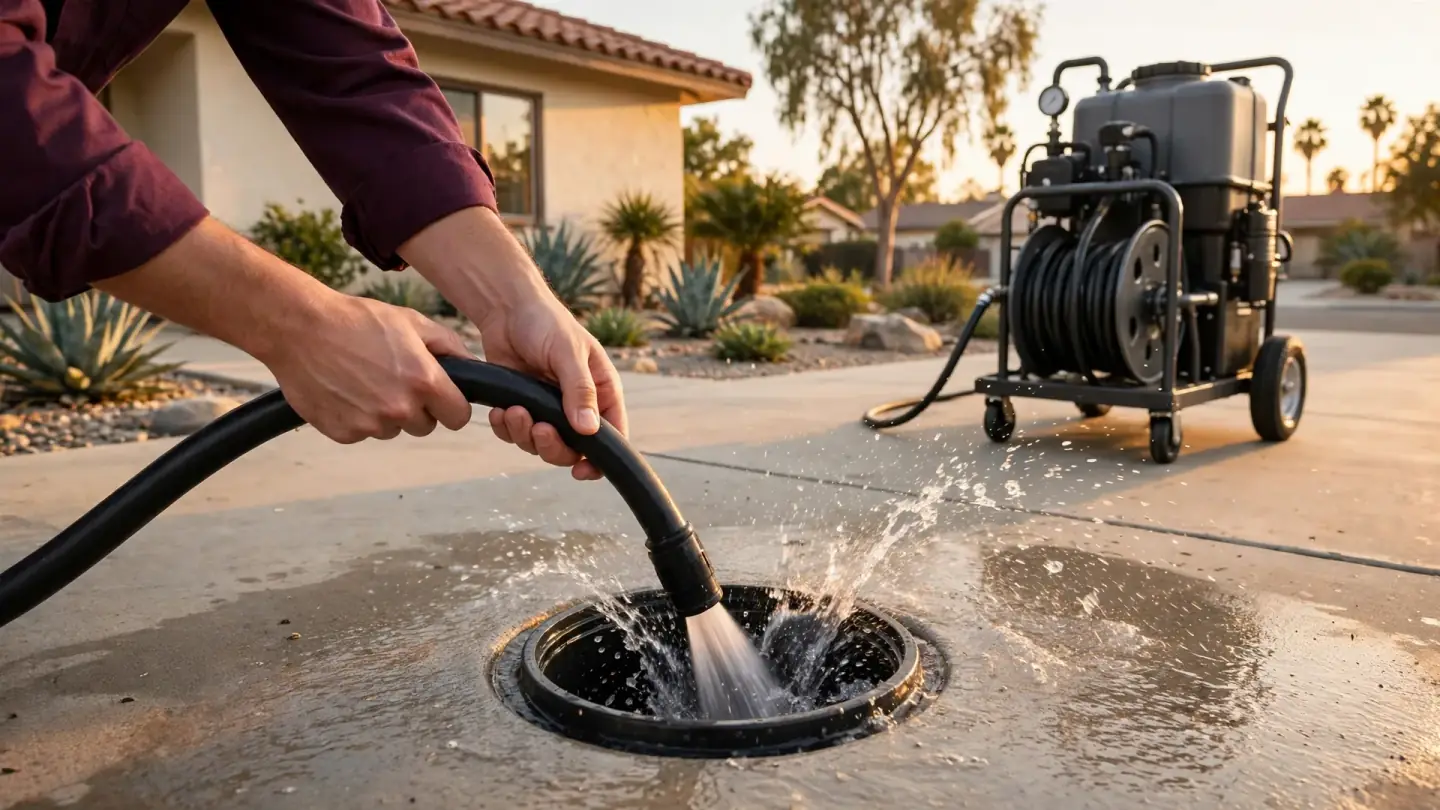
A jetter set up at the cleanout
Process
A typical jetting job
- 1
Confirm a drain path
If the line is fully stopped, a cable machine opens it first so jetting water has somewhere to go.
- 2
Check the pipe
For older, fragile or unknown lines the contractor may run a camera first to look for cracks, offsets or thin walls.
- 3
Choose the nozzle
A penetrating nozzle for packed debris, a spreading nozzle for grease, a rotating nozzle for scale, a root nozzle for fines.
- 4
Set pressure and flow
Pressure and flow are matched to the pipe size and material. Small interior lines get less than a four-inch lateral.
- 5
Jet upstream from the access
The hose is fed in and pulled back in passes, so loosened debris is flushed toward the sewer rather than pushed into fixtures.
- 6
Verify
A camera pass or a high-volume flow test shows the bore is clean.
Nozzles
Nozzles and what they're for
| Nozzle | Jet pattern | Best on |
|---|---|---|
| Penetrating (forward jet) | One forward jet plus rear jets | Packed debris, opening partial blockages |
| Flushing / spreader | Rear jets only, wide angle | Grease and sludge on long runs |
| Rotating | Spinning jets | Scale and baked-on grease |
| Root cutting | Spinning blades or jets | Fine roots after a saw pass |
| Small-line nozzle | Low-flow orifices | Interior branch lines and sinks |
Preparation
What to do before a jetting visit
- Clear a path to the cleanout and keep vehicles away from it.
- Tell the contractor about any fixture that has overflowed, so it can be watched while jetting runs.
- Close toilet lids and cover floor drains near the work if asked; pressurised air can push a little water out of traps.
- Mention the house's age and any known repairs to the line.
- Know where your outdoor hose bib is; some jetters draw from it.
- Keep children and pets back from the work area while the hose is under pressure.
Riverside lines and jetting
Hard water makes jetting more relevant in Riverside than in soft-water cities. Riverside Public Utilities reports hardness around 197 milligrams per litre, or roughly 12 grains per gallon [1]. The scale that builds in kitchen and laundry lines bonds with grease into a crust, and only abrasion or a rotating jet removes it completely.
Commercial kitchens are the other big use. The City of Riverside's Environmental Compliance Section enforces grease rules for food businesses under Municipal Code Chapter 14.12 [2], and its restaurant guidance stresses keeping grease out of the sewer [3]. Jetting the line between the kitchen and the interceptor is common maintenance for a busy restaurant.
Pipe age is the counterweight. Clay laterals from the pre-war era in districts like the Wood Streets [4] and early Arlington can have cracked bells and loose joints. Jetting can be done safely on many of them, but a camera check first is the responsible way to find out.
Is jetting safe for my pipe?
For sound pipe of any common material, yes, when pressure, flow and nozzle are matched to the line. Plastic, cast iron in fair condition and intact clay all tolerate properly set jetting. The risks are with pipe that is already failing: a collapsed section, a large crack or a badly corroded cast iron wall can be made worse.
This is why a contractor might suggest a camera look before jetting an unknown line, and why they shouldn't simply crank the pressure up when a blockage resists. If a nozzle won't pass a point, that point needs to be seen, not blasted. You can ask the contractor what pressure they plan to use and why.
Is hydro jetting better than snaking a drain?
Cable machines are quicker to set up, cut roots more aggressively and work on a fully stopped line. Jetting cleans more thoroughly, removes grease and scale better and leaves the pipe ready for a clear camera image. Neither is better in every case. Many of the best results come from cabling first to open the line and jetting second to clean it.
If a contractor proposes only jetting on a fully blocked line, ask how the water will drain. If they propose only cabling on a grease-heavy kitchen line that keeps clogging, ask whether jetting would hold longer. The equipment comparison on the homepage sets out the differences side by side.
What jetting leaves behind
A properly jetted line is clean to the pipe material: plastic looks smooth and pale, cast iron shows its dark wall, clay shows its glazed surface and its joints. That clean bore is useful in two ways. It drains at full capacity, and it gives a camera an honest picture. Hairline cracks and early root growth that were hidden under sludge become visible, which is why the contractor may suggest filming right after jetting.
Jetting doesn't coat or seal the pipe, and it doesn't stop new buildup. Grease, scale and roots begin to return as soon as the line is back in use. How fast depends on the household or business: a restaurant fryer line can need attention within months, while a lightly used guest bath may stay clean for years. The maintenance page covers how to judge that interval.
Jetting in the laundry line
Laundry drains are an overlooked jetting job. A washer discharges a large volume quickly, carrying lint, detergent residue and, in hard-water areas, a fine mineral film. Over years the standpipe and laundry branch develop a fuzzy, felt-like lining that cable heads compress rather than remove. A small-line jetting nozzle strips it out and restores the pipe's full capacity, which stops the familiar overflow at the end of the spin cycle.
Because laundry branches are often two-inch pipe running inside walls or under slabs, the contractor will use a smaller hose and lower settings than on a lateral. The same caution about fragile pipe applies: an old galvanised laundry branch can be thin, and a camera check is sensible if the house is old or the line has been patched.
Water, wastewater and the work area
Jetting uses a meaningful volume of water, and it all goes down the line being cleaned, along with the grease and grit it removes. On a sound line that is exactly where it should go. The contractor will watch the lowest fixtures in the house while jetting, because if a hidden restriction exists downstream, water can rise there before anyone notices. That is one reason to clear a full stoppage with a cable first.
Outdoors, a little spray around the cleanout is normal as the hose enters and leaves. A careful contractor protects nearby walls, windows and anything stored near the access point, and rinses the area when finished. If the cleanout is in a garage or utility room, ask how they'll keep the area dry; a shield over the opening is common practice.
Ask
Questions worth asking before jetting starts
- Is the line open enough for jetting water to drain away?
- Has the pipe been inspected, or is a camera look planned first?
- Which nozzle will be used and why?
- What pressure is planned for this pipe size and material?
- Where will the hose be fed in, and which way will debris be flushed?
- Will the line be filmed or flow-tested afterwards?
FAQ
Hydro jetting questions
Can hydro jetting damage older cast iron or clay pipes?
Hydro jetting can damage pipe that is already cracked, badly corroded or separated, which is why a camera check first is sensible on older lines. Sound cast iron and clay usually handle jetting well when pressure and nozzle suit the pipe. Ask how the contractor sets pressure for your line before jetting starts.
Does hydro jetting get rid of tree roots in a sewer line?
Hydro jetting removes fine roots and root hair well, especially after a cutting head has opened heavy root masses. Jetting does not seal the cracks or joints roots enter through, so roots will return over time. A camera inspection after jetting shows where the entry points are.
Should I choose hydro jetting or snaking for my drain?
Snaking, or cabling, punches through and breaks up a blockage, while hydro jetting scours the pipe walls clean. For a simple hair or paper clog, a cable is usually enough. For grease, scale or recurring blockages, jetting often lasts longer. The contractor can explain which suits your line.
Will hydro jetting flood my house with water?
Hydro jetting should not flood the house when it is done from a suitable cleanout and the downstream line is open enough to carry the water away. Contractors usually establish flow first. If the line is completely blocked, they may cable it before jetting to give the water somewhere to go.
How often should a drain or sewer line be hydro jetted?
Jetting frequency depends on what builds up and how fast. A busy restaurant kitchen line may need regular scheduled jetting, while a home may need it only after a problem. A camera check after cleaning helps set a sensible interval based on what returns, rather than a fixed calendar.
Is hydro jetting safe for PVC and ABS plastic drain lines?
Hydro jetting is generally safe for sound PVC and ABS lines when pressure and nozzle are matched to the pipe size. Plastic pipe is smooth and holds up well. The main concerns are poorly glued joints and damaged sections, which a camera inspection can reveal before jetting.
What does a contractor need to set up for hydro jetting?
A contractor needs access to a cleanout or suitable opening, a water supply and room to run the hose and position the jetter. Clear a path to the cleanout and move vehicles from the driveway if needed. Tell the contractor on the call where the cleanout is and how to reach it.
Sources and citations
- [1]Riverside Public Utilities: 2025 Water Quality Report (hardness)
- [2]City of Riverside Environmental Compliance Section: Restaurant wastewater discharge survey and grease interceptor requirements
- [3]City of Riverside Public Works: Best management practices for restaurants and food service
- [4]City of Riverside Housing and Human Services: Wood Streets neighborhood