Key facts: Kitchen Drain Cleaning
- Cooking fat sets on the cooler pipe wall a few feet past the sink, narrowing the kitchen line layer by layer.
- Riverside's tap water averages about 12 grains per gallon of hardness, and its scale helps kitchen grease bond to pipe [1].
- Slab-built homes have kitchen lines buried under the floor, so cleaning is done from fixtures and cleanouts [2].
- Riverside restaurants follow separate grease interceptor rules under Municipal Code Chapter 14.12 [3].
How grease turns into a blockage
Cooking fat leaves the pan as a liquid, but a kitchen branch line is cool. A few feet downstream the fat congeals on the pipe wall, starting on the top and sides where it floats. Each wash adds a thin layer. Over months the layers trap food particles and coffee grounds and the opening narrows from a full two-inch circle to a slot. The sink still drains, just slower, until a holiday meal or a big batch of dishes sends more than the slot can carry.
Riverside water adds a mineral component. With average hardness around 12 grains per gallon [1], calcium carbonate collects on the pipe surface and mixes with soap residue into a hard grey film. That film is a far better anchor for grease than smooth pipe. When a contractor pulls a cutter back out of a Riverside kitchen line, the debris is often a layered crust rather than soft sludge.
This is why kitchen drain cleaning has to treat the whole bore of the pipe. A thin cable pushed through restores flow by opening a channel in the middle; it leaves the walls coated, and the same channel closes again. The goal is to scour the circumference. Other fixtures are covered on the services hub for Riverside drains.
Signs
How do I know my kitchen drain line is clogging?
Double sink filling on one side
Water rising in the second bowl when the first drains means the shared tailpiece or the line just past the trap is restricted.
Dishwasher leaving water behind
Dishwashers pump into the sink drain or disposal. A partial clog downstream shows up as standing water in the dishwasher tub.
Disposal humming but sink still full
A working disposal grinds waste fine, but it can't push it through a line that is already narrowed by grease.
Sour smell from the sink
Rotting food and fat held in the line releases odour every time hot water disturbs it.
Read moreGurgling after the dishwasher drains
Air dragged through the trap signals a restriction or a venting problem on the kitchen branch.
Read more
Where the kitchen line begins
The process
Cleaning a kitchen line properly
- 1
Clear the fixture side
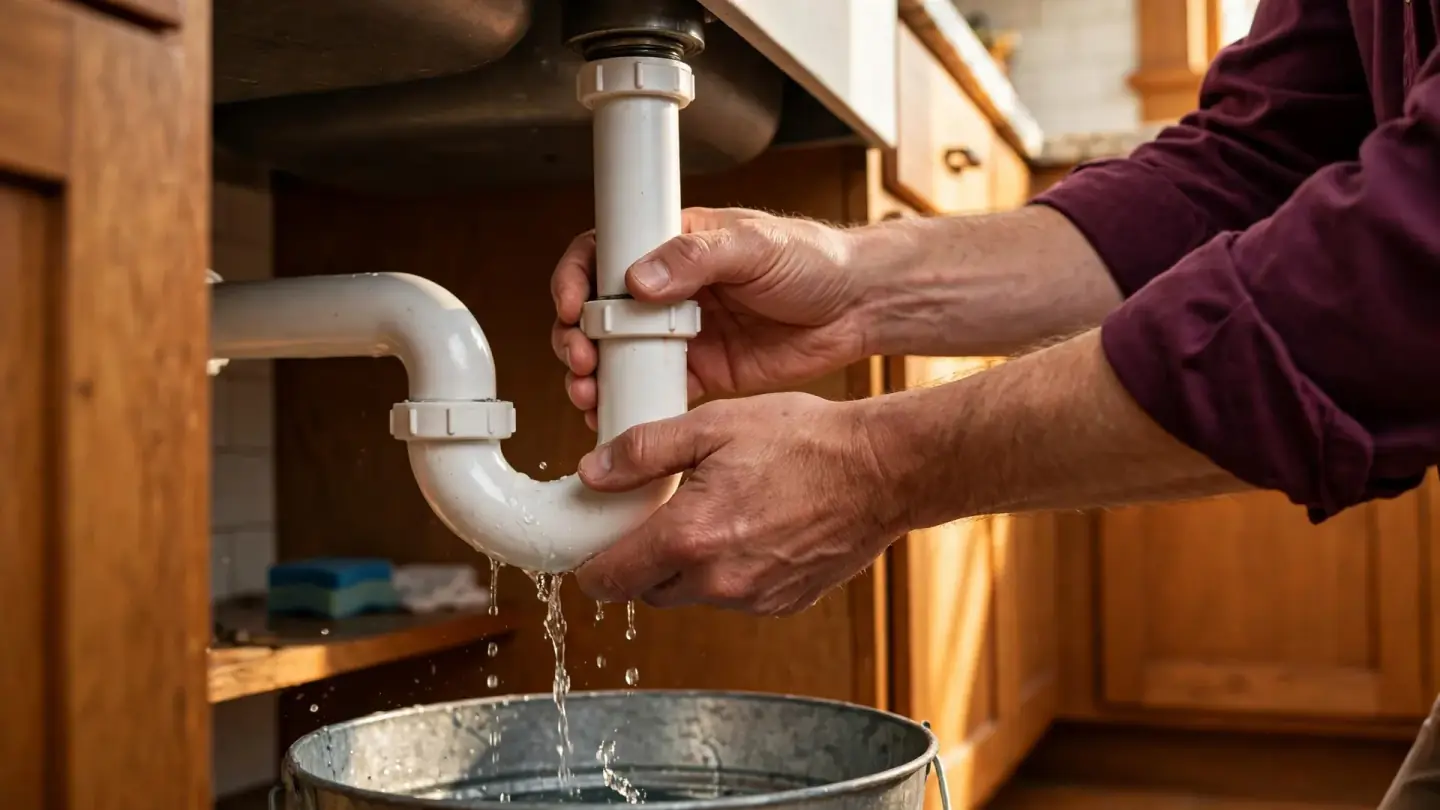
The trap is removed and checked. On a sink with a disposal, the disposal outlet and the dishwasher connection are inspected for packed food.
- 2
Find the run
The contractor estimates where the kitchen branch travels: through a wall to a stack, or under the slab toward the building drain. That determines how far the equipment must go.
- 3
Open the line
A drum machine with a cutting head opens a channel. If the debris coming back is soft grease, the contractor will usually recommend jetting to finish the job.
- 4
Scour the walls
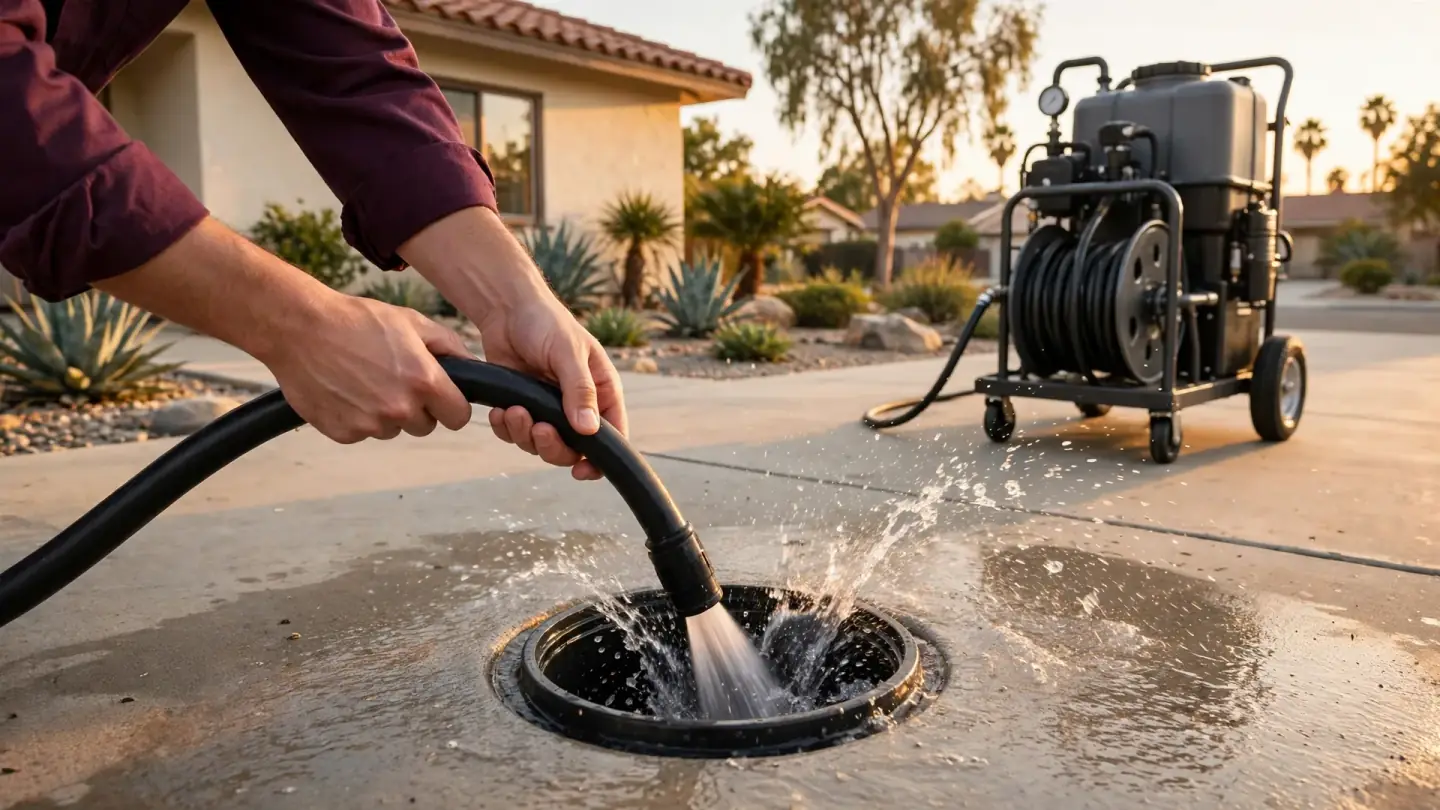
Water jetting with a nozzle that throws rear-facing jets scrubs the full circumference, carrying grease and scale downstream to the larger building drain.
- 5
Flush and test
Hot water is run at volume, the dishwasher is cycled if possible, and both bowls are filled and released together to load the line.
- 6
Advise on habits
You get practical advice on scraping, strainers and disposal use, because the clean pipe will start collecting fat again with the next wash.
Parts guide
Kitchen drain components and what goes wrong
| Component | Typical fault | Who handles it |
|---|---|---|
| Sink strainer basket | Missing or worn, letting food through | Homeowner can replace |
| Disposal | Jammed impeller or packed outlet | Homeowner can reset; contractor clears outlet |
| Dishwasher drain hose | Kinked or clogged with food | Contractor or appliance technician |
| P-trap and tailpiece | Grease and food packed in the bend | Homeowner or contractor |
| Kitchen branch line | Grease and scale narrowing the bore | Contractor with machine or jetter |
| Vent for the kitchen fixture | Restricted, causing gurgling and slow flow | Contractor |
Prevention
Kitchen habits that keep the line clear
- Let pan fat cool and wipe it into the trash instead of rinsing it down. Liquid oil still sets further down the pipe.
- Use a strainer basket on every bowl and empty it into the bin, not the disposal.
- Run the disposal with a strong stream of cold water and keep it running a few seconds after the grinding stops so the waste clears the trap.
- Keep coffee grounds, eggshells, rice and pasta out of the disposal. They form a dense paste with grease.
- Avoid pouring boiling water into PVC kitchen drains repeatedly; it doesn't dissolve set grease and can stress plastic joints.
- If one bowl is already slow, stop using the dishwasher until the line is cleared so its pump doesn't add more water to a restricted pipe.
What makes Riverside kitchens different
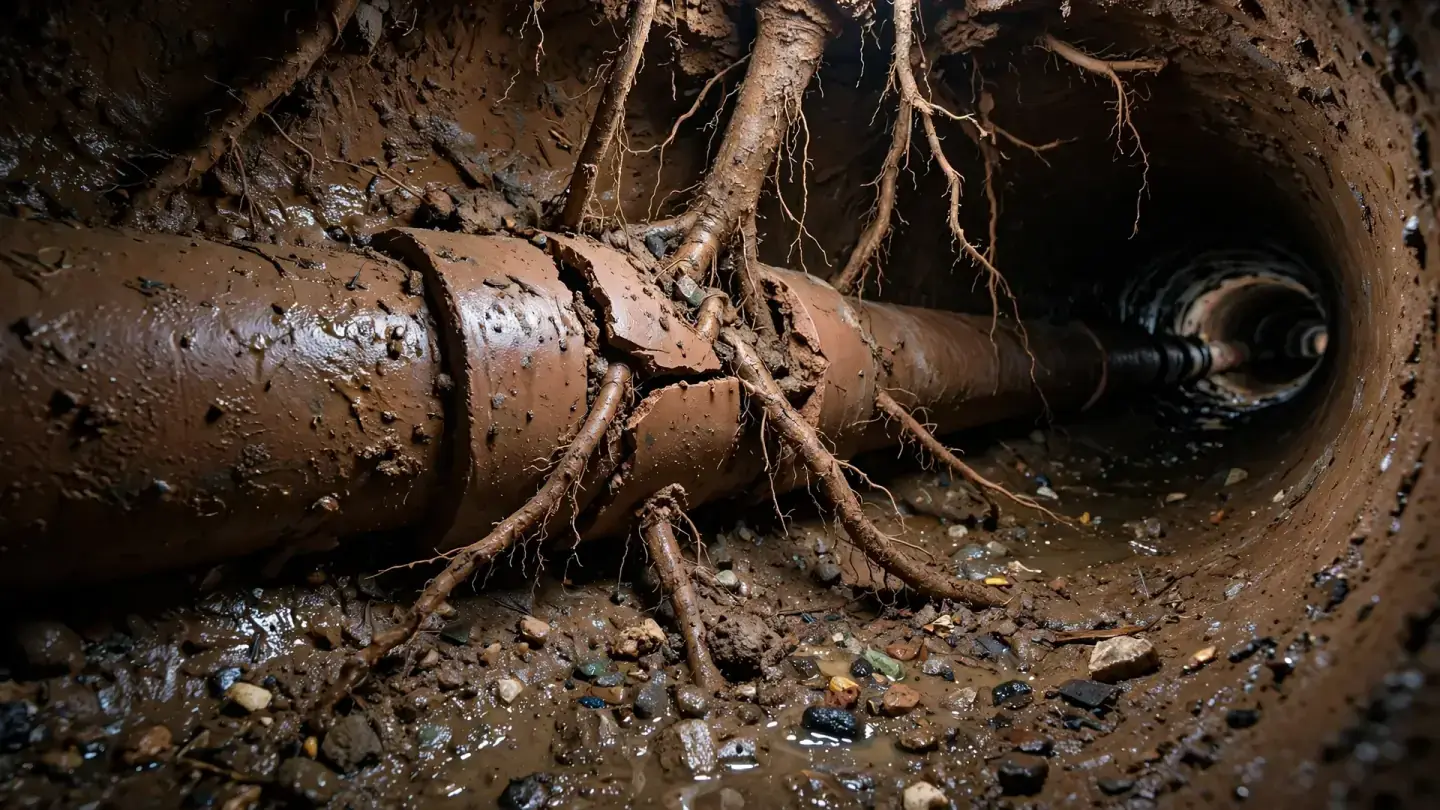
Kitchen lines in older Riverside houses were often installed in galvanised steel or cast iron. Both roughen inside over decades, and hard water accelerates the mineral layer. In neighbourhoods built before the war, such as the Wood Streets [4], it is common for the kitchen branch to have been partly replaced with plastic during remodels, which creates transitions where debris can catch.
In slab-built tracts, the kitchen line usually drops through the floor and runs under concrete to join the building drain [2]. A grease blockage there can't be reached from below. Cleaning is done from the sink, from a wall cleanout if one exists, or from the main cleanout working back upstream. A contractor may also recommend a camera inspection if a slab line keeps blocking, to rule out a sag that holds grease.
Restaurants are a separate case. Riverside's Environmental Compliance Section regulates commercial grease interceptors under Municipal Code Chapter 14.12 [3], and food businesses have obligations that households don't. That side of the work is covered on the commercial drain cleaning page.
Should a kitchen line be cabled or jetted?
Both methods have a place, and a careful contractor explains which one they're using and why. A drum machine spins a steel cable with a cutting or scraping head on the end. It is fast to set up, works well through a sink trap arm, and is the right first tool when the line is fully stopped and water has nowhere to go. Its limitation is geometry: a head narrower than the pipe can only clean the part of the wall it touches.
A water jetter pushes a hose through the line with a nozzle that fires most of its water backwards. Those rear jets pull the hose forward and scrub the pipe as it travels, and the water carries loosened grease downstream. Jetting is the better finishing tool for a kitchen line coated in fat and scale, provided the line has somewhere to drain and the pipe is in sound condition.
In practice many kitchen visits use both: the cable opens a fully stopped line so water can move, then the jetter cleans the walls. If the contractor recommends only one, ask what they expect to find and how they'll confirm the line is clean afterwards. Pulling the head back with a clean, grease-free tip, and a strong flow test with both bowls full, are the signs you're looking for.
Some kitchens add a further question: whether the line ever had a cleanout fitted. Many older houses have none on the kitchen branch, which means cleaning goes through the trap arm and a tight bend in the wall. A contractor may suggest adding an accessible cleanout during any future remodel so the next cleaning is simpler, a point covered in the California Plumbing Code's cleanout access rules [5].
Deciding how often a kitchen line needs attention
A household that cooks at home most days and has a disposal will see grease buildup sooner than one that rarely fries or roasts. If your kitchen line has needed clearing more than once in a year, a scheduled cleaning on a regular interval can be more practical than waiting for the next stoppage. Ask the contractor to show you what came out of the line; it tells both of you how quickly it is building.
If the cleaning reveals sections of pipe that are badly scaled, cracked or sagging, clearing will only ever be a temporary measure. The contractor will explain whether the defect is in the wall, under the slab or in the yard, and what the repair involves. Anything arranged after the call is agreed between you and the contractor.
When the dishwasher, not the drain, is the problem
A dishwasher that leaves water in the tub doesn't always point to a clogged kitchen line. Its own filter, drain pump or check valve can fail on their own. A quick way to tell: if the sink drains normally while the dishwasher holds water, the fault is likely in the appliance or its hose. If the sink is also slow, the shared drain is the likelier culprit and kitchen drain cleaning will fix both.
Where the dishwasher hose connects to the disposal, the knockout plug inside the disposal inlet must be removed on new installations. A disposal fitted without removing it leaves the dishwasher with nowhere to drain. It's a common oversight after a disposal replacement, and a contractor will check it before running a machine down the line.
FAQ
Kitchen drain questions
Does using a garbage disposal cause kitchen drain clogs?
A garbage disposal does not create clogs on its own, but it makes it easy to send starches, fibrous peels and grounds into the line, where they mix with grease. Run plenty of cold water while grinding, and keep fats, rice, pasta and coffee grounds out of the sink to reduce buildup.
Will hot water and dish soap clear grease out of my kitchen pipe?
Hot water and dish soap can move a little fresh grease, but they rarely clear an established kitchen clog. Grease cools and sets again a few metres down the line. A mechanical cleaning removes buildup from the pipe walls. Never pour boiling water into a sink with plastic pipes or standing water.
Why do both sides of my double kitchen sink back up together?
A double sink backing up on both sides means the clog sits past the point where the bowls join. That is usually the trap arm or the branch in the wall. Plunging one side pushes water up the other. Block one drain while plunging, or call to have the branch cabled.
Is jetting safe to use on an older kitchen drain line?
Jetting is often a good choice for kitchen grease, but older galvanized or cast iron kitchen lines should be checked first. Corroded pipe can be thin. The contractor may use a camera to judge the pipe's condition, then set jet pressure and nozzle size to suit.
How can I tell whether my kitchen clog is past the sink trap?
If the trap is clean and the sink still drains slowly, the clog is past the trap in the wall or branch line. Another clue is water backing up in the other bowl or the dishwasher. The contractor will usually remove the trap and run a cable from the trap arm.
Why does my kitchen sink fill up when the dishwasher drains?
A kitchen sink that fills when the dishwasher drains has a restriction downstream of where the dishwasher hose connects. The dishwasher pumps water faster than the narrowed line can take it, so it rises in the sink. Clearing the kitchen branch line usually solves it.
Is it normal for a kitchen drain to smell even when it isn't clogged?
A smell from an unclogged kitchen drain is common and usually comes from food and grease coating the disposal, tailpiece and trap. Cleaning the disposal and flushing with plenty of water often helps. A persistent sewer smell, though, points to a dry trap or vent problem that needs checking.
Sources and citations
- [1]Riverside Public Utilities: 2025 Water Quality Report (hardness)
- [2]Fine Homebuilding: Plumbing under a concrete floor
- [3]City of Riverside Environmental Compliance Section: Restaurant wastewater discharge survey and grease interceptor requirements
- [4]City of Riverside Housing and Human Services: Wood Streets neighborhood
- [5]California Plumbing Code 707.8: cleanout access