Key facts: Emergency Toilet Drain
- Turn the supply valve behind the toilet clockwise to stop an overflow; pressing the tank flapper down also stops the flow.
- Never flush a second time to test a clog; that is how most toilet floods happen.
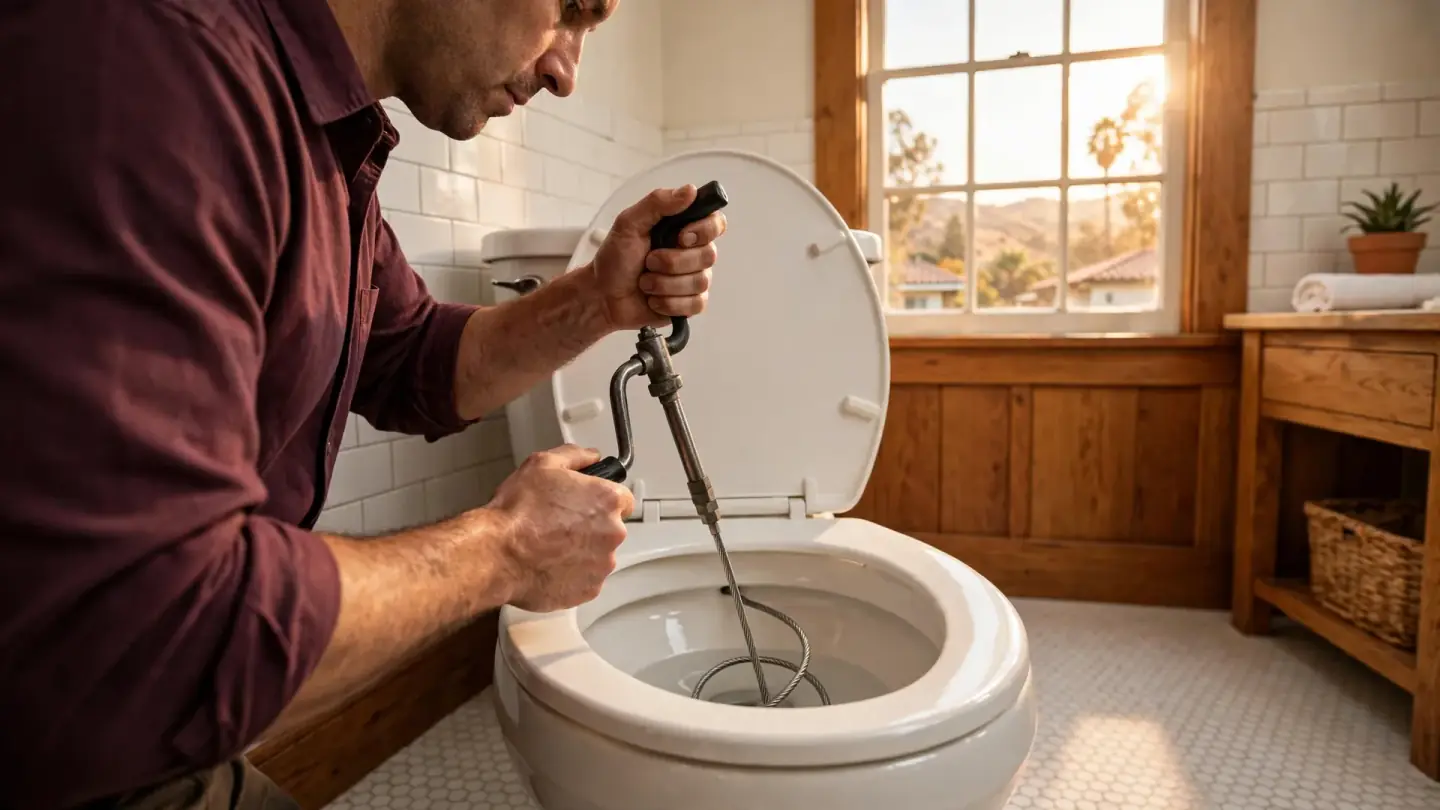
- A closet auger's guard tube protects porcelain while its cable clears the trapway.
- If the toilet is fine but the line past it is blocked, remember that in Riverside the owner, not the city, looks after the lateral up to the property line [1].
Stopping a toilet overflow in seconds
When the bowl is rising after a flush, reach behind the toilet and turn the small oval valve on the supply line clockwise until it stops. That cuts the water refilling the tank. If you can't reach it or it's seized, lift the tank lid and push the flapper at the bottom of the tank down onto its seat; that stops water flowing from the tank into the bowl. Then lift the float or fill-valve arm to stop the tank refilling.
Those steps keep the bowl from spilling further. Do not flush again to 'test' it. A second flush onto an unresolved clog is how most toilet floods happen.
Signs
When does a clogged toilet become an emergency?
Bowl full to the rim after one flush
Trapway or closet bend fully blocked.
Only toilet in the home is out
A household with one toilet needs it working promptly.
Water seeping from the base
The wax seal may be failing or a downstream blockage is forcing water out.
Shower or tub fills when you flush
The blockage is past the bathroom, in a shared line or the main.
Read moreObject flushed
Phones, toys or bottles lodge in the trapway; forcing them deeper makes retrieval harder.
Next steps
After the overflow stops
- 1
Close the supply valve fully
If the valve leaks or won't turn, close the main water valve instead.
- 2
Protect the floor
Towels around the base and in doorways. If the overflow was sewage, treat towels as contaminated.
- 3
Wear gloves
Toilet water carries bacteria. Use waterproof gloves for any cleanup and wash hands thoroughly afterwards.
- 4
Try a flange plunger once
With the bowl half full, a flange plunger seated in the outlet and worked firmly can move a paper clog.
- 5
Stop if anything solid went in
Plunging a solid object pushes it further. Leave it for retrieval.
- 6
Don't use other drains if they gurgle
If tubs or sinks respond when you plunge, the problem is in a shared line.
The valve that stops a toilet overflow
When to call
When an overflowing toilet needs a call now
Call to check emergency availability. An independent local drain contractor speaks with you on the call and asks what happened.
- It's the only toilet in the home.
- A solid object went down.
- Plunging didn't move it, or the bowl refilled to the rim.
- Other drains rise or gurgle when the toilet is used.
- Water is coming from the base or through a ceiling below.
What will the contractor do to clear the toilet?
The contractor starts with a closet auger, a short cable inside a guard tube that protects the porcelain, and works it through the trapway to hook or break up the obstruction. Most paper and wipe clogs clear this way. If the auger won't pass, or there's a known object, the toilet is lifted off the flange so the trapway and the closet bend beneath can be cleared from below, and the toilet is reset on a new seal.
If the toilet clears but the downstream line is slow, the problem is in the branch or main line. Riverside owners maintain the lateral and cleanout between the building and the property boundary [1], and that work is described on the main sewer line cleaning page. Routine toilet issues are covered on the toilet drain clearing page.
Riverside notes on toilet emergencies
Wipes cause many toilet and lateral stoppages because they don't break down like paper. They also travel into the public sewer, which in Riverside carries wastewater from homes and businesses through more than 800 miles of pipe to the Regional Water Quality Control Plant [2]. Keeping wipes in the bin protects both your plumbing and the city's.
Toilets on slab floors connect to closet bends set in the concrete [3], so reaching below the toilet means pulling it. On raised floors in older pre-war homes, a toilet that overflowed may have wet the subfloor around the flange; a contractor resetting it can check whether the flange and floor are still sound.
Cleaning up after a toilet overflow
Water that came from the tank before the flush is fairly clean; water from the bowl is not. Treat any overflow after use as contaminated. Mop hard floors with a disinfectant cleaner, bag towels and wash them on a hot cycle, and keep children and pets out until it's done. Bath mats and rugs soaked with bowl water are usually better discarded.
Check below the bathroom too. On an upper floor, look at the ceiling underneath. On a raised wooden floor, check the subfloor around the toilet base over the next day or two for softness or odour, which can signal that water got under the flooring.
Households with one toilet
Many Riverside homes, especially smaller pre-war bungalows and some postwar houses, have a single bathroom. When its toilet is out of action, the household is too. That is a legitimate reason to treat a clog as urgent even when nothing is overflowing. Tell the contractor on the call that it's the only toilet; it helps them judge how to prioritise.
While you wait, don't be tempted to keep flushing with buckets of water. Pouring water into a blocked bowl simply raises the level and risks a spill. If the bowl has drained down slowly on its own, the clog may be partial, which is useful to mention, but the toilet still needs clearing before regular use.
FAQ
Toilet emergency questions
How do I turn off the water to an overflowing toilet?
Turn off an overflowing toilet at the small oval valve on the wall behind it, turning clockwise until it stops. If the valve is stuck, lift the tank lid and raise the float to stop refilling while you look for the main shutoff. Don't flush again until the bowl level has dropped back down.
How many times should I plunge a toilet before calling for help?
Plunge a toilet with a flange plunger for about ten to fifteen firm strokes, two or three times. If the water still will not drop, stop; more force can push a solid object deeper or crack an old wax seal. Call for help if the bowl stays full or another drain gurgles.
Why is my toilet clogged when nothing unusual was flushed?
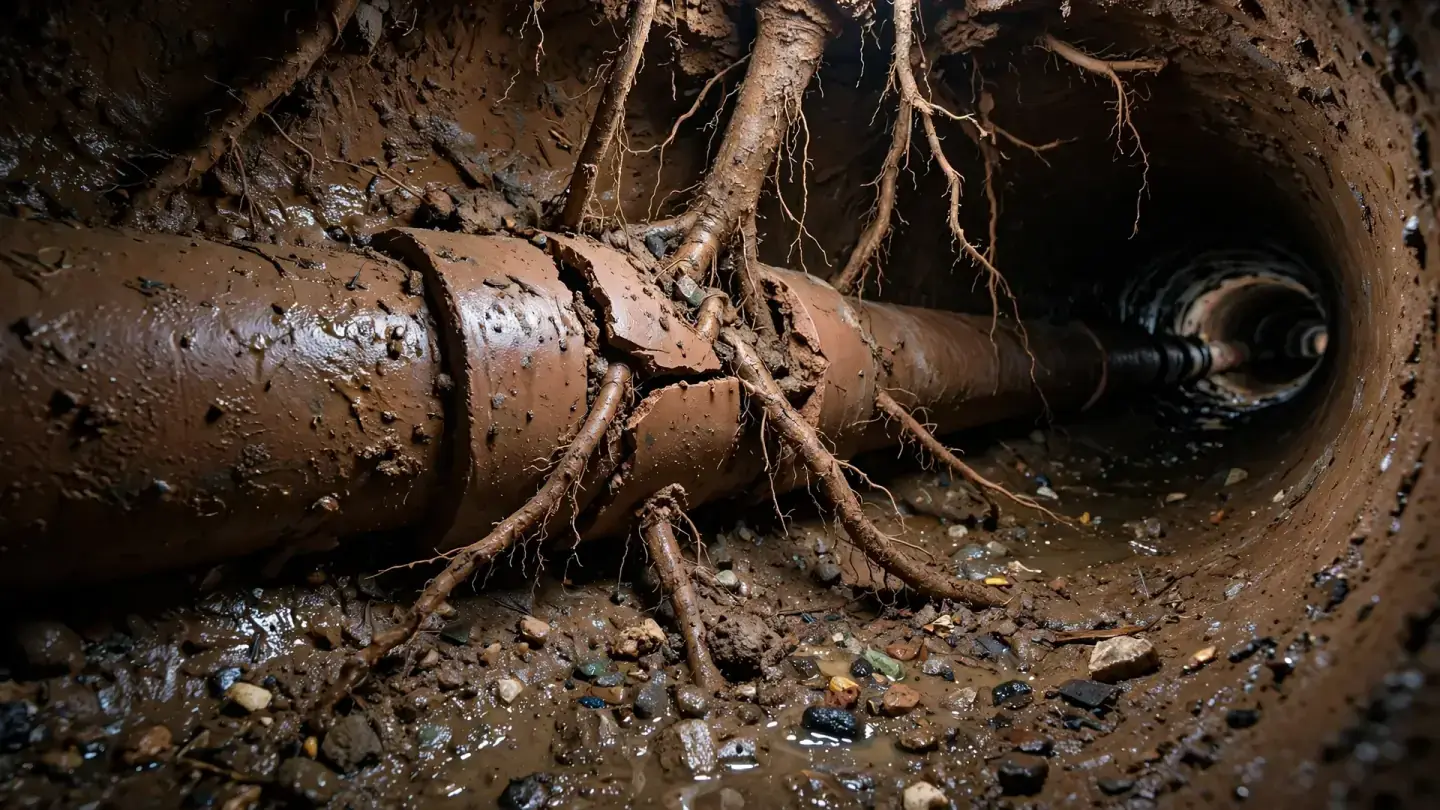
A toilet can clog without anything unusual because the line past it is narrowed by roots, scale or a sag in the pipe. Ordinary paper then catches on that restriction. Riverside's older clay laterals often have root intrusion at the joints. If clogs keep coming back, a camera inspection of the line is worth asking about.
Is it dangerous if toilet water overflows onto the bathroom floor?
Toilet overflow water from a used bowl carries bacteria, so treat it as contaminated. Wear gloves, mop with disinfectant, and wash the mop head separately. Wet carpet or wood near a toilet should be dried quickly; water that seeps under vinyl or past the flange can also stain the ceiling below.
Can I flush a different toilet if one toilet is clogged?
Flushing a different toilet is fine when that toilet is on a separate branch and every other drain is normal. If flushing the second toilet makes the first one rise, or the tub gurgles, both share the blockage. Stop flushing anywhere and call, because the clog is past the individual toilets.
What if my only toilet is clogged and I can't use the bathroom?
When your only toilet is clogged, say so on the call because it changes how urgent the job is. Shut the supply valve and avoid flushing. Use a neighbour's or a nearby public restroom for the short term. Don't pour buckets of water into the bowl to force it, since the overflow will land on the floor.
Do flushable wipes cause toilet emergencies?
Flushable wipes are a common cause of toilet and sewer emergencies because they hold together far longer than toilet paper. Wipes snag on joints and roots and build into a plug. Riverside's sewer guidance asks residents to put wipes in the trash, and the same habit protects your own lateral.