Key facts: Floor Drain Cleaning
- A floor drain that fills with dirty water usually signals a main-line or lateral stoppage, not a floor drain clog.
- Dry floor drain traps let sewer gas into garages and laundry rooms; refilling with water restores the seal.
- The 2025 California Plumbing Code, Title 24 Part 5, took effect on 1 January 2026 [1].
- Riverside requires a minimum 750-gallon grease interceptor for restaurants where Environmental Compliance determines one is needed [2].
Why floor drains are different
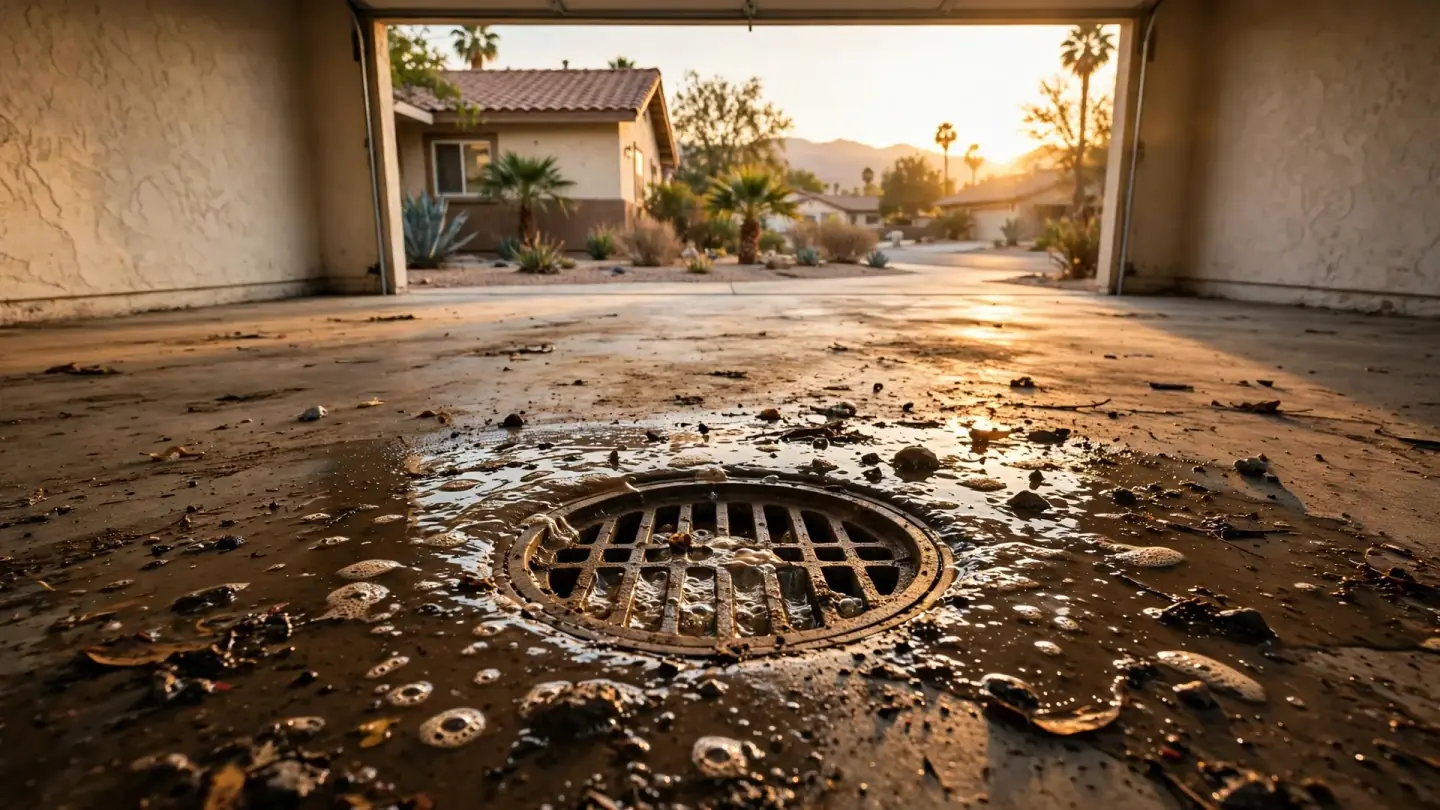
A floor drain is a fixture with no tap. It sits at the low point of a room, usually a laundry, utility area, garage or commercial kitchen, and waits for water: a spill, a water heater relief discharge, a washer overflow or mop water. Because it may go weeks without use, its trap can dry out, and because it collects whatever is on the floor, it fills with sand, lint, hair and grit.
Floor drains also sit at the lowest point of the drainage system. When a building drain or lateral blocks, sewage rises to the lowest open opening, and that is often the floor drain. A floor drain that suddenly fills with dirty water is usually reporting a problem downstream, not a problem in itself.
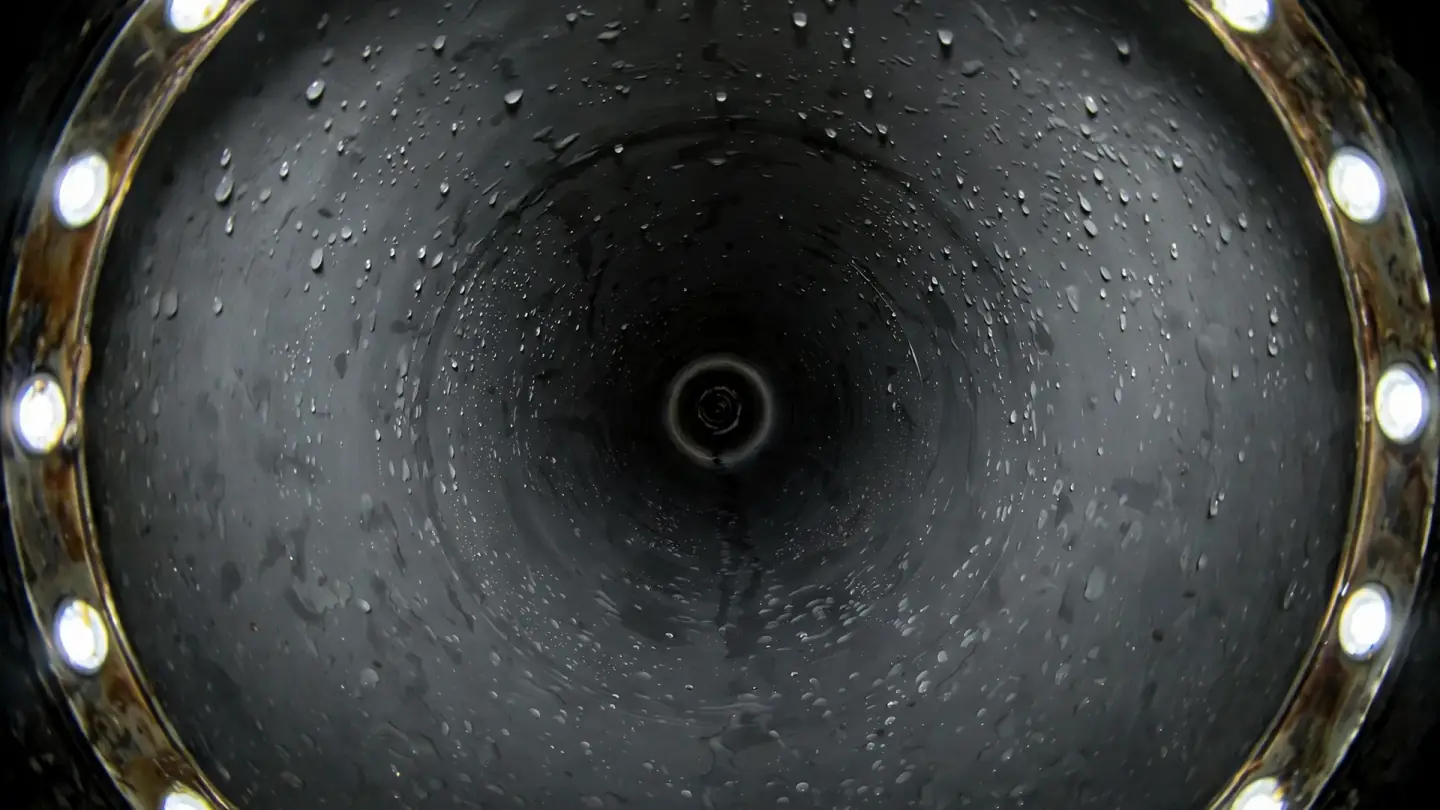
So floor drain cleaning has two forms. One is cleaning the drain's own body, strainer and trap of sediment. The other is recognising when the floor drain is the messenger and the real work belongs on the main line. Garages and laundry rooms are covered with other fixtures in the drain services hub.
Signs
What are the signs a floor drain needs cleaning?
Sewer smell in the garage or laundry
A dry trap lets sewer gas into the room. Refilling it often fixes the smell.
Read moreWater slow to leave the floor
Sediment and lint narrow the strainer and trap.
Dirty water rising from the drain
The main line downstream is blocked; sewage is taking the lowest exit.
Read moreWater appearing when the washer drains
A restricted laundry or building drain is overflowing at the floor.
Gurgling from the floor drain
Air movement through its trap signals pressure changes in a restricted line.
Read more
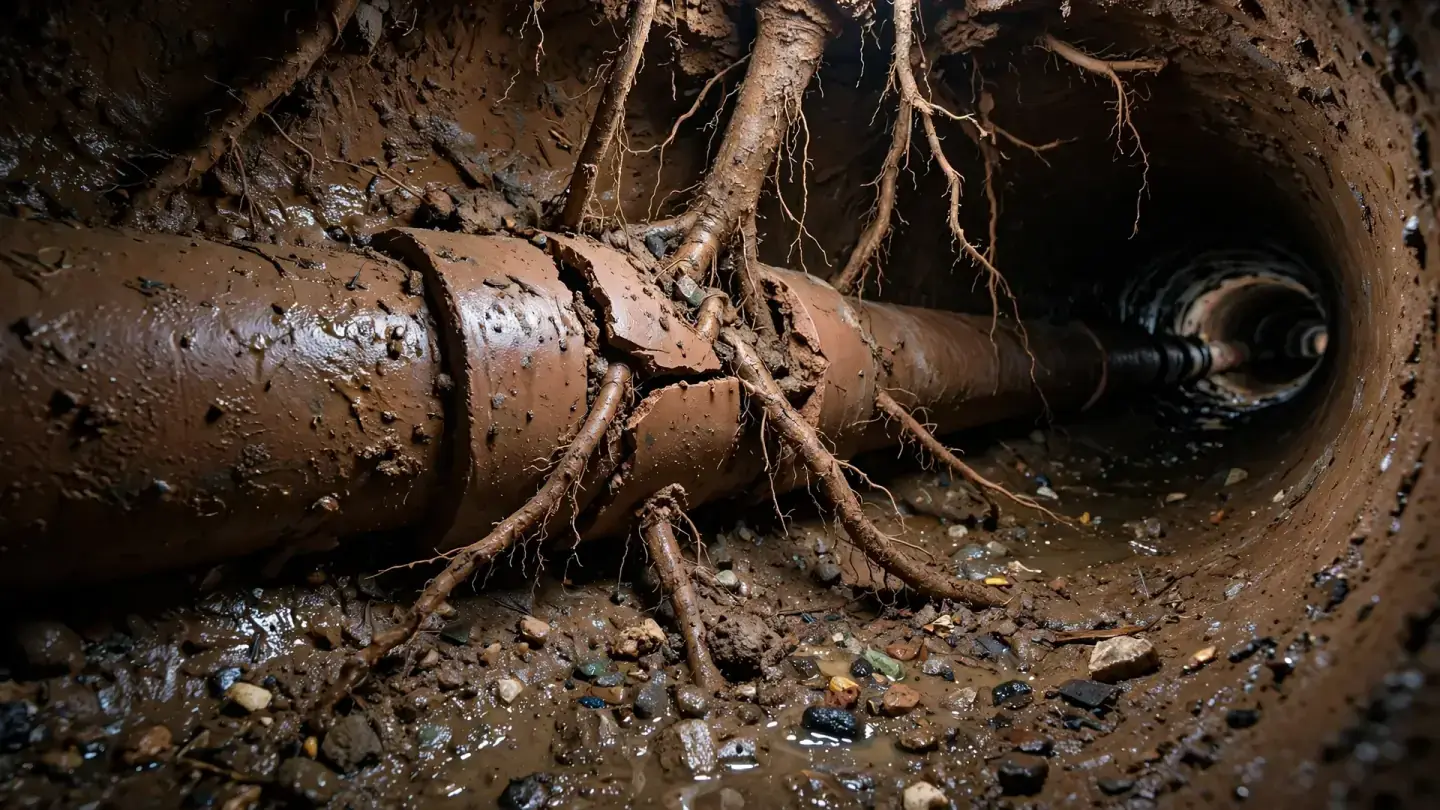
A typical garage floor drain
Procedure
Clearing a floor drain
- 1
Find out what kind it is
Sanitary floor drains connect to the sewer; some older garage or outdoor drains connect to storm drainage or dry wells. The contractor confirms which before cleaning.
- 2
Remove the grate and strainer
Grates are unscrewed or lifted, and the sediment bucket or strainer, if present, is emptied.
- 3
Clear the trap
Sand and grit are scooped or vacuumed out. Many floor drain traps are deep and collect heavy sediment that a cable can't remove.
- 4
Cable the outlet
A drum machine is run through the trap and into the line to the building drain.
- 5
Check the trap primer
If the drain has a trap primer, a device that tops up its water seal, its supply is checked for function.
- 6
Refill and test
Water is poured in to fill the trap, then a larger volume tests the line.
Types
Floor drain types
| Type | Where | Usual issue |
|---|---|---|
| Residential garage drain | Garages, near water heaters | Dry trap, sediment, odour |
| Laundry room drain | Near washers | Lint buildup, overflow from washer discharge |
| Commercial floor sink | Restaurant kitchens | Grease and food solids; must route through grease control |
| Shop or warehouse drain | Work areas | Sand, grit, oily residue |
| Area drain | Patios, stairwells | Leaves and soil; often storm, not sewer |
Upkeep
How can I keep a floor drain from smelling?
- Pour a bucket of water into each floor drain every few weeks to keep the trap sealed.
- Keep the grate clear; don't store boxes or mats over it.
- Sweep sand and debris away from the drain instead of hosing it in.
- Use a lint trap on any laundry sink or washer standpipe that feeds near the drain.
- Never pour oil, paint, solvent or automotive fluids into a garage drain. They contaminate the sewer and may violate local discharge rules.
- If dirty water ever rises from the drain, stop using water in the house and call; it's a main-line warning.
Riverside floor drains and the code
The California Plumbing Code, Title 24 Part 5, governs how floor drains, traps and cleanouts are installed in the state; the 2025 edition took effect on 1 January 2026 [1]. Cleanouts must be accessible and have working clearance in front of them [3], which matters when a floor drain line is cleaned from an adjacent cleanout rather than through its grate.
In commercial kitchens, floor sinks and floor drains in food prep areas typically route through grease control. Riverside's Environmental Compliance Section determines whether a restaurant needs a grease interceptor, and requires a minimum 750-gallon interceptor where one is called for [2]. A blocked kitchen floor sink in a restaurant is therefore part of the grease system, not just a floor drain.
Hard water is a smaller factor here than in fixtures that see daily use, but laundry floor drains near washers do collect the soap and mineral film that Riverside's roughly 12-grain water produces [4].
When a floor drain is telling you about the main line
If a floor drain fills with grey or brown water while you run fixtures elsewhere, don't clean the floor drain: the problem is downstream. Every drain in the house funnels into the building drain and the lateral, and a stoppage there pushes water back up through the lowest opening. Stop using water and treat it as a main-line problem.
Riverside owners maintain the lateral and its cleanout from the house to the property line [5]. A contractor will clear the main from the exterior cleanout, then return to check the floor drain's own trap once the line is flowing.
Water heater drains and relief discharge
Garage floor drains often sit next to a water heater for a reason: the heater's temperature and pressure relief valve discharge line, and sometimes its drain pan, may run to that drain. If water appears at the floor drain without any fixture running, check whether the relief line is dripping. A dripping relief valve is a water heater issue, not a drain issue, and it should be looked at by someone qualified to work on the heater.
When a water heater is flushed to remove sediment, the sediment-laden water often goes to the nearest floor drain. Riverside's hard water produces plenty of that sediment, and it settles in the floor drain trap. A slow garage floor drain after a heater flush is often just sand in the trap, which a contractor can scoop and flush out.
Laundry standpipes and lint
A clothes washer pumps water out fast, often through a standpipe that drops into a trap below the floor or into a laundry sink. Lint, pet hair and loose fibres from towels pass through the pump and collect where the water slows down. Over time the standpipe trap and the line beyond it narrow, and the washer's discharge overflows the standpipe or backs up into a nearby floor drain.
A mesh lint catcher on the washer hose, or on the laundry sink drain, removes much of that material before it reaches the pipe. If the standpipe overflows only at the end of the spin cycle, when the pump runs hardest, the line is restricted and needs clearing rather than a taller standpipe.
Floor sinks in Riverside restaurants
Commercial floor sinks are square, deeper versions of floor drains, set flush with the kitchen floor to receive indirect waste from dishwashers, ice machines, prep sinks and steam tables. They usually have a removable strainer basket and a grate. In a busy kitchen they collect food solids and grease all day, and they block from the top down as the basket fills and from the inside out as grease coats the outlet.
Riverside's restaurant guidance from Public Works calls for keeping food solids and grease out of drains through practices like dry wiping and strainers [6]. Floor sink baskets emptied at the end of every shift, and outlets cleaned on a regular schedule, keep the floor sinks and the line to the grease interceptor flowing. When a floor sink backs up, the contractor will usually check the interceptor's condition as well, because a full interceptor can back water into every floor sink in the kitchen.
Floor drains in older garages and basements
A small number of older Riverside houses have partial basements or cellars, and many have detached or attached garages built at different times from the house. Floor drains in those spaces may be original and may connect to a clay line, a storm system or even an old dry well. A contractor will trace where a drain goes before running a machine into it, because cleaning a storm connection with sewer equipment, or the other way round, wastes time and can push debris into the wrong system.
If a garage floor drain has never been used and nobody knows where it goes, a quick camera look can answer the question and tell you whether it needs a trap, a cover or simply regular water to keep the seal.
On the call
What to mention when you call about a floor drain
- Where the drain is: garage, laundry, utility room, shop floor or commercial kitchen.
- Whether it is slow, smelly or actively filling with water.
- Whether other drains in the building are also slow or backing up.
- Whether there's a water heater, washer or ice machine discharging nearby.
- Whether the drain has a removable bucket, strainer or trap primer.
FAQ
Floor drain questions
Why does my garage smell like sewer gas near the floor drain?
A garage that smells like sewer usually has a floor drain trap that has dried out. Without water in the trap, sewer air rises straight into the room. Pouring a few litres of water into the drain refills the seal. If the smell returns quickly, the trap may be cracked or the drain needs cleaning.
Is my garage floor drain connected to the sewer or the storm drain?
A garage floor drain can connect to either, depending on how and when the building was plumbed. Indoor floor drains in homes typically tie into the sanitary drain through a trap. A camera or dye test can confirm the route. Never pour oil, paint or chemicals into a floor drain either way.
Why did dirty water come up through my floor drain?
Dirty water rising from a floor drain usually means the main line downstream is blocked. The floor drain is often the lowest opening, so wastewater from upstairs fixtures surfaces there first. Stop running water in the house and call to be connected with a contractor who can clear the main line.
What is a trap primer, and does my floor drain need one?
A trap primer is a device that adds a small amount of water to a floor drain trap so it never dries out. California's plumbing code calls for trap seal protection on certain floor drains. Older homes may lack one; regularly adding water does the same job by hand.
Can I pour bleach down my floor drain to get rid of the smell?
Bleach may cover a floor drain smell briefly, but it does not fix the cause. The usual problem is a dry or broken trap seal, not bacteria. Refill the trap with water first. Never mix bleach with other drain products; the combination can release toxic gas.
How do I clean a laundry floor drain that keeps getting lint in it?
A laundry floor drain that catches lint needs a filter on the washer discharge hose and regular removal of the strainer to scoop out fibres. Lint packs into traps and branch lines. If water still drains slowly, the contractor can cable the line and check whether lint has built up further down.
Do I need a permit to add or move a floor drain?
Adding or relocating a floor drain is plumbing alteration work, which normally requires a permit and inspection in Riverside. Simply cleaning an existing floor drain does not. Ask the licensed contractor you speak with about permits before agreeing to any new drain installation.
Sources and citations
- [1]California Building Standards Commission: California codes (Title 24, Part 5 Plumbing)
- [2]City of Riverside Environmental Compliance Section: Restaurant wastewater discharge survey and grease interceptor requirements
- [3]California Plumbing Code 707.9: cleanout clearance
- [4]Riverside Public Utilities: 2025 Water Quality Report (hardness)
- [5]City of Riverside Wastewater Division: Home sewer line maintenance brochure
- [6]City of Riverside Public Works: Best management practices for restaurants and food service