Key facts: Sewer smell indoors
- Most indoor sewer smells come from a dry trap, a failed toilet seal or a restricted vent, not a broken sewer.
- In a warm, dry climate, unused traps can evaporate within weeks; running water refills the seal.
- Older slab homes with cast iron drains can develop cracks that release sewer gas [1].
- A smoke test pushes harmless smoke into the drains to show where gas escapes.
Why does my whole house smell like sewer?
Every fixture has a trap, a bend that holds a plug of water between the room and the sewer. That water seal is what keeps sewer gas out. When a trap dries out, siphons empty, leaks or is bypassed by a broken pipe or seal, gas from the drainage system enters the house. Sewer gas is mostly unpleasant rather than immediately dangerous at household levels, but it should never be ignored: it means the drain system isn't sealed.
The common causes, roughly in order of likelihood, are: a dry trap in a rarely used fixture or floor drain, a failed toilet wax ring, a blocked or damaged vent that lets traps siphon, a partly blocked drain holding decaying material, and a cracked or separated drain pipe in a wall or under a slab.
Symptom table
Sewer smell clues
| What you notice | Likely cause | What to do |
|---|---|---|
| Smell from a guest bath or garage | Dry trap in an unused fixture or floor drain | Run water to refill the trap |
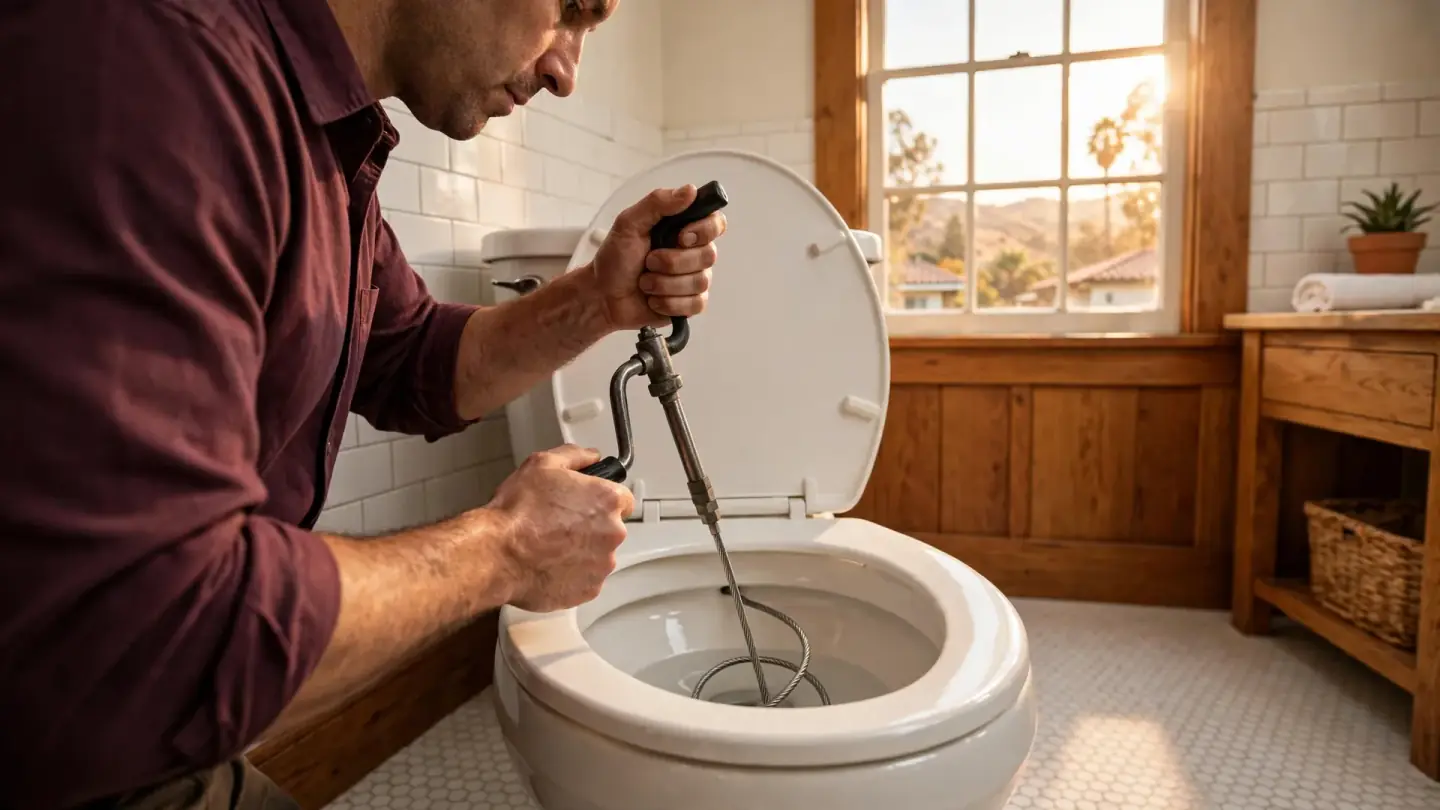
| Smell around a toilet base | Failed wax ring or loose toilet | Reset toilet on a new seal |
| Smell when other fixtures drain, with gurgling | Vent restriction siphoning traps | Vent inspection |
| Smell from the kitchen sink | Food and grease decaying in a partly blocked line | Clean the line |
| Persistent smell with all traps full | Cracked or open drain in a wall or under the slab | Camera; smoke test |
| Smell outdoors near the foundation | Cleanout cap missing or lateral damaged | Replace cap; inspect lateral |
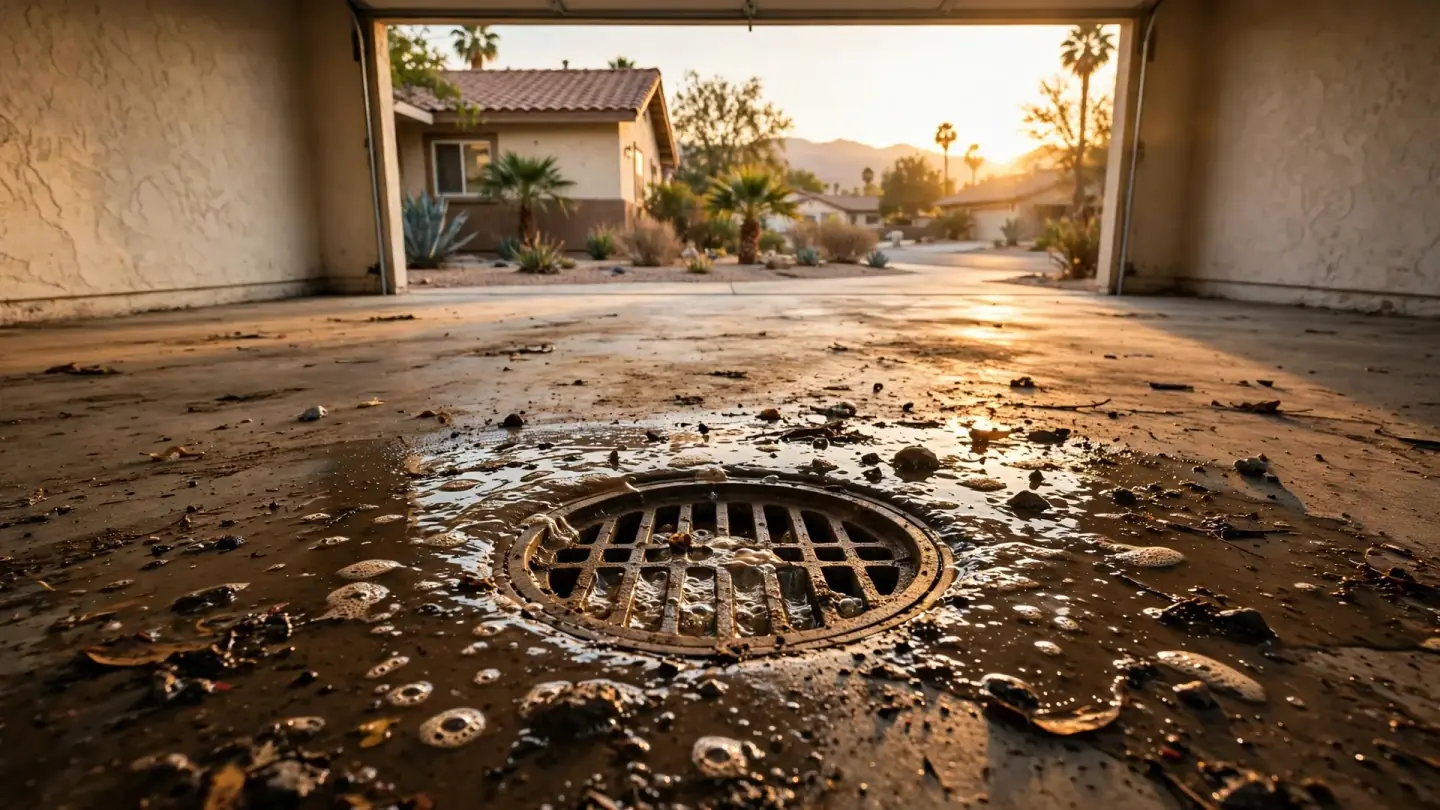
Refilling a dry floor drain trap
Safe checks
Safe checks you can do now
- Run water for a minute in every rarely used sink, tub and shower, and pour a bucket into floor drains.
- Check that the outdoor cleanout cap is present and tight.
- Rock each toilet gently; one that moves may have a failed seal.
- Look under sinks for loose slip nuts or missing trap parts.
- Note whether the smell comes with gurgling when other fixtures drain.
- Never mix drain or cleaning chemicals to mask a smell; some combinations release toxic gas. If the smell is strong and you feel unwell, ventilate and leave the area.
Can an unused drain cause a sewer smell in the house?
In Riverside's warm, dry climate, a trap that isn't used can lose its water to evaporation over a few weeks. Guest bathrooms, basement or garage sinks, laundry floor drains and showers in vacation rentals are the usual culprits. Refilling the trap fixes it immediately. For a fixture that sits unused for long periods, a little water every couple of weeks prevents the smell returning. Floor drains in some buildings have trap primers that do this automatically; when a primer fails, the smell returns.
Vents, siphoning and gurgling
Drain vents let air into the system so water can flow without pulling the water out of traps. If a vent is blocked by a nest, debris or a roofing job, draining water can siphon a trap empty, and you'll often hear gurgling first. A smell that comes and goes with other fixtures' use is a classic vent symptom. Roof vents should be inspected by someone with safe roof access. The gurgling drains guide covers this in more detail.
Cracked drains in walls and under slabs
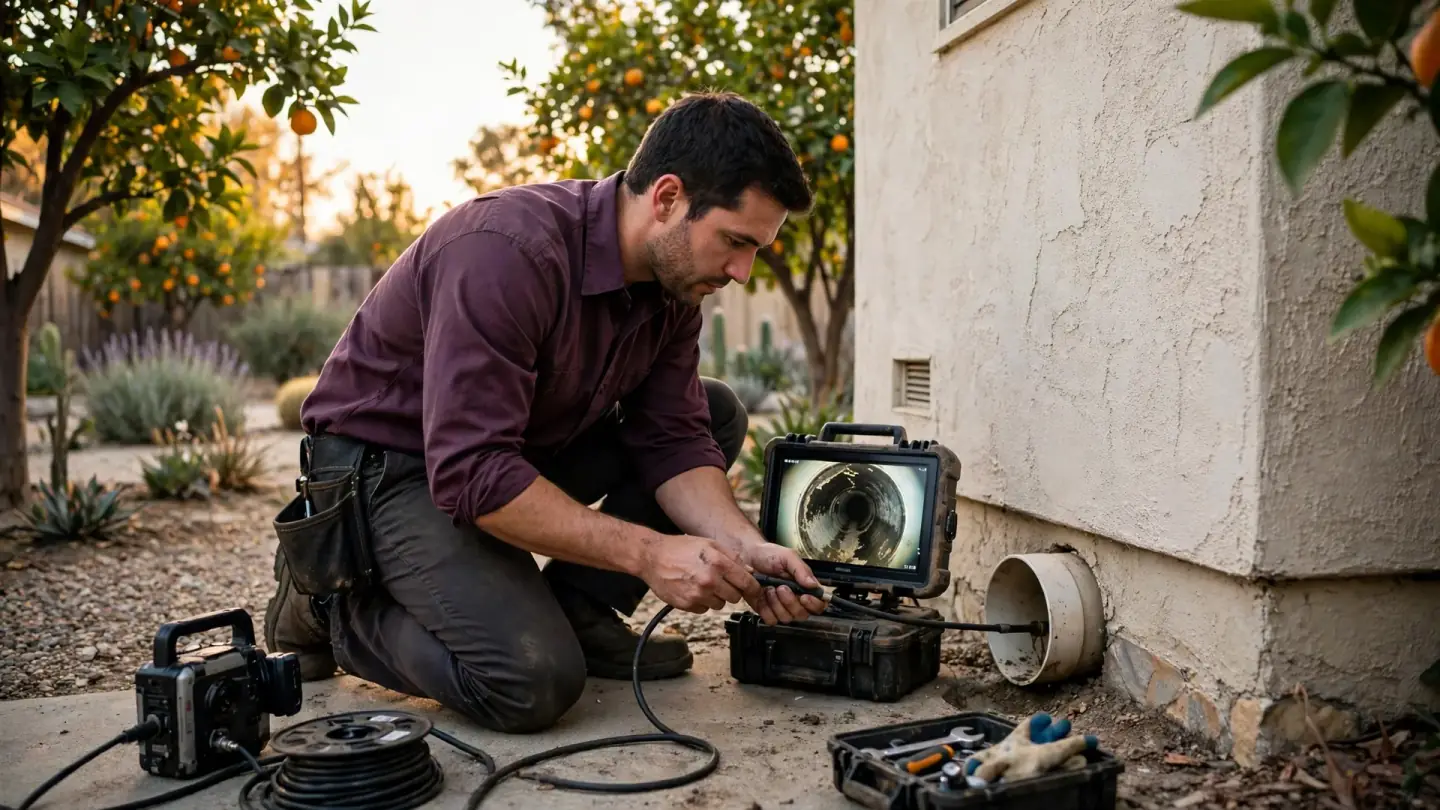
When every trap is full and seals are good, a persistent smell usually means an opening in the drain system itself: a cracked fitting in a wall, a separated joint in an attic vent, or a corroded section of cast iron under a slab. Older Riverside homes, including the many postwar slab houses built with cast iron drains [1], are more prone to this. A camera inspection shows cracks and holes inside the pipe; a smoke test, in which harmless smoke is pushed into the drain system, shows where it escapes.
Diagnosis
How a contractor traces a sewer smell
- 1
Check the easy causes
Traps, toilet seals, cleanout caps and under-sink fittings.
- 2
Check the vents
Look for gurgling, slow drains and roof vent blockages.
- 3
Clean any slow lines
Decaying material in a partly blocked line is a common source.
- 4
Camera the suspect sections
Look for cracks, open joints and corrosion inside walls or under the slab.
- 5
Smoke test if needed
Smoke reveals openings in the system that a camera may miss.
- 6
Recommend repairs
Seal, fitting or pipe repairs as needed, with the location known.
Repair or simple fix?
Most sewer smells are fixed by refilling a trap, resetting a toilet or replacing a cleanout cap. Vent clearing and line cleaning handle many of the rest. Only a minority involve repairing cracked or corroded pipe, and when they do, the camera and smoke test show exactly where. Lateral problems outside fall under the owner's responsibility to the property line in Riverside [2].
See the drain guides hub for related problems such as gurgling noises and clogs in slab-built homes. A persistent smell is often traced with a sewer camera inspection.
Prevention
Prevention
- Run water in unused fixtures every couple of weeks.
- Keep cleanout caps in place and replace damaged ones.
- Clean kitchen and bathroom lines before buildup starts to decay.
- Have roof vents checked after roofing or solar work.
- Reset a rocking toilet promptly; its seal is likely failing.
Tell the pro
Details that help trace a smell
- Where the smell is strongest and when it appears.
- Whether it comes with gurgling or slow drains.
- Which fixtures are rarely used.
- Recent roof, solar or remodelling work.
- The house's age and whether it's on a slab.
FAQ
Sewer smell questions
Is sewer gas smell in the house dangerous?
Sewer gas in a house is mainly a nuisance at low levels, but it should not be ignored. Strong or persistent odour means gas is escaping indoors, and sewer gas contains hydrogen sulfide and other gases. Ventilate the room, refill dry traps, and if the smell is strong or someone feels unwell, leave and get help.
Why does my guest bathroom smell like sewage?
A guest bathroom smells like sewage most often because an unused trap has dried out. In Riverside's warm, dry climate, trap water can evaporate within weeks. Run water in the sink, tub and shower for a minute and flush the toilet. If the smell returns quickly, a seal or vent may be at fault.
Why does my house smell like sewer when the washing machine drains?
A sewer smell when the washer drains usually means the washer's standpipe trap is being siphoned or the drain hose is sealed too tightly into the standpipe. Rushing water pulls the trap seal out and lets gas escape. A partly blocked vent or drain line can cause the same effect.
Can a cracked drain pipe under the slab make my house smell like sewer?
A cracked drain under a slab can make a house smell like sewer, because gas escapes through the crack into the soil and up through gaps in the floor. Older slab homes with cast iron drains are more prone to this. A smoke test or camera inspection can locate the crack.
Will bleach or air freshener get rid of a sewer smell?
Bleach and air fresheners only mask a sewer smell for a short time; they do not fix the opening that lets gas in. Mixing bleach with other drain products can also release toxic gas. Refill traps, check toilet seals and have a persistent smell traced instead.
Why do I smell sewage in the yard near my house?
Sewage smell in the yard near the house often points to a leak or blockage in the lateral. An open or broken cleanout cap, or a vent discharging close to the ground, can also be the source. Wet patches or lush grass along the line strengthen the case. A camera inspection shows whether the lateral is cracked.
Why does my bathroom smell like sewer only at night?
A bathroom that smells like sewer at night often has a slow-drying trap, a failing toilet wax seal or a vent issue. These show up most when the house is closed and still. Air movement changes with doors and windows shut. Refill traps before bed and check whether the toilet rocks; a loose toilet suggests a failed seal.