
Key facts: Bathroom Drain Cleaning
- Most slow bathroom sinks are a hair and soap-scum mat within the first few inches below the pop-up stopper.
- Riverside's 2025 water report lists hardness from 180 to 210 mg/L, so mineral film forms inside lavatory tailpieces and traps [1].
- Several slow fixtures in one bathroom point to the shared branch line or vent rather than one sink.
- Pre-war Riverside homes may have galvanised trap arms that narrow internally with rust and scale [2].
Small pipes, sticky debris
A bathroom lavatory usually drains through an inch-and-a-quarter tailpiece into an inch-and-a-half trap and arm. That is half the diameter of a kitchen line, and it handles toothpaste, shaving residue, skin oils, hair and soap. Bar soap is the real binder: it contains fats that react with calcium in hard water to form soap scum, a waxy deposit that sticks to the pipe and catches hair.
Riverside's water averages about 12 grains per gallon of hardness [1], enough to leave white crust on faucet aerators and a matching film inside the drain. Hair caught in that film forms a mat right below the pop-up stopper, often within the first six inches. That is the good news: many slow bathroom sinks are cleared without going past the trap.
When they're not, the restriction is usually in the trap arm or where the arm enters the wall, a point where the pipe changes direction and debris settles. Bathroom drain cleaning is a matter of reaching that spot with the right size of cable and pulling the debris out rather than pushing it further into the branch. Bathroom fixtures are only one part of the Riverside drain services list.
Signs
How do I know my bathroom sink drain needs cleaning?
Sink drains slower every week
A gradual slowdown is classic hair-and-soap buildup at the stopper linkage or trap.
Water standing after the stopper is up
The pop-up assembly may be caught on a hair mat or its pivot rod may be misadjusted, holding the stopper partly closed.
Two bathroom sinks slow at once
Double vanities usually share one trap arm or branch; a restriction past the junction affects both.
Sink gurgles when the tub drains
When fixtures on one branch interact, the branch line or its vent is restricted.
Read moreMusty smell around the vanity
A slow leak at a slip-joint nut or a dried trap in a rarely used guest bath both produce odour.
Read more
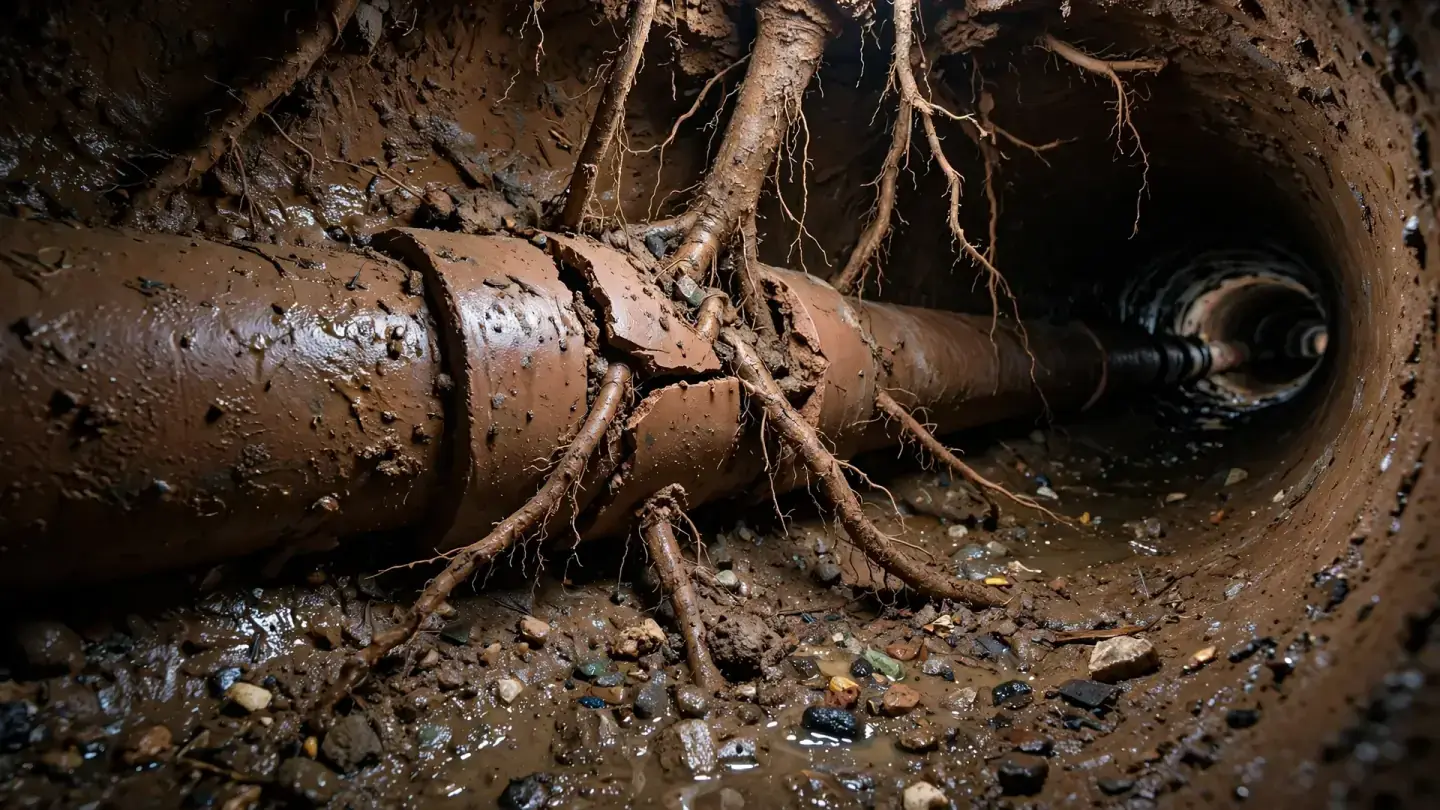
Inside a typical bathroom vanity
Step by step
Clearing a bathroom sink drain
- 1
Remove the stopper
The pop-up stopper is released at the pivot rod and lifted out. Hair wound around it is removed, and the tailpiece is checked with a light.
- 2
Check the overflow
The overflow channel is flushed. A blocked overflow can trap odour and slow drainage by preventing air from entering.
- 3
Open the trap
The trap is removed over a bucket and cleaned. Plastic slip-joint washers are inspected and replaced if they're flattened.
- 4
Cable the trap arm
A small hand auger or compact drum machine with a quarter-inch cable is run into the arm and through the wall fitting into the branch.
- 5
Reassemble and adjust
The trap is reinstalled hand-tight plus a quarter turn, and the pop-up rod is set so the stopper opens fully.
- 6
Test with both sinks
On double vanities both bowls are filled and released together, and nearby tub or shower drains are run to load the shared branch.
Parts
Bathroom drain parts at a glance
| Part | What it does | Common problem |
|---|---|---|
| Pop-up stopper | Opens and closes the drain | Hair wraps around the post |
| Pivot rod and clevis | Links the lift rod to the stopper | Misadjusted, leaving stopper half-closed |
| Overflow channel | Prevents spills and lets air in | Packed with soap film and odour |
| Tailpiece | Drops from the sink to the trap | Scale ring at the top |
| P-trap | Holds a water seal against sewer gas | Hair and soap mat in the bend |
| Trap arm and wall fitting | Carries water to the branch | Debris caught at the turn into the wall |
Upkeep
Things you can do between cleanings
- Fit a mesh hair catcher under or over the stopper and empty it weekly.
- Switch from bar soap to liquid soap if a sink keeps slowing; liquid soaps leave less scum in hard water.
- Every few weeks, lift out the pop-up stopper and wipe it clean.
- Run hot water for a minute after shaving or grooming to carry residue past the trap.
- In a guest bath that sits unused, run water for a few seconds every couple of weeks so the trap stays sealed.
- Hand-tighten slip nuts only; overtightened plastic nuts crack and leak.
Riverside bathroom specifics
Hard water is the most local factor. Riverside Public Utilities' 2025 report puts hardness between 180 and 210 milligrams per litre [1], and households that don't soften water notice it on glass doors and faucet aerators first. The same mineral film forms inside the tailpiece and trap. A contractor clearing a Riverside bathroom sink often finds a hard ring at the top of the tailpiece that needs scraping, not just a hair clog.
Older homes add their own quirks. Pre-war houses, which make up almost all of neighbourhoods like the Wood Streets [2], may still have galvanised steel trap arms and drop-ear wall fittings that corrode and narrow internally. In those houses, a bathroom sink that clogs repeatedly may have a branch pipe that has simply closed down with rust and scale. A camera inspection settles the question.
Newer slab-on-grade houses usually run bathroom branches under the floor to the building drain [3]. A restriction in that buried section is cleaned from above through the fixture or a cleanout, and if it keeps coming back, the contractor may look for a low spot in the line.
Is it one sink or the whole bathroom line?
The diagnosis turns on how many fixtures are affected. One slow lavatory is a fixture clog. A sink, tub and toilet in one bathroom all draining poorly points to the branch serving that room or to its vent. If every bathroom in the house is slow, the problem is further downstream, in the building drain or the lateral, and the main sewer line cleaning page is the better guide.
That distinction matters because the tools are different. A quarter-inch cable that suits a lavatory arm is far too light for a three-inch branch, and running a heavy machine through a small trap arm risks cracking fittings. Describing the pattern clearly on the call lets the contractor bring the right equipment the first time.
Remodelled bathrooms and their weak points
Many Riverside bathrooms have been remodelled at least once, and remodel work leaves its own signature in the drain. A vessel sink set higher than the original lavatory, a new vanity with a trap arm pushed into an old wall fitting at an awkward angle, or a long horizontal run added to reach a relocated sink can all slow drainage. Debris settles wherever water loses speed.
Look for two clues. If the trap sits noticeably lower than the wall outlet, water has to climb, and the arm will hold sludge. If the trap arm is long and nearly level, it lacks the fall needed to carry hair and soap. Cleaning helps, but the contractor may point out that a short adjustment to the trap height would stop the repeat calls.
The vent behind a slow lavatory
Every fixture needs air behind its water to drain at full speed. Bathroom groups are usually vented through a pipe that rises inside the wall and exits the roof. If that vent is restricted by a bird nest, leaves or a roofing repair that covered it, water leaving the sink pulls air through the trap instead, which produces gurgling and a slow, glugging drain even when the pipe itself is clean.
A contractor who clears a lavatory and still sees sluggish flow will often check the vent before doing anything else. On single-storey Riverside homes the vent can sometimes be inspected and cleared from the roof, which needs safe access and is not a job for a homeowner on a ladder. Where a remodel has added an air admittance valve under the vanity instead of a true vent, the valve can stick, and replacing it restores normal drainage.
The vent question also explains a common puzzle: a sink that drains well on its own but slows badly when the tub or toilet is used at the same time. The fixtures are competing for the same limited air supply. Clearing the vent, or the branch the fixtures share, solves both symptoms together.
Before the call
Details worth having ready when you call
- Which bathroom and which fixtures are affected, and whether the problem is getting worse.
- Whether the home has one or two storeys, and whether the bathroom sits above another room, a garage or a finished ceiling that could be damaged by an overflow.
- Roughly when the house was built and whether the bathroom has been remodelled.
- Anything that may have gone down the drain: a cap, jewellery, cotton swabs, cosmetic products.
- Whether you've tried a chemical product, so the contractor can protect skin and eyes before opening the trap.
- Where the nearest cleanout is, if you know: under the sink, on an outside wall or in the yard.
FAQ
Bathroom drain questions
Why does my bathroom sink clog so much more often than my kitchen sink?
A bathroom sink clogs more often because its drain is narrower and it receives hair, toothpaste and soap film that knit together. Kitchen lines are wider and carry mostly food and grease. In Riverside, hard-water scale gives the bathroom mix a rough surface to grab, so small sink lines close up faster than people expect.
Is a plastic hair-snake tool safe to use on my bathroom sink?
A plastic barbed hair tool is generally safe and is one of the better first steps for a slow vanity. Pull the stopper, feed the strip in gently, and draw the hair out rather than pushing it deeper. If the sink still runs slowly after two tries, the blockage is probably past the trap and needs a cable.
Will a whole-house water softener stop my bathroom drains from clogging?
A water softener reduces new scale, which helps, but it will not remove scale already in the pipe or stop hair from collecting. Riverside water averages about 12 grains per gallon of hardness, so softening can lengthen the time between cleanings. Existing buildup still has to be cleared mechanically by the contractor you speak with.
Why are both sinks in my double vanity draining slowly at the same time?
Two vanity sinks slowing together usually means the shared branch behind the wall is restricted, not either trap. Both basins feed one line, so a single build-up affects them equally. A blocked vent can cause the same symptom, which is why the contractor often checks for gurgling and runs a cable past the tee.
Can cabling a bathroom drain damage old galvanized or cast iron pipes?
Cabling is usually safe for older bathroom pipe when the cable size and cutter suit the line. Thin, corroded galvanized pipe can be fragile, so a careful contractor starts with a smaller head and lower speed. If the pipe looks badly rusted, a camera check before heavy cutting is a sensible precaution.
How long does it take to clear a clogged bathroom sink drain?
Clearing a single bathroom sink is often a short job once the trap and access are reached, but timing depends on where the clog sits. A blockage in the trap is quick; one deep in a shared branch takes longer. Ask the contractor you're connected with to explain the expected steps during the call.
Should I worry if my bathroom sink drain smells like rotten eggs?
A rotten-egg smell from a bathroom sink usually comes from bacteria living on gunk in the overflow and tailpiece, not from the sewer. Cleaning the overflow channel and stopper often fixes it. If the smell persists after cleaning, ask about a dry trap, a loose slip joint or a vent problem.