Key facts: Emergency Hydro Jetting
- A line that re-blocks within hours of cabling is usually coated wall to wall with grease or sludge, which jetting removes.
- Jetting water needs a path, so a fully stopped line is opened with a cable first.
- Riverside prohibits enzymes and emulsifiers in grease interceptors and sets a 25 percent capacity maintenance threshold [1].
- Riverside's water averages about 12 grains per gallon of hardness, helping grease form a crust [2].
When a cable isn't enough
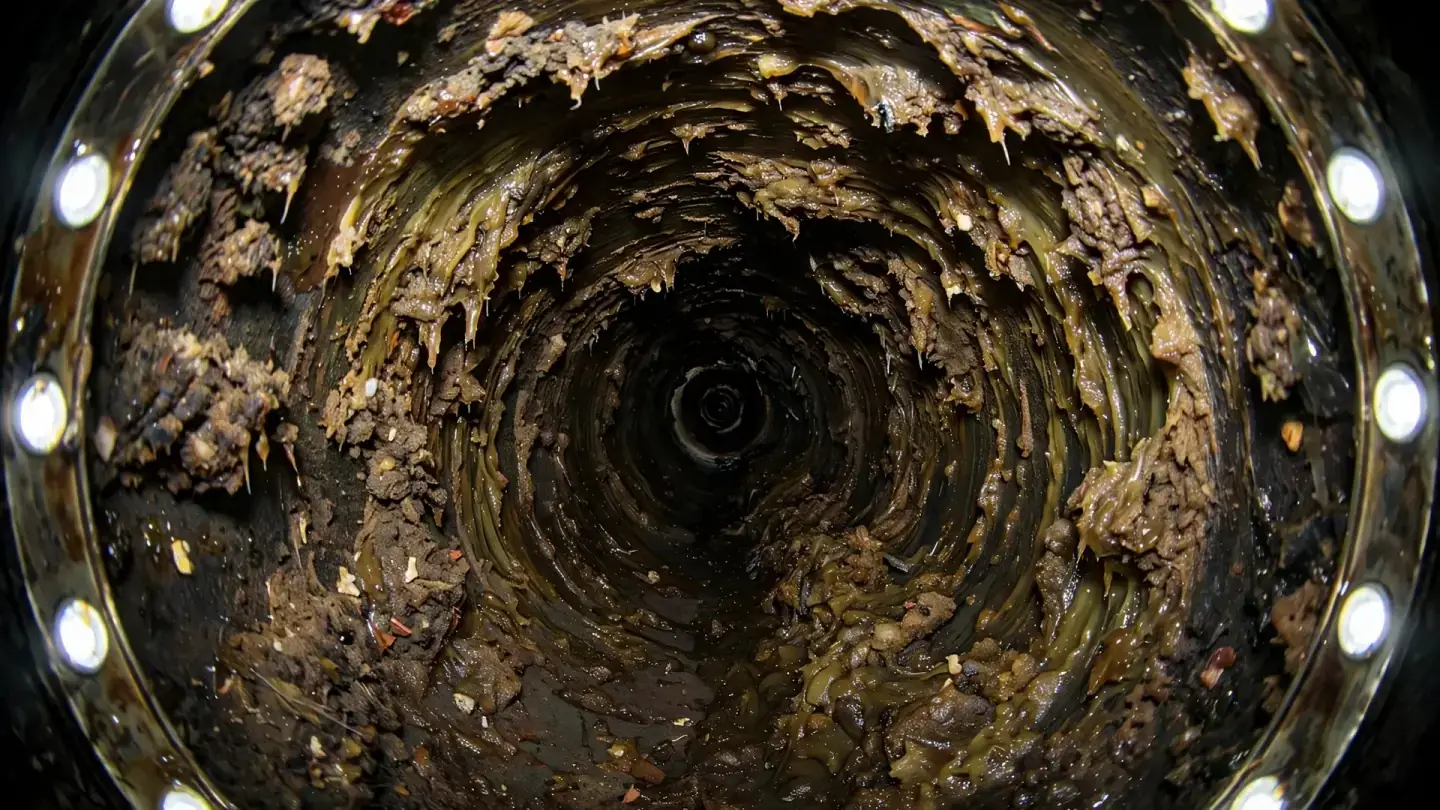
A drum or sectional machine opens a channel through a blockage. In most lines that's enough to restore flow. In a line coated wall to wall with grease, or holding a long plug of sludge in a sagging section, the channel closes again within hours as the loosened material slumps back. The sink drains, then stops; the floor sink clears, then fills during the next rush.
That pattern points to jetting. A jetter's rear-facing nozzles scour the full circumference and flush the debris downstream, which removes what a cable leaves behind. It is particularly relevant in Riverside, where water averages around 12 grains per gallon of hardness [2] and kitchen grease bonds to mineral film into a crust.
Signs
How do I know a cable won't be enough?
Re-blocked within a day of cabling
The cable opened a hole; the walls are still coated.
Read moreThick grey grease on the cutter head
The line is lined with fat, not plugged by an object.
Restaurant floor sinks filling during service
Peak-hour volume is exposing a coated line that cabling alone won't keep open.
Read moreSludge returning at a known sag
A belly in a lateral collects solids that need flushing out.
Several kitchen fixtures slow together
A shared kitchen stack in a multi-unit building is coating up.
Holding pattern
What to do while you wait
- 1
Reduce flow into the line
Use as few fixtures as possible on the affected line. In a restaurant, that may mean holding dish machine cycles.
- 2
Stop grease at the source
Scrape plates and pans into the bin, put fryer oil into waste containers and empty sink strainers.
- 3
Keep the area clear
Clear access to the cleanout or interceptor and keep vehicles off it.
- 4
Watch the lowest drains
Floor drains and floor sinks are where water appears first; keep an eye on them.
- 5
Don't use degreasers or hot flushes
They move grease a short distance downstream where it sets again, often in a worse place.
- 6
Note the pattern
When does it back up, after which fixture, how quickly after cabling? That helps the contractor.
Jetting to clear a grease-lined line
Checklist
Before calling for urgent jetting
Call to check emergency availability. The call connects you to an independent local contractor who can tell you whether their equipment and schedule fit.
- Confirm the line drains at least slowly; jetting water needs somewhere to go. If it is fully stopped, a cable opens it first.
- Know where the cleanout or access point is.
- Know the building's age and whether the line has been camera-inspected.
- For restaurants, know when the grease interceptor was last pumped.
- Be ready to describe what came back on the cable, if the line was cabled recently.
What happens during an urgent jetting job?
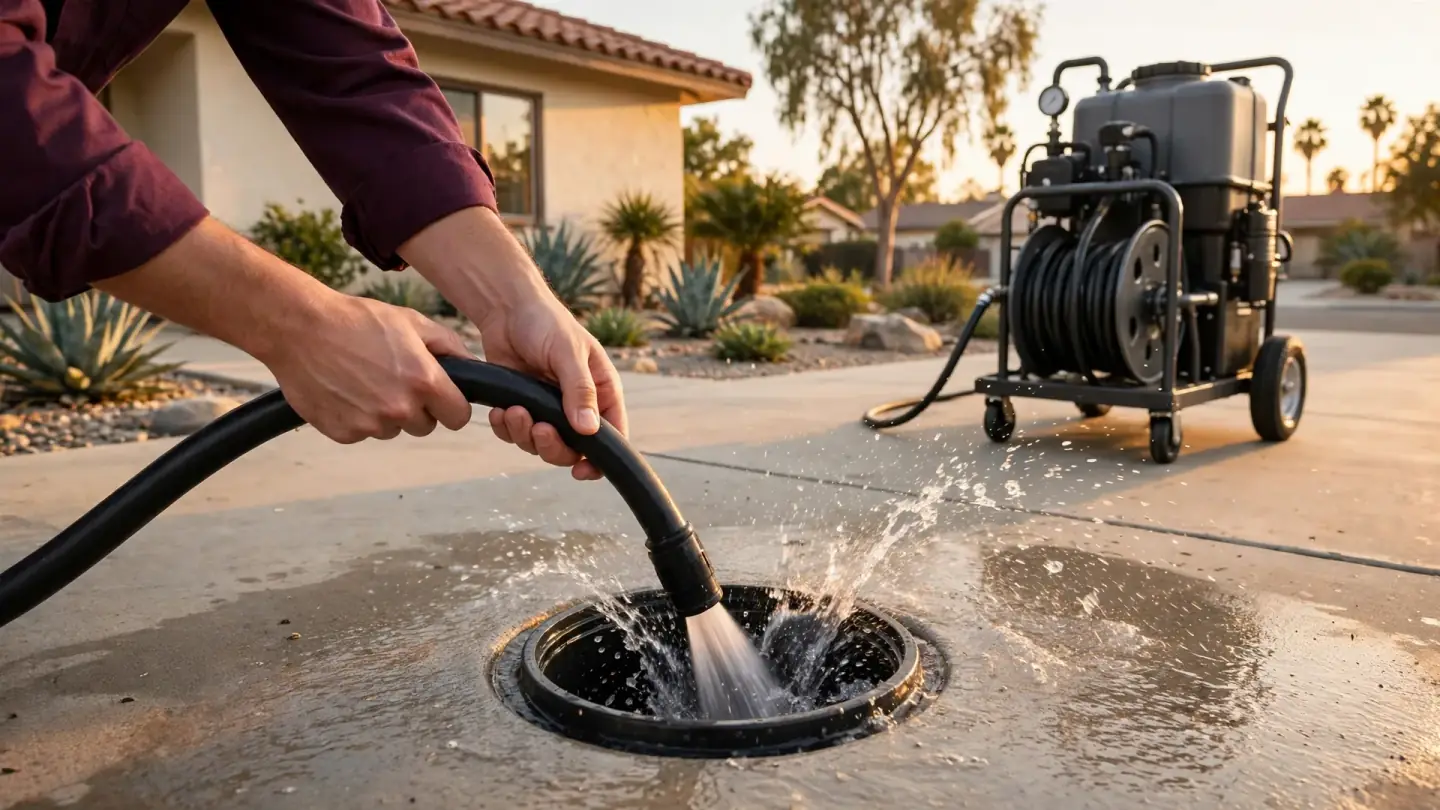
The contractor confirms there's a drain path, and if the line is fully stopped, opens it with a cable first. For an older or unknown pipe, a brief camera look may come before jetting to make sure the pipe can take the pressure. The nozzle is chosen for the job, a spreading nozzle for grease, a penetrating nozzle for packed sludge, and the hose is fed in from the cleanout and pulled back in passes so debris flushes toward the sewer.
In a restaurant, the line to the interceptor is jetted and the interceptor's condition noted; if it's full, cleaning the line just pushes grease into it and beyond. Pumping is done by a licensed hauler. The general method is explained on the hydro jetting page.
Riverside grease rules and emergency jetting
For food businesses, an urgent grease problem is also a compliance matter. The City of Riverside's Environmental Compliance Section enforces grease controls under Municipal Code Chapter 14.12, considers an interceptor improperly maintained once its working capacity drops by more than 25 percent, and prohibits enzymes and emulsifiers in interceptors [1]. The city's restaurant guidance also asks businesses to keep grease out of drains through scraping and strainers [3].
Overflows from an interceptor are reported to the Environmental Compliance Section; check the city's current contact information. The city's Sewer System Management Plan identifies fats, oils and grease as a cause of sewer overflows [4].
Is it safe to jet an old line in a hurry?
Urgency doesn't change the physics. A cracked clay lateral or a thin cast iron section can be damaged by pressure that a sound pipe would shrug off. In older Riverside districts, where many laterals are clay from before the war, a careful contractor may insist on a quick camera look first, even in an emergency. That few minutes can prevent a cleaning job from becoming a repair job.
If a contractor proposes skipping the look on an old pipe, it's reasonable to ask how they'll judge the pressure. A good answer refers to the pipe size, material and what came back on the cable.
Apartment kitchen stacks
In apartment and condominium buildings, kitchen sinks on every floor drain into a shared vertical stack. Grease from all those kitchens coats the stack and the horizontal line at its base, and when that base closes, the lowest units' sinks fill with water from the floors above. Cabling the base gives temporary relief, but the coating on the stack walls remains, and the backup returns quickly.
Jetting the stack from a cleanout at its base, or from the roof vent in some designs, removes that coating along the full height. Property managers should notify tenants before the work so no one runs a dishwasher mid-jetting, and ask the contractor to check the lowest units afterwards for any splash-back through their traps.
FAQ
Emergency jetting questions
Why does my drain keep clogging again right after it was snaked?
A drain clogs again right after snaking when the cable only bored a hole through grease, sludge or roots lining the pipe. The remaining coating catches new debris within days. Hydro jetting scours the full pipe wall, which is why contractors often recommend it after a repeat blockage in kitchen and main lines.
Can hydro jetting clear a drain that is completely blocked?
Hydro jetting can clear a completely blocked drain, but many contractors first open a path with a cable so the jet water has somewhere to go. Jetting a fully stopped line without an exit can push water back into the house. The contractor chooses the order after looking at the access point and the line.
Is emergency hydro jetting safe for old cast iron or clay pipes in Riverside?
Hydro jetting is generally safe for sound cast iron and clay pipes when the contractor adjusts pressure and nozzle to the pipe. Badly cracked, collapsed or heavily corroded sections can be damaged further. A camera look before or during jetting helps, and older Riverside neighbourhoods often have these materials, so ask about it on the call.
Should I use a degreaser while I wait for hydro jetting?
Skip the degreaser while waiting for hydro jetting. Degreasers and enzyme products move grease a short way down the pipe, where it can set again, and some are caustic to the contractor's hands and equipment. Stop using the line, note what you have already poured in, and tell the company when you call.
How long does emergency hydro jetting take on a restaurant line?
Emergency hydro jetting on a restaurant line often takes a couple of hours, depending on line length, the number of access points and how much grease is present. Interceptor pumping, if needed, is a separate job. Plan for the kitchen line to be out of use during that time and ask about timing on the call.
Will hydro jetting remove tree roots from my sewer line?
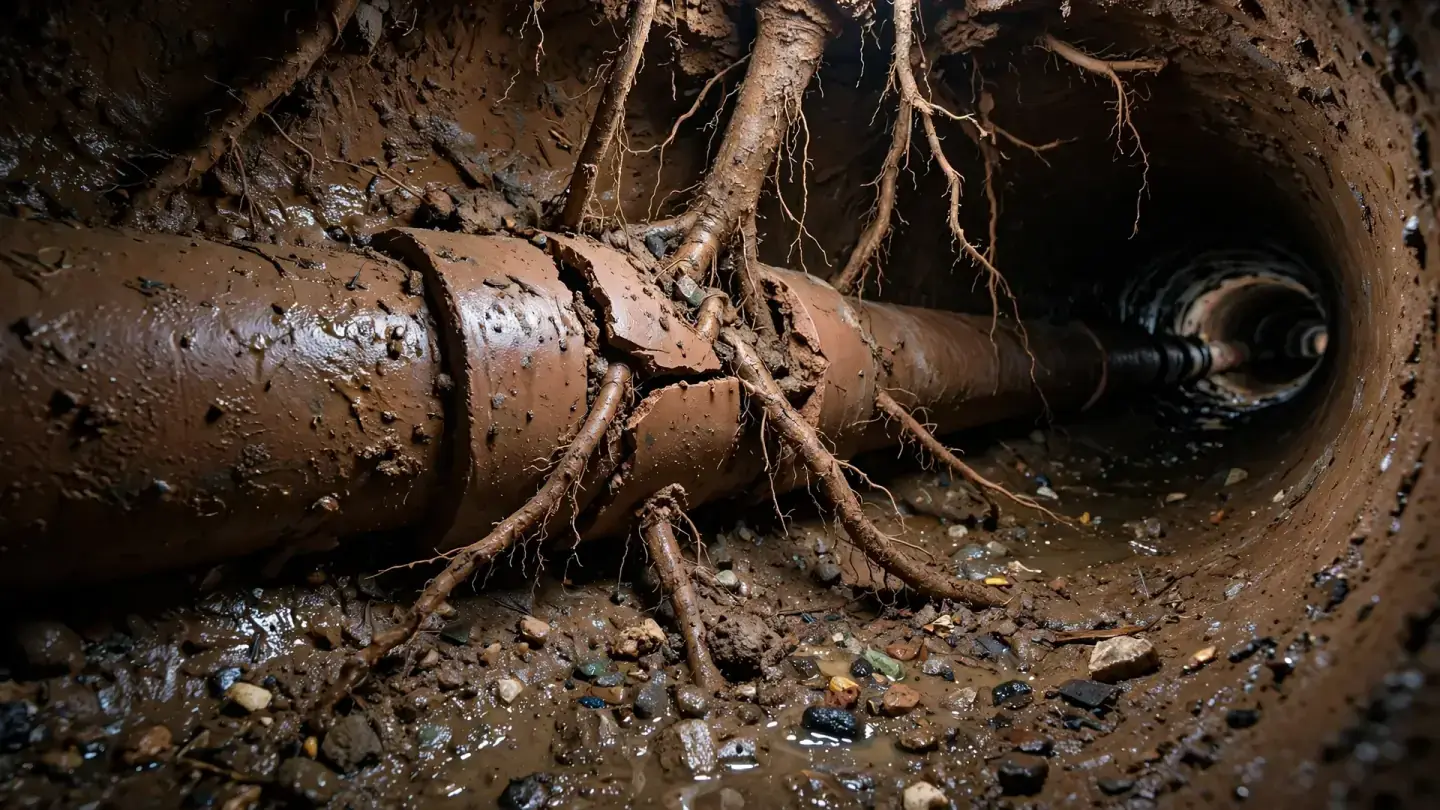
Hydro jetting removes fine roots and the debris they trap, and some nozzles are made to cut roots. Thick, woody roots usually need a mechanical root cutter first. Roots grow back through the same joints, so jetting is a maintenance step, not a cure; a camera inspection shows whether the pipe needs repair.
Can hydro jetting flood my home if the line is backed up?
Hydro jetting can push water back into the house if the line is still blocked downstream, so contractors usually open the blockage first and jet from a cleanout outside. Ask them to protect the lowest fixtures and keep a drain open. Water use during jetting should be stopped until they say the line is clear.
Sources and citations
- [1]City of Riverside Environmental Compliance Section: Restaurant wastewater discharge survey and grease interceptor requirements
- [2]Riverside Public Utilities: 2025 Water Quality Report (hardness)
- [3]City of Riverside Public Works: Best management practices for restaurants and food service
- [4]City of Riverside Public Works: Sewer System Management Plan (2025)