Key facts: Interceptor maintenance schedule
- Riverside treats an interceptor as not properly maintained once grease and solids reduce its working capacity by more than 25 percent [1].
- Each cleaning in Riverside must remove the entire contents of the interceptor, and enzymes or emulsifiers are not allowed [1].
- Pump receipts and waste manifests must stay on site for at least three years [1].
- Gravity interceptors are large in-ground tanks that rely on retention time for grease to float and solids to settle [2].
How often should a grease interceptor be pumped?
As often as it takes to stay under the line Riverside draws. The city's Environmental Compliance Section treats an interceptor as not properly maintained once accumulated grease and solids cut its working capacity by more than 25 percent [1]. A busy kitchen with fryers and a long menu may reach that quickly; a café that mostly reheats may take much longer. There is no single right interval, which is why the schedule has to come from measuring your own tank.
A good schedule covers three things together: pumping the interceptor, cleaning the kitchen lines that feed it, and checking the outlet line toward the sewer. Pump the tank without jetting a grease-lined inlet and the next backup comes from the pipe; jet the pipes into a full tank and the grease ends up in the outlet. If the interceptor is overflowing today, go to the grease interceptor backup page first.
Symptom table
Reading your interceptor measurements
| What you see | Likely cause | What to do |
|---|---|---|
| Layers near a quarter of depth at pump-out | Interval about right | Keep the schedule |
| Layers well past a quarter at pump-out | Interval too long | Shorten it; measure midway |
| Thin layers every visit | Interval shorter than needed | Measure before lengthening |
| Grease at the downstream cleanout | Baffle damage or overfull tank | Inspect baffles; pump sooner |
| Kitchen lines slow between pump-outs | Inlet pipe coated | Add line jetting to the plan |
| Fill rate jumps after a menu change | More fried or roasted items | Re-measure and reset interval |
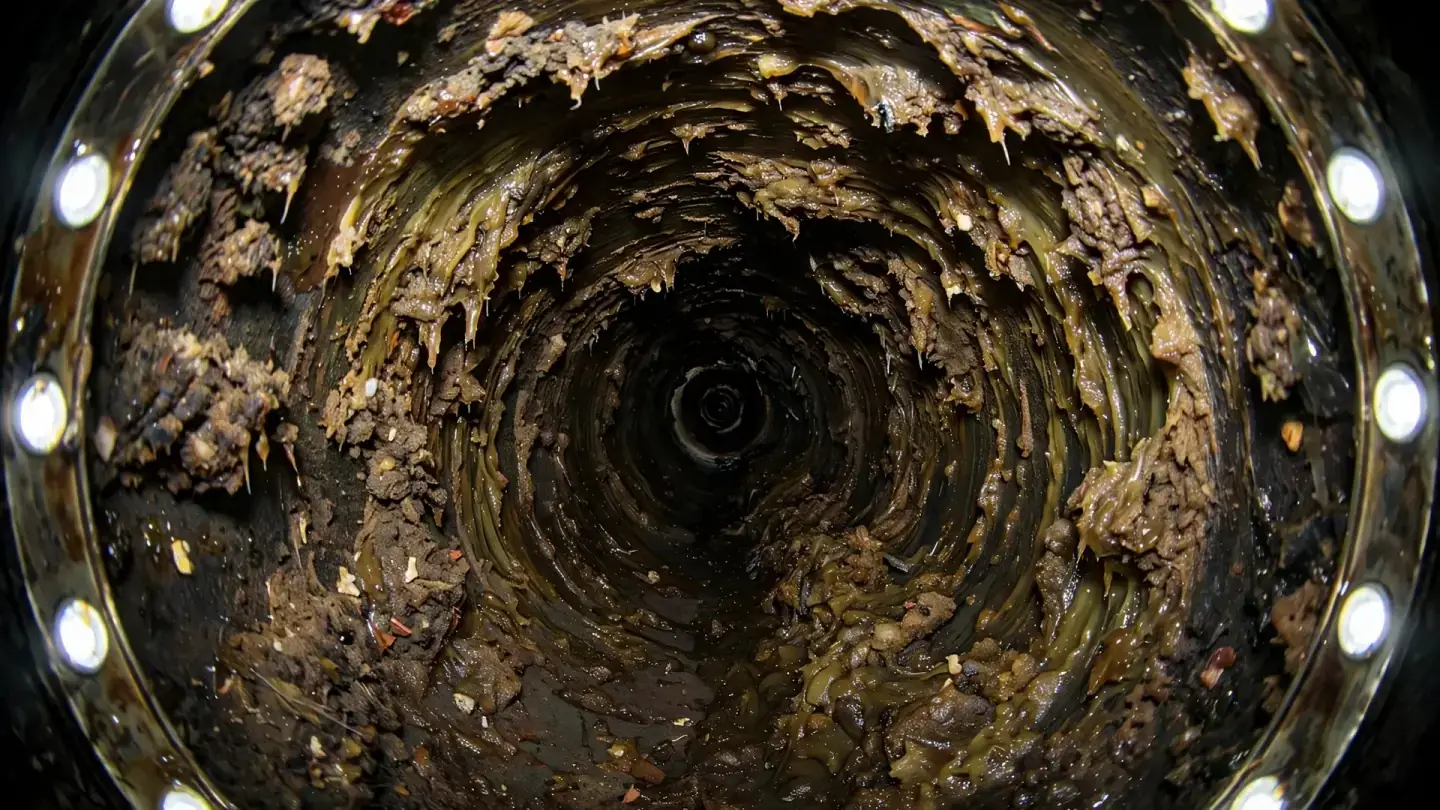
Why the inlet line belongs in the schedule
Safe checks
Interceptor checks staff can log
- Record the date of every pump-out and the hauler's name, straight from the receipt.
- Ask the hauler to note the grease and solids depth before pumping; write it in the log.
- Note any slow floor sinks or prep sinks and the day they started.
- Track fryer oil collected in the waste oil container; a sudden drop can mean oil going down drains.
- Check strainers and floor sink baskets each shift.
- Never open an in-ground interceptor without proper procedures; leave measuring to the hauler or contractor.
Measuring the layers instead of guessing
An interceptor works because grease floats and food solids sink while cleaner water passes through the middle; gravity units are sized to hold water long enough for that to happen [2]. Measuring means finding the thickness of the floating grease cap and the settled solids, usually with a clear core sampler pushed through the full depth. Added together and compared with the tank's working depth, they tell you how close it is to Riverside's 25 percent line [1].
Measure at the halfway point of your current interval for the first few cycles. If the layers are already near a quarter, the interval is too long. If they're thin at pump-out, you have room. Over a few months the numbers show your kitchen's real fill rate, which is far more reliable than a sticker on the lid.
What changes the schedule for a Riverside kitchen?
Menu and volume matter most. Fried foods, roasted meats, cheese-heavy dishes and sauces send more grease; extended hours and catering add more of everything. A restaurant that adds a fryer or a weekend brunch should re-measure rather than assume the old interval still works. Seasonal patterns matter too, such as event weekends downtown or holiday catering.
Kitchen habits are the other lever. The city's restaurant practices, such as dry wiping plates and pans and using strainers [3], reduce what reaches the tank. Training new staff matters because turnover undoes good habits fast. Additives are not a shortcut: Riverside prohibits enzymes and emulsifiers in interceptors, and each cleaning must remove the entire contents rather than just skimming grease [1].
Matching line cleaning to the pump-out
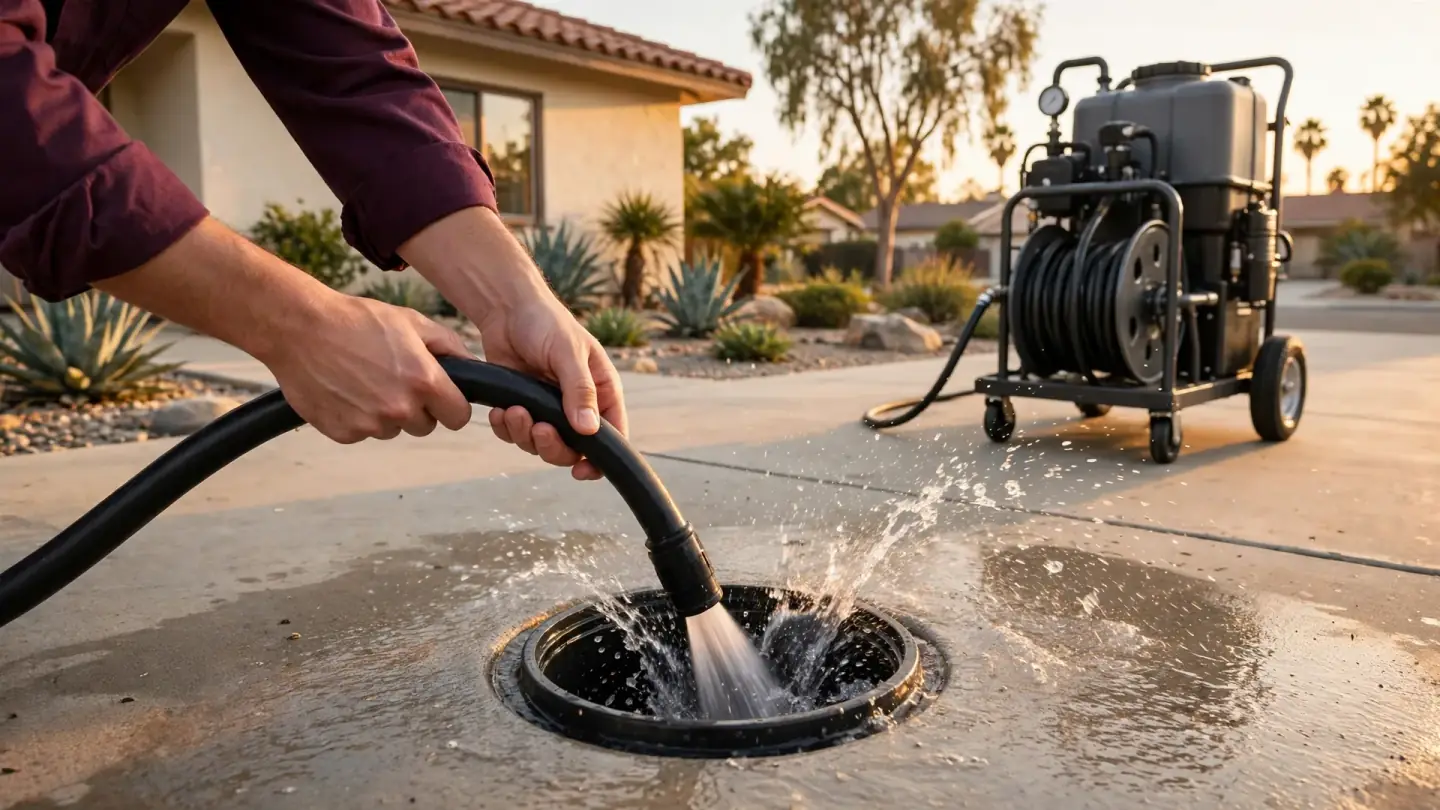
The kitchen lines between the sinks and the interceptor collect grease on their walls even when the tank is well kept. Cabling makes a hole through that coating; hydro jetting removes it. Many kitchens schedule line jetting alongside each pump-out visit, with the contractor working after the tank is empty so loosened grease lands in a tank with room for it.
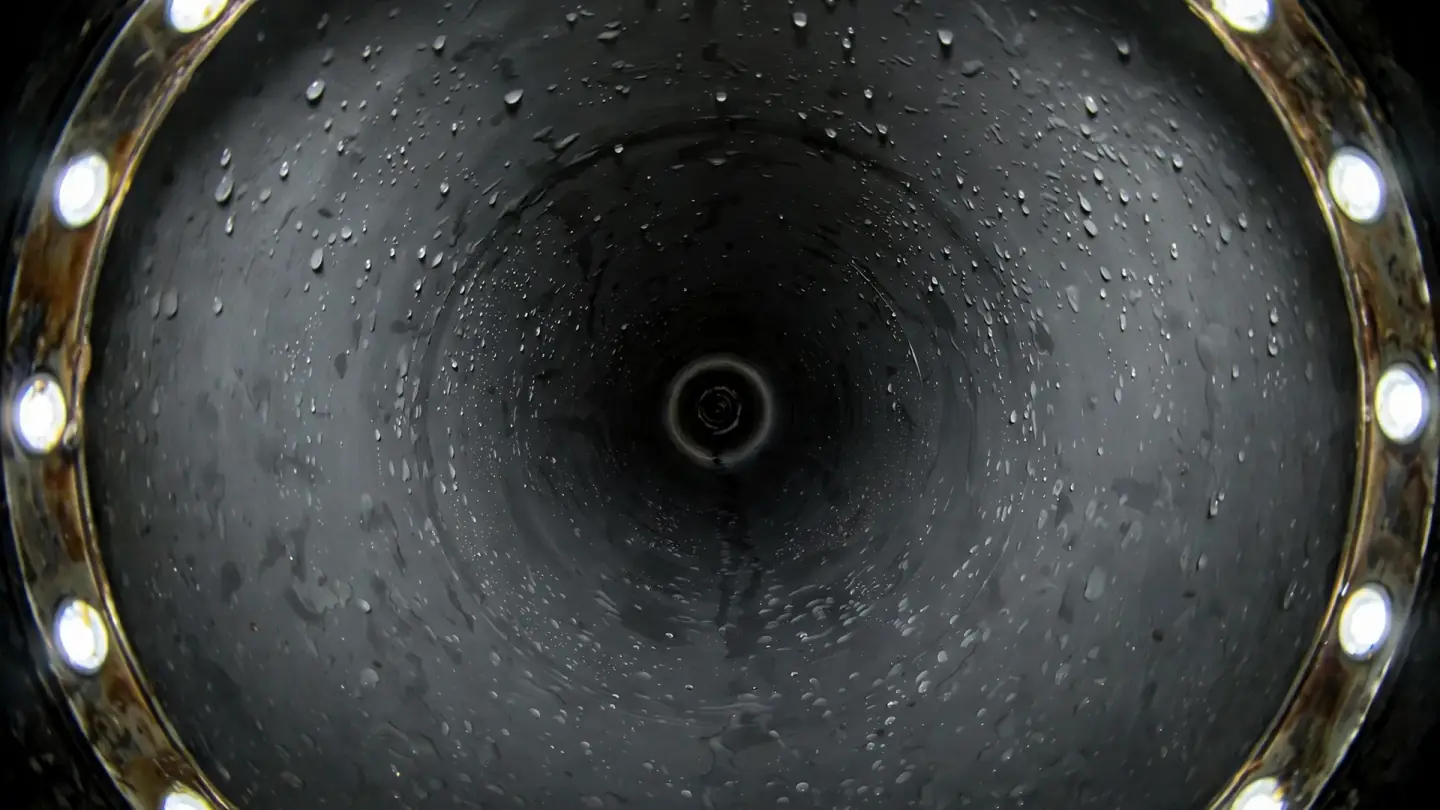
The outlet line deserves a check too, because grease that escaped earlier hardens there. A camera run once in a while, or after any overflow, shows whether the outlet is clean and whether the baffles or tees inside the tank are intact. The commercial drain cleaning page explains how scheduled visits are usually organised, and the restaurant grease trap backups guide covers why floor sinks fill during service.
Diagnosis
How a contractor sets up a maintenance plan
- 1
Review the records
Past pump receipts, manifests and any inspection notes show the history.
- 2
Measure at pump-out
Grease cap and solids depth are recorded before the hauler empties the tank.
- 3
Inspect the tank
With the tank empty, baffles, tees and the outlet are checked for damage.
- 4
Clean the inlet and outlet
Lines are jetted and, where useful, filmed to show their condition.
- 5
Set a trial interval
A starting interval is chosen, with a mid-cycle measurement to test it.
- 6
Adjust from the numbers
After a few cycles the interval is lengthened or shortened based on real fill rates.
Prevention
Habits that stretch the time between pump-outs
- Scrape and dry wipe every plate, pan and utensil before washing.
- Keep strainers in every sink and empty floor sink baskets often.
- Send all fryer oil and pan grease to the waste oil container.
- Avoid running very hot water and degreasers to 'push' grease through.
- Train each new hire on what goes in the trash, not the drain.
Tell the pro
Records to have ready for the contractor
- Interceptor size and location, and any cleanouts nearby.
- Dates of the last few pump-outs and the measured layer depths.
- Any recent backups and which drains were affected.
- Menu, hours or volume changes since the last service.
- Notes from Environmental Compliance inspections.
FAQ
Interceptor schedule questions
How do I know when my grease interceptor needs pumping?
Your grease interceptor needs pumping before the grease cap and settled solids together fill a quarter of its working depth, which is Riverside's maintenance line. The only reliable way to know is to measure the layers. Ask your hauler to record the depths at each visit and adjust the interval from those numbers.
Is monthly pumping enough for a busy restaurant in Riverside?
Monthly pumping may or may not be enough; it depends on your interceptor's size and how fast your kitchen fills it. Measure the layers midway through a month. If they're already near a quarter of the depth, pump more often; if they're thin, you may have room to stretch it.
Should the kitchen lines be jetted when the interceptor is pumped?
Jetting the kitchen lines on pump-out day is a common and sensible pattern. The tank is empty, so grease loosened from the pipes has somewhere to go. Jetting into a full interceptor pushes grease through to the outlet, which causes the next blockage downstream.
What records does Riverside want for grease interceptor maintenance?
Riverside wants pump receipts and waste manifests kept on site for at least three years. Inspectors may ask to see them alongside the interceptor and the waste oil container. A simple log with dates, depths measured, hauler names and line cleaning visits makes inspections easier.
Can I skim the grease off the top instead of a full pump-out?
Skimming isn't a substitute for a full pump-out in Riverside, where each cleaning must remove the entire contents. Settled solids at the bottom reduce capacity as much as floating grease. Partial cleaning also leaves odours and can let grease escape to the outlet.
What is the difference between a grease trap and a grease interceptor?
A grease trap is usually a small unit under or beside a sink, while a grease interceptor is a large tank, often in the ground outside, serving the whole kitchen. Both separate grease by letting it float. Small traps need very frequent cleaning; large interceptors are pumped by a hauler on a schedule.
Do enzyme treatments let me pump the interceptor less often?
Enzyme treatments are prohibited in Riverside grease interceptors and won't legally extend the interval. They break grease into small droplets that pass through and set again in the public sewer. Kitchen habits and measured pumping are the way to stretch the schedule.