Key facts: Sewer belly under a slab
- A belly is a sag in a sewer pipe, often near a joint, and its main cause is poor bedding when the pipe was laid [1].
- Foundation settlement and ground movement such as earthquakes can also create a belly [1].
- Slab drains are laid in the soil before the concrete is poured, so bedding quality under them is set at construction [2].
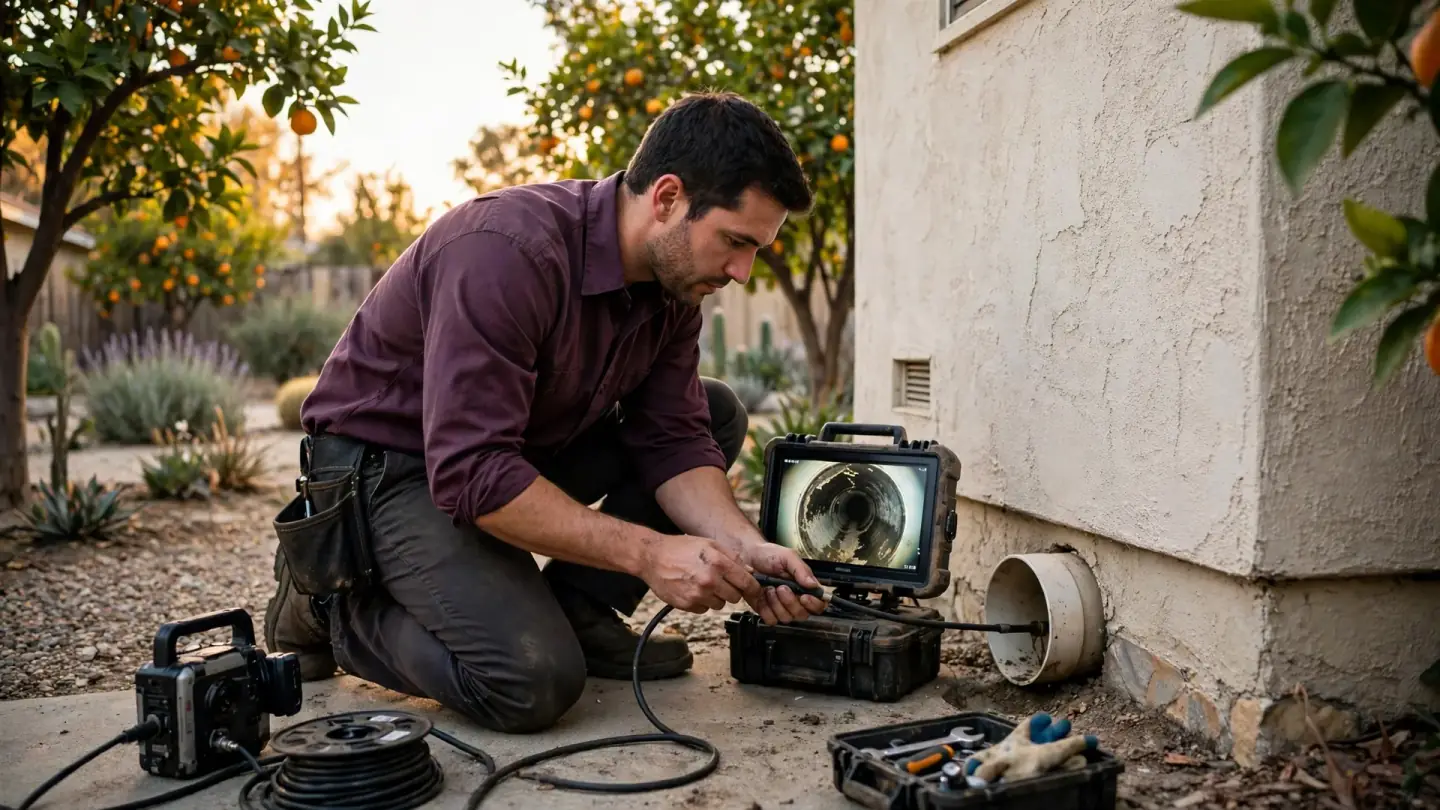
- Camera inspection is how pipe defects are seen and judged before repair, lining or replacement is chosen [3].
What is a belly in a sewer line?
Drain pipe is laid with a steady downhill slope so water carries waste with it. A belly is a stretch where that slope reverses: the pipe dips and then rises again, usually near a joint [1]. Water settles in the dip and stays there. Paper, grease and food solids drop out of the slower flow and collect in the standing water, so the low spot narrows a little more each week.
Under a slab the pipe was set in the ground before the concrete went on [2], and the most common cause of a belly is bedding that wasn't compacted evenly at that stage [1]. Soil under the pipe settles over years, the pipe follows it down, and the problem appears long after construction. Settlement of the foundation and ground movement can do the same [1].
Symptom table
Belly warning signs
| What you see | Likely cause | What to do |
|---|---|---|
| Clogs return to the same spot | Debris collecting in a low section | Camera after cleaning |
| Slow drains soon after cleaning | Standing water slowing the flow | Ask for a belly depth estimate |
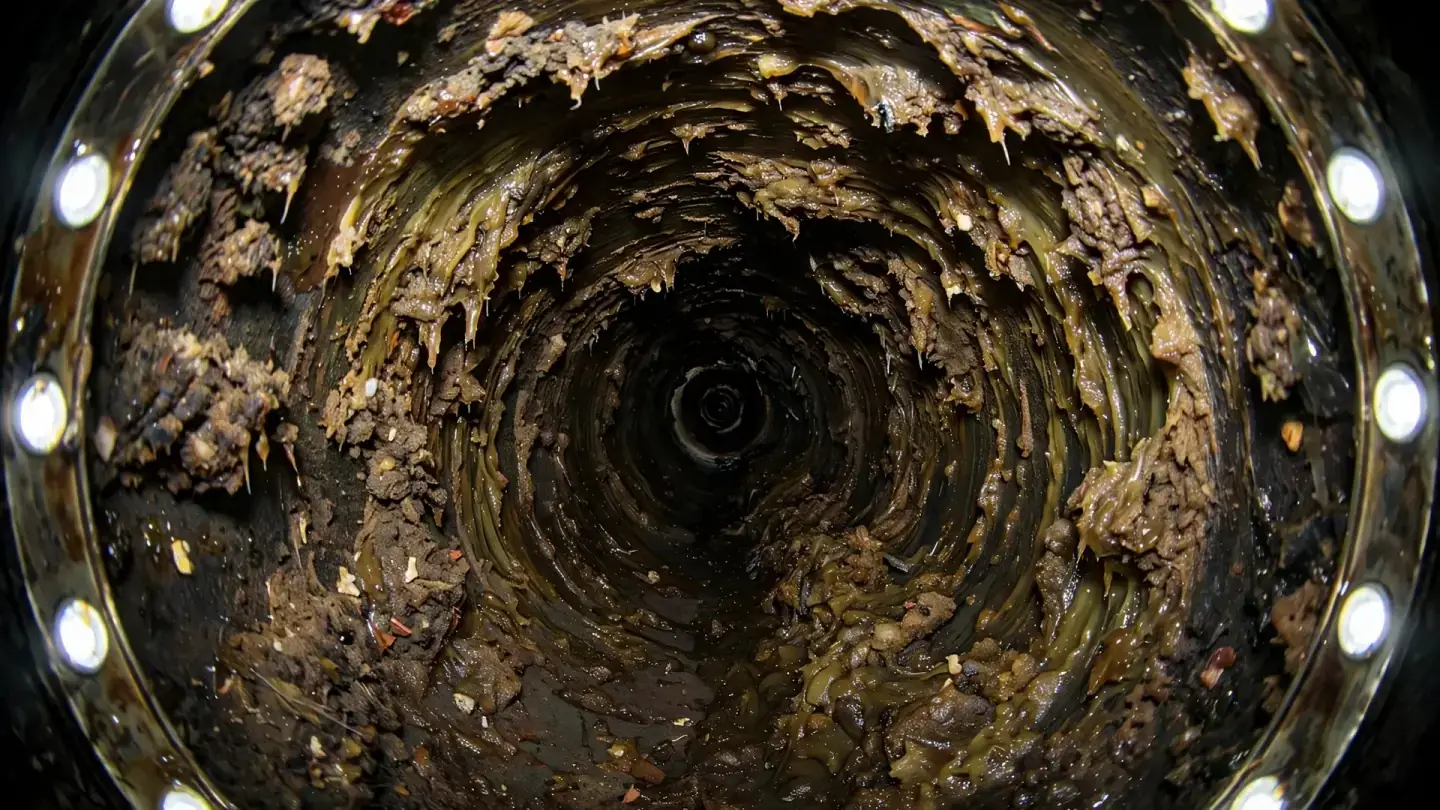
| Cable comes back with grease and paper | Solids settling in the dip | Jet and re-film |
| Sewer odour near one wall | Waste sitting in the line | Camera; check vent and seals |
| Gurgles when large volumes drain | Partial blockage in the sag | Clear, then locate |
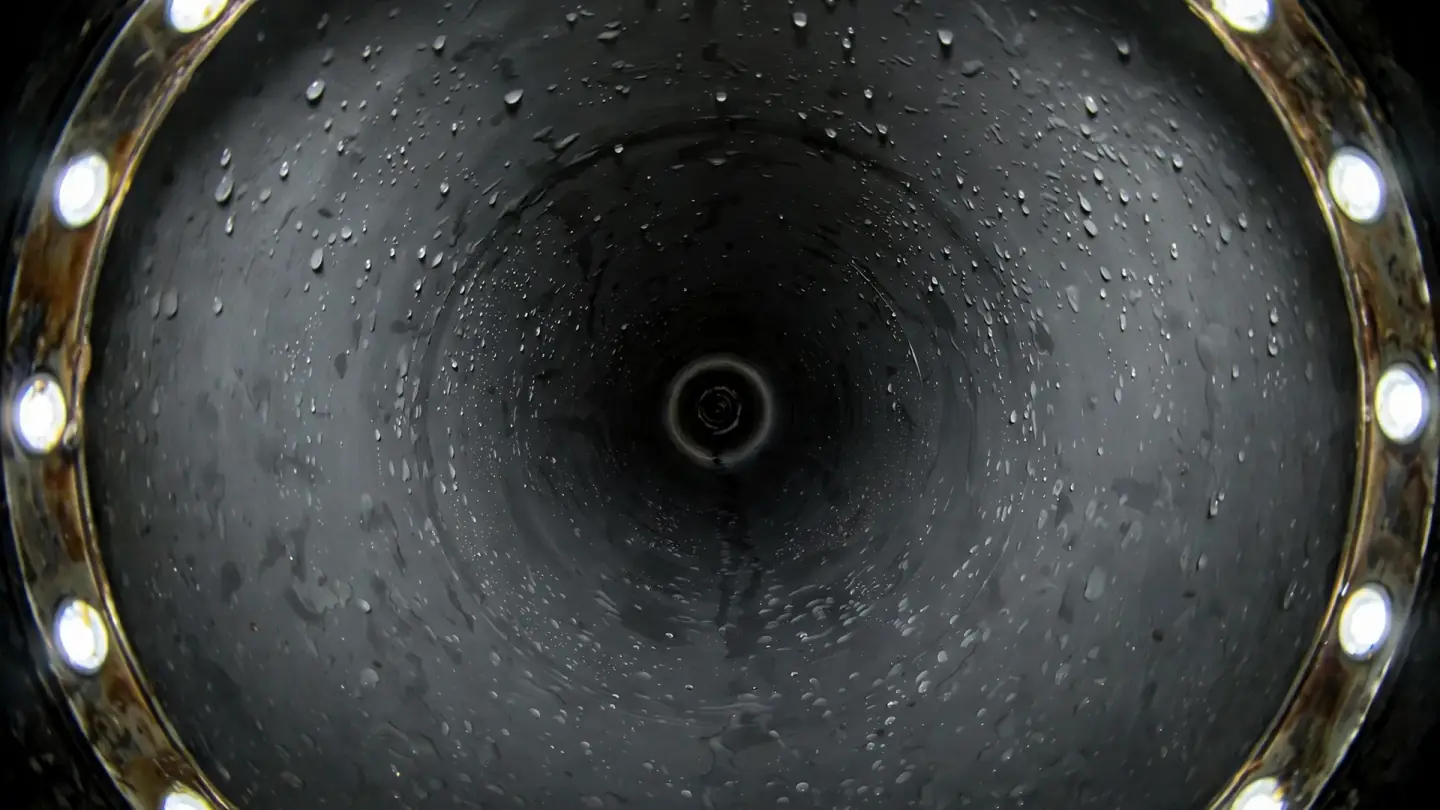
| Camera picture goes under water | Pipe holding water: classic belly | Measure length and depth |
When the camera goes under water
Safe checks
Clues you can gather before the visit
- Note which drains clog and whether it's always the same group.
- Track how soon after each cleaning the slow draining returns.
- Check old inspection reports or camera footage for words like 'belly', 'sag' or 'standing water'.
- Notice cracks in the slab or sticking doors, which can point to settlement.
- Don't use chemical openers; they sit in the belly with the waste.
- Don't break concrete to look; a camera and locator find the spot first.
How serious is a belly under a slab?
It depends on size. A shallow sag that holds a little water over a short distance may cause no trouble beyond the occasional slow drain, especially if the household is careful about what goes down. A deep or long belly that fills the pipe with water creates a permanent partial blockage, and the line will clog over and over no matter how well it's cleaned.
Pipe material matters too. In older slab houses with cast iron under the floor, a belly often sits at a joint that has also scaled and rusted, so the low spot is rough and catches more. Plastic lines in newer homes have smooth walls, but a belly in plastic still holds debris. Riverside's hard water [4] adds mineral deposits wherever water stands for long.
Why bellies show up in Riverside slab homes
Riverside built a great deal of housing on slabs after the war, and many of those houses are now old enough for slow soil settlement to show in the pipes beneath them. Southern California's ground also moves in earthquakes, which is one of the listed causes of bellies [1]. Remodels add risk: a bathroom moved during a renovation means new pipe joined to old under the slab, and the joint is a common place for a sag.
Bellies also appear outside the house, in the lateral under the yard or driveway. Heavy vehicles over a shallow line, a trench that was backfilled loosely or roots lifting and dropping a section can all leave a low spot. The slab-on-grade drain clogs guide covers other under-slab problems.
Diagnosis
How a belly is found and measured
- 1
Clean the line first
A cable or jetter clears the debris so the camera can see the pipe.
- 2
Run the camera slowly
The point where the lens dips into standing water marks the start of the sag.
- 3
Read the footage counter
Distance from the cleanout shows where the belly starts and ends.
- 4
Mark the sag through the floor
The camera's transmitter is traced through the slab to mark the spot on the floor.
- 5
Judge the depth
How much of the pipe is under water indicates how deep the sag is.
- 6
Explain the options
The contractor walks you through the footage and what each option involves [3].
Live with it, clean it or repair it?
For a mild belly, a scheduled cleaning plan and sensible habits may be enough; many owners choose that once they've seen the footage. Hydro jetting is useful here because it scours the settled debris out of the low spot rather than just punching through it. The preventative drain maintenance page explains how an interval is set.
A severe belly usually needs the section re-laid at the right slope, which under a slab means opening the floor or rerouting the line. Lining doesn't correct a sag, because the liner follows the existing pipe. Ask for a written note of the belly's location, length and estimated depth, and keep the footage. The drain camera inspection page covers what to ask during the inspection.
Prevention
Habits that help a line with a sag
- Flush only toilet paper; wipes and paper towels collect fast in a belly.
- Keep grease and food scraps out of the kitchen sink.
- Run a full sink or tub of water now and then to push debris through.
- Schedule cleaning before the usual clog interval runs out.
- Film the line again after any earthquake or major settlement crack.
FAQ
Sewer belly questions
How do I know if my sewer line has a belly?
A sewer line belly is confirmed on camera, when the lens dips into standing water in a section that should be draining. Clues before that include clogs in the same place soon after each cleaning and slow drains that never quite recover. Ask for the footage and the distance from the cleanout.
Can a belly in a sewer pipe be fixed without breaking the slab?
A belly can sometimes be managed without breaking the slab through scheduled cleaning, and some lines can be rerouted around the house instead. Lining alone doesn't fix a sag because it follows the low spot. A deep belly under the floor usually means opening the slab at that point.
Is a small belly in a sewer line normal?
Small bellies are common in older lines and aren't always a problem. A shallow sag holding a little water over a short distance may cause no symptoms. It becomes a problem when it causes repeated clogs, which the camera and your clog history together will show.
Will hydro jetting fix a sag in my sewer line?
Hydro jetting won't change the shape of a sagging sewer line, but it cleans out the debris that collects in the low spot more thoroughly than a cable. That can keep a mild belly flowing for longer between visits. It doesn't fix the slope; only re-laying the section does.
Can earthquakes cause a sewer line to sag?
Earthquakes are one recognised cause of sewer line bellies, along with poor bedding and settlement. Ground movement can shift a section of buried pipe. If your drains changed after a quake, a camera inspection shows whether a sag or a separated joint appeared.
Should a belly in the sewer line stop me buying a house?
A belly in the sewer line doesn't have to stop a purchase, but you should know its size and location before you commit. Ask for the footage, the length and estimated depth, and a contractor's view of whether it needs repair. Then decide with your agent how to handle it.