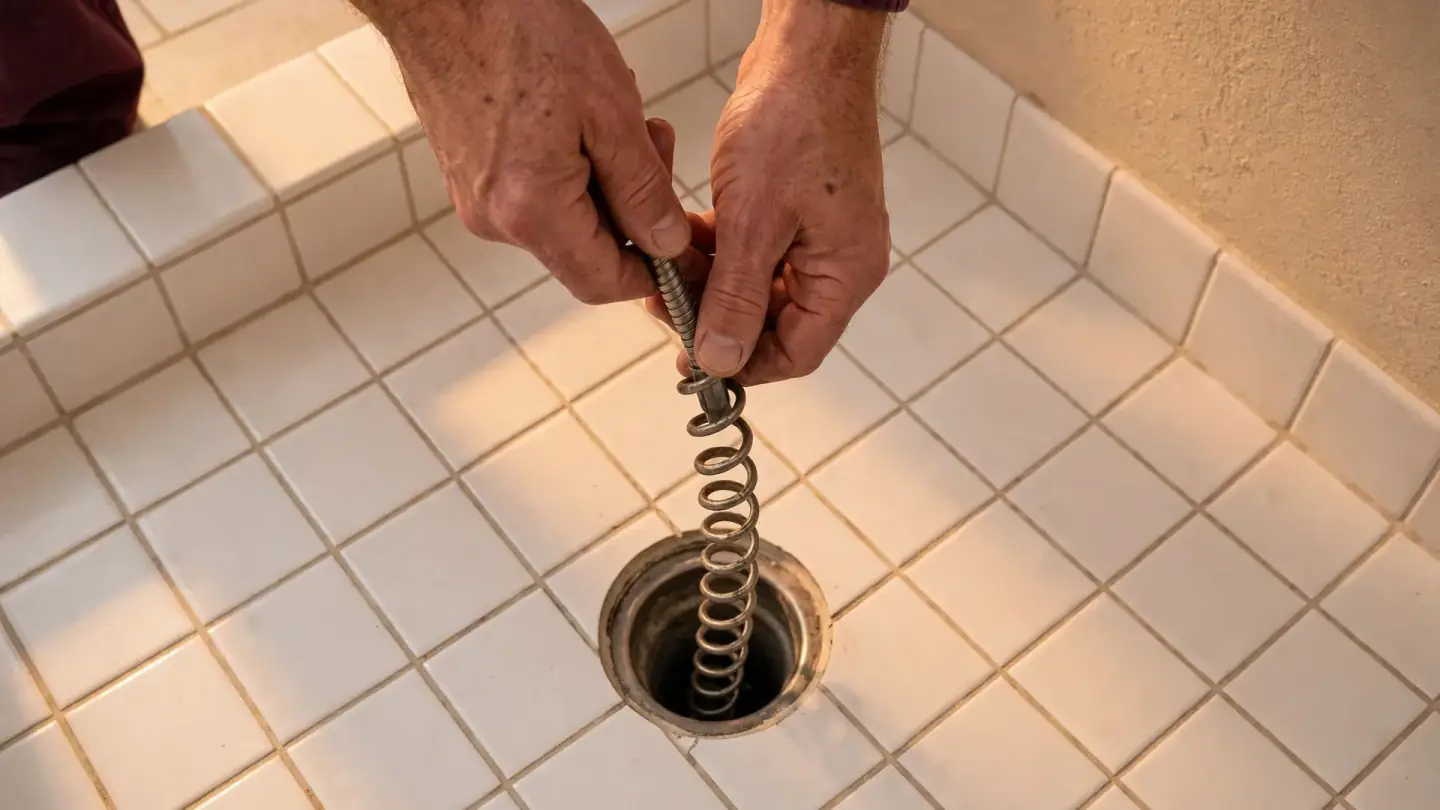

Key facts: Sink clogs and pop-up stoppers
- A pop-up plug is built into the drain and moved up and down by a handle on the sink, so it sits in the flow path [1].
- The pop-up assembly also connects to the basin's overflow inlet, which can trap scum and odour [1].
- A trap below the sink holds water to block sewer gas, and it is also where heavier debris settles [2].
- Riverside's water averages about twelve grains per gallon of hardness, so scale builds on stoppers and in sink drains [3].
Why do pop-up stoppers make sinks clog?
A pop-up stopper sits right in the drain opening and is lifted and lowered by a handle on the sink [1]. Underneath, a horizontal pivot rod pushes through the drain pipe and hooks into the stopper's stem. That gives hair a perfect anchor: strands wrap around the stem and rod, soap and toothpaste bind them into a sticky mat, and within months the opening is half blocked.
The clog is usually within a hand's length of the drain opening, which is good news. It means many slow lavatory sinks can be fixed by removing and cleaning the stopper, without tools beyond a bucket and some gloves. If the stopper comes out clean and the sink is still slow, the problem has moved further down into the trap or the line in the wall.
Symptom table
Lavatory sink clues
| What you see | Likely cause | What to do |
|---|---|---|
| Slow drain, stopper fully open | Hair on stopper stem and pivot rod | Pull and clean the stopper |
| Stopper won't lift high enough | Linkage loose or out of adjustment | Adjust the clevis strap |
| Stopper won't seal to hold water | Worn gasket or scale on the seat | Clean or replace stopper |
| Musty smell from the sink | Scum in the overflow channel | Flush and clean the overflow |
| Clean stopper, still slow | Trap or wall pipe clogged | Clean trap; call if no change |
| Both vanity sinks slow | Shared branch or vent | Have the branch checked |
Under the vanity: rod, strap and trap

Safe checks
Pulling and cleaning a pop-up stopper
- Clear the vanity cabinet and put a towel and small bucket under the drain.
- Find the pivot rod behind the drain pipe and unscrew the nut that holds it in.
- Slide the rod out a little and lift the stopper straight up out of the drain.
- Pull off the hair and slime, then scrub scale from the stopper with an old toothbrush and vinegar.
- Refit the stopper so the rod passes through its loop, retighten the nut by hand and check for drips.
- Skip caustic openers; they sit in the trap and can damage the stopper's finish and gasket.
Hair, soap and toothpaste: the usual mix
Bathroom sinks see a particular kind of waste. Hair from shaving and brushing, bar soap, toothpaste, shaving cream, skin products and the occasional cotton bud all go down a narrow drain with very little water behind them. Unlike a kitchen sink, a lavatory sink rarely gets a big flush of water to clear the pipe, so material settles where it lands.
Hard water adds to it. Riverside's supply averages around twelve grains per gallon of hardness [3], and soap reacts with those minerals to form scum that coats the stopper, the tailpiece and the trap. That rough coating catches the next strand of hair. Over time you get a layered plug that's part hair, part soap scum and part mineral.
Can the overflow hole cause a smell or slow drain?
Most bathroom sinks have an overflow hole near the rim, which joins the drain just below the stopper [1]. Its channel is rarely flushed, so scum and bacteria build up in it, which is a common source of a musty smell. Pour a jug of warm water slowly into the overflow, then clean the opening with a small bottle brush.
The overflow also lets air into the drain as the basin empties. If it's blocked solid, a full basin can drain more slowly and gurgle. It won't usually cause a full clog by itself, but cleaning it is part of fixing a slow, smelly lavatory sink. A smell that persists after cleaning points elsewhere; the sewer smell guide covers traps and vents.
When the clog is past the trap
If the stopper is clean, remove the trap with a bucket underneath; most bathroom traps have slip nuts that loosen by hand. A trap packed with hair and scum can be cleaned and refitted. If the trap is clear and the sink still won't drain, the clog is in the trap arm or the pipe inside the wall, and a small cable from that opening is the next step. That's where a contractor is useful, especially in older homes with galvanised branches that narrow with scale.
Two sinks in a double vanity slowing together points to the shared branch, not either stopper. The bathroom drain cleaning page explains how lavatory branches and vents are cleared, and for a tub or shower in the same room, see shower and bathtub drain cleaning.
Diagnosis
How a contractor clears a stubborn lavatory drain
- 1
Pull and inspect the stopper
Hair, scale and gasket wear show how long it's been building.
- 2
Remove the trap
The trap is cleaned and checked for corrosion or damage.
- 3
Run a cable past the trap
A small hand or drill-powered cable opens the branch inside the wall.
- 4
Check the other fixtures
If a second sink or the tub is slow too, the shared branch or vent is checked.
- 5
Adjust or replace the pop-up
Linkage is set so the stopper opens fully, or a worn assembly is replaced.
Prevention
Keeping a lavatory sink flowing
- Pull and clean the stopper every month or two before it slows.
- Rinse hair after shaving or brushing into the trash, not the basin.
- Run warm water for a few seconds after using toothpaste or shaving cream.
- Flush the overflow channel with warm water occasionally.
- Wipe scale off the stopper so it opens and seals properly.
Tell the pro
Sink details to give the contractor
- Whether you've already cleaned the stopper and trap.
- If one sink, both sinks or the tub are affected.
- Any smell, gurgle or leak under the vanity.
- Whether chemical opener has been used.
- The rough age of the house and bathroom.
FAQ
Pop-up stopper questions
How do I get a pop-up stopper out of a bathroom sink?
To remove a pop-up stopper, look under the sink for the horizontal pivot rod behind the drain pipe. Unscrew the nut holding it, pull the rod back slightly, and lift the stopper out from above. Some stoppers simply twist out without touching the rod.
Why won't my sink stopper stay up?
A sink stopper that won't stay up usually has a loose pivot-rod nut or a clevis strap that has slipped. Tighten the nut behind the drain pipe by hand, then adjust the strap's screw so the lift rod raises the stopper fully. A worn spring clip can also let it drop.
Why does my bathroom sink smell musty even when it drains?
A musty bathroom sink smell is often scum in the overflow channel or on the stopper, not a drain problem. Clean the stopper, flush warm water slowly through the overflow hole and scrub its opening. If a sewer smell remains, check that the trap holds water.
Can I replace a pop-up stopper with a simple drain grid?
You can replace a pop-up stopper with a grid drain or a push-button stopper, which some people find easier to keep clean. The new drain must suit a sink with an overflow if yours has one. It's a straightforward swap for a contractor or a confident DIYer.
Is it safe to use a plunger on a bathroom sink?
A small cup plunger can help with a bathroom sink if you block the overflow hole with a wet cloth first, so pressure goes down the drain. Remove the stopper before plunging. If a few attempts don't work, stop; the clog is probably packed in the trap or wall pipe.
How often should I clean my bathroom sink stopper?
Cleaning a bathroom sink stopper every month or two keeps hair and soap from building into a clog. Homes with long hair or heavy use may need it more often. Do it before the sink slows, because a quick clean is far easier than clearing a packed trap.