Key facts: Slab Drain Backup
- In a slab-on-grade house the drain lines are laid in the soil before the concrete is poured, so they can't be reached from below [1].
- The California Plumbing Code allows a two-way cleanout outside the building at the lower end of the building drain, extended to grade [2].
- In Riverside the lateral beyond a slab house, and its cleanout, is the owner's to look after as far as the property line [3].
- Riverside's water averages about twelve grains per gallon of hardness, which leaves scale that narrows older buried lines [4].
Why slab homes back up from the bottom first
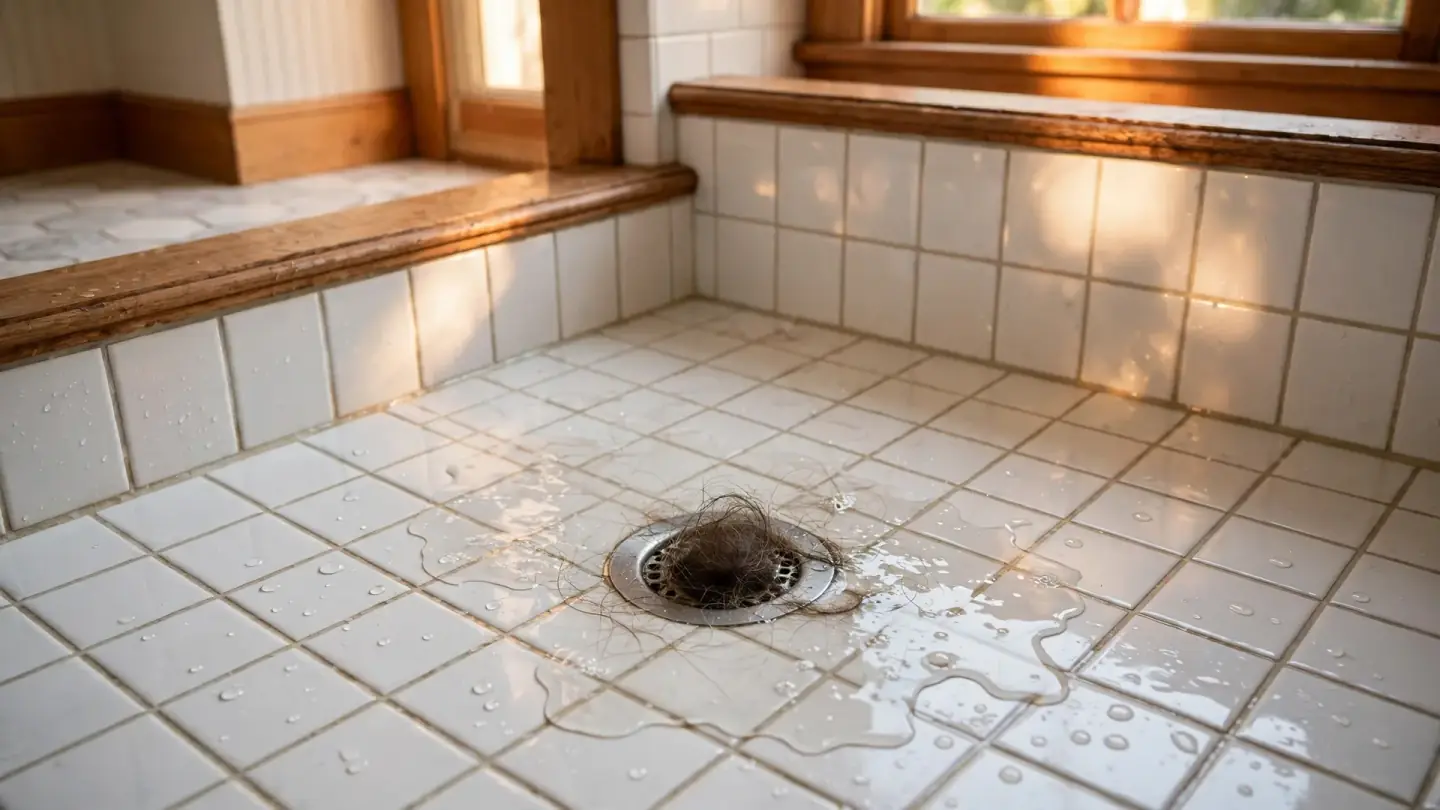
In a house on a concrete slab every drain drops through the floor into pipe that was bedded in the soil before the pour [1]. Those branches join under the slab and leave the house as one building drain. When that buried pipe or the lateral beyond it blocks, wastewater has nowhere to go but up, and it appears first at the lowest opening: the shower pan, the tub or a ground-floor toilet.
That's why a slab backup can look like a shower problem when it isn't. If the shower fills while someone flushes a toilet in another room, or the tub gurgles while the washing machine drains, the blockage is downstream of where those lines meet. The cause is often roots, grease, scale or a sag in the buried run, and none of them can be fixed by plunging the shower.
Warning signs
Clues the stoppage is under the slab
Shower fills when a toilet flushes
Both fixtures share a buried line, and the blockage is past their junction.
Water seeping at the base of a toilet
Pressure from a full line is pushing water out under the wax seal.
Several ground-floor drains slow at once
One fixture is a local clog; many together point to the building drain.
Outdoor cleanout full of water
If the cap is off and water stands in the pipe, the block is further toward the street.
Read moreRepeated backups in the same spot
A low section in buried pipe, called a belly, holds debris and blocks again.
Read more
Do this now
Safe steps for a backing-up slab house
- 1
Stop all water in the house
No flushing, showers, dishwasher or laundry. Turn off irrigation timers if they run soon, and make sure a water softener isn't about to regenerate.
- 2
Close the valve behind a rising toilet
Turn the supply valve clockwise so the tank can't refill into a full bowl.
- 3
Find the outdoor cleanout
Look along the wall nearest the bathrooms or between the house and the street for a capped pipe at ground level.
- 4
Loosen the cap slowly, if it's safe
If the cleanout is outside and below the lowest drain, easing the cap can let water drain into the yard instead of the house. Stand to the side; it may be under pressure.
- 5
Protect floors and walls
Lay towels at the shower threshold and along baseboards. Move rugs and anything stored on the floor nearby.
- 6
Treat the water as sewage
Treat water from a backed-up drain as sewage, even if it looks clear.
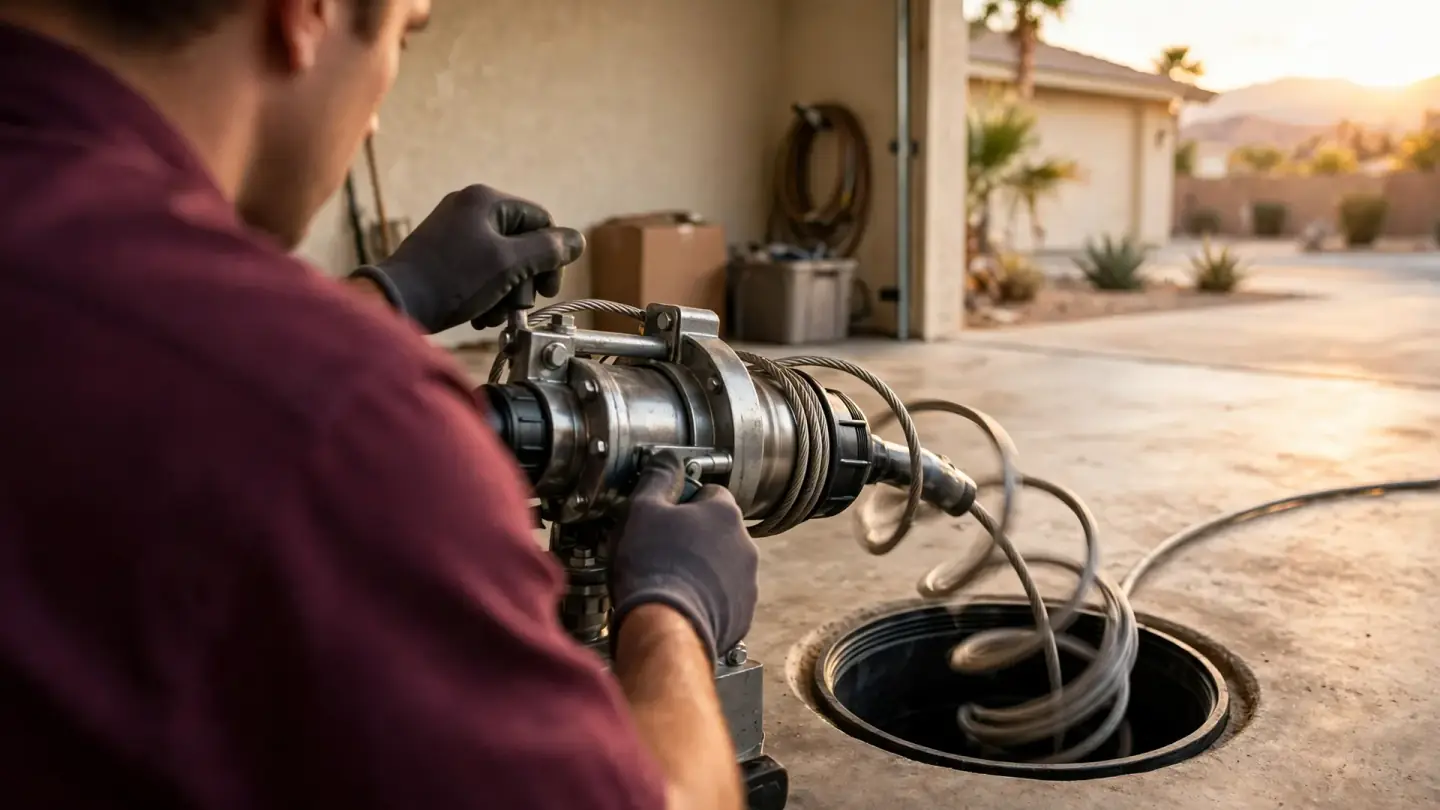
Clearing a buried line from the cleanout
Avoid
Mistakes that make a slab backup worse
- Pouring chemical opener into the shower; it can't reach a blockage under the floor and leaves caustic water for the contractor.
- Plunging the toilet repeatedly; it forces sewage up through the shower and can lift the wax seal.
- Running the washing machine 'just to finish the load'; a single drain cycle can overflow a shower pan.
- Opening an indoor cleanout in a closet or hallway; with the line full, it will spill inside.
- Breaking concrete to look for the pipe before anyone has located it with a camera.
When to call
Call now if these apply
Call to check emergency availability. You'll speak with an independent local drain contractor on the call.
- Sewage is in the shower, tub or on the floor.
- You can't find or safely open an outdoor cleanout.
- Water is getting under flooring, baseboards or into carpet.
- Every drain in the house is slow or stopped.
- This is the second backup in a few months, which hints at a structural problem under the slab.
How an urgent slab drain visit usually goes
The contractor's first question is access. An outdoor two-way cleanout at the end of the building drain is the best entry because the code allows it to sit outside and be extended to grade [2]. If there isn't one, the usual fallback is pulling a ground-floor toilet and running the cable from the flange, or entering through a roof vent on a single-storey house. A drum machine with a cutting head opens the line, and what comes back on the cable, such as roots, wipes, grease or scale, says a lot about the cause.
Once water is flowing, a camera run is the step that matters most for a slab house. It shows whether the line is cracked, offset, sagging or simply dirty, and a locator can mark on the floor or yard exactly where a problem sits. That answers the question homeowners worry about most: whether anything will need to be opened. The main sewer line cleaning page and the drain camera inspection page explain those steps in full.
Riverside conditions behind slab backups
Much of Riverside's postwar and later housing was built on slabs, from La Sierra to Orangecrest. Older slab homes may still have cast iron under the floor, which narrows as it scales and rusts; Riverside's water hardness, around twelve grains per gallon [4], adds mineral build-up that grease and paper cling to. Newer plastic lines don't scale the same way but can sag if the soil beneath them settled after the pour.
Outside the house, Riverside places the lateral and its cleanout up to the property line in the owner's hands [3]. Mature citrus, ficus and palms planted over front-yard laterals are common across the city, and roots that enter a joint will catch everything flushed after them. If the contractor finds roots, the citrus and palm roots guide explains what can be done.
After the water goes down
Run each fixture one at a time while someone watches the shower. Clean and disinfect any surface sewage touched, and dry flooring with fans; slab floors stay damp longer than raised ones because water can creep under vinyl and laminate. Keep the contractor's notes and any camera footage with your house records.
For the general picture of buried drains, read the slab-on-grade drain clogs guide. If water rose anywhere other than the bathroom, the general emergency drain cleaning page covers other scenarios, and every urgent page is listed on the emergency hub.
FAQ
Slab backup questions
What does it mean when every ground-floor drain in my slab house backs up together?
Ground-floor drains backing up together means the building drain under the slab, or the lateral beyond it, is blocked past the point where the branches join. Plunging any one fixture won't reach it. Stop using water and call; it's cleared from an outdoor cleanout or a pulled toilet.
Can a drain under a concrete slab be cleared without breaking the floor?
Most drains under a slab are cleared without breaking concrete. The contractor runs a cable or jetter from an outdoor cleanout, a pulled toilet or a roof vent. Concrete only needs opening when a camera shows the pipe itself is broken or badly sagged, and that is a repair decision made after the emergency.
Where is the sewer cleanout on a Riverside slab house?
On most Riverside slab houses the main cleanout is outside, along the wall nearest the bathrooms or between the house and the street, often a capped pipe a few inches above the soil. Some homes also have a property-line cleanout near the sidewalk. Plants and pavers sometimes hide it.
Is it dangerous to take a shower while the drains are backing up?
Taking a shower while the drains back up adds water straight into the blocked line and can push sewage over the shower threshold. Treat any backed-up water as contaminated. Hold off on showers, laundry and dishes until the line has been cleared and the shower drains normally.
Why does my slab house keep backing up every few months?
Repeated backups in a slab house usually mean something in the buried pipe is catching waste: roots at a joint, a sag that holds water, scale in old cast iron or an offset joint. Cleaning restores flow, but only a camera inspection shows which one, so ask for footage after the line is opened.
Should I open the cleanout cap myself when the drains back up?
Opening an outdoor cleanout yourself can relieve a backup if the cleanout sits lower than your indoor drains. Loosen it slowly while standing aside, since water may be under pressure, and expect sewage in the yard. Never open an indoor cleanout when the line is full.
Will my homeowners insurance cover a slab drain backup?
Insurance cover for a slab drain backup depends on your policy, and many standard policies treat sewer backup as a separate endorsement. Take photos before cleaning up, keep the contractor's notes and call your insurer early. This site can't advise on a specific policy.