Key facts: Grease Interceptor Backup
- Riverside requires interceptor overflows to be reported promptly to the city [1].
- Enzymes and emulsifiers are prohibited in Riverside grease interceptors, including as a quick fix during a backup [1].
- Riverside's sewer system management plan addresses fats, oils and grease as part of preventing sewer overflows [2].
- Many storm drain systems discharge untreated water to streams, so spilled kitchen grease must be kept out of gutters and catch basins [3].
What a grease interceptor overflow looks like
An interceptor in trouble rarely fails quietly. Floor sinks near the dish station fill first, then the three-compartment sink stops draining, and finally grey, fatty water seeps from around the interceptor lid in the floor, the parking lot or the alley. The smell is sharp and rancid. If the unit sits outside, the overflow can run across asphalt toward a catch basin within minutes.
This page is about that moment: the tank or its outlet is full and wastewater is escaping. Planning pump-out intervals belongs in the grease interceptor maintenance schedule guide, and the general causes of slow restaurant drains are covered in the restaurant grease trap backups guide. Here the goal is to stop the spill, protect the storm drain and get the line open again.
Warning signs
Signs the interceptor itself is the problem
Water around the lid or manhole cover
The tank is full to its outlet or the outlet pipe is blocked downstream.
Every floor sink rising together
One shared point, usually the interceptor or its inlet, has stopped accepting flow.
A grease cap visible through the inspection port
A thick floating layer means the working space inside is nearly gone.
Hand sinks fine, kitchen drains stopped
Restroom and hand-sink lines often bypass the interceptor, which points the finger at it.
Rancid odour stronger than usual
Grease and food solids have been held too long and are breaking down.
Do this now
Containing an interceptor spill right now
- 1
Shut down kitchen discharge
Stop the dish machine, close the prep and pot sinks and tell staff not to pour anything down floor sinks.
- 2
Protect the nearest storm drain
Cover or berm any catch basin in the path of the spill with absorbent socks, sand or a drain mat so grease can't reach it.
- 3
Soak up, don't hose down
Use absorbent and a squeegee into containers. Washing the spill away with a hose sends it straight into the storm system.
- 4
Keep people back
Rope off the area. Greasy water on tile or asphalt is a slip hazard for staff and customers.
- 5
Leave the lid closed
Interceptors hold gases and heavy lids. Opening one is a job for the hauler or contractor with the right procedure.
- 6
Call and record
Call to check emergency availability, then note the time the overflow began and take photos for the city report and your records.
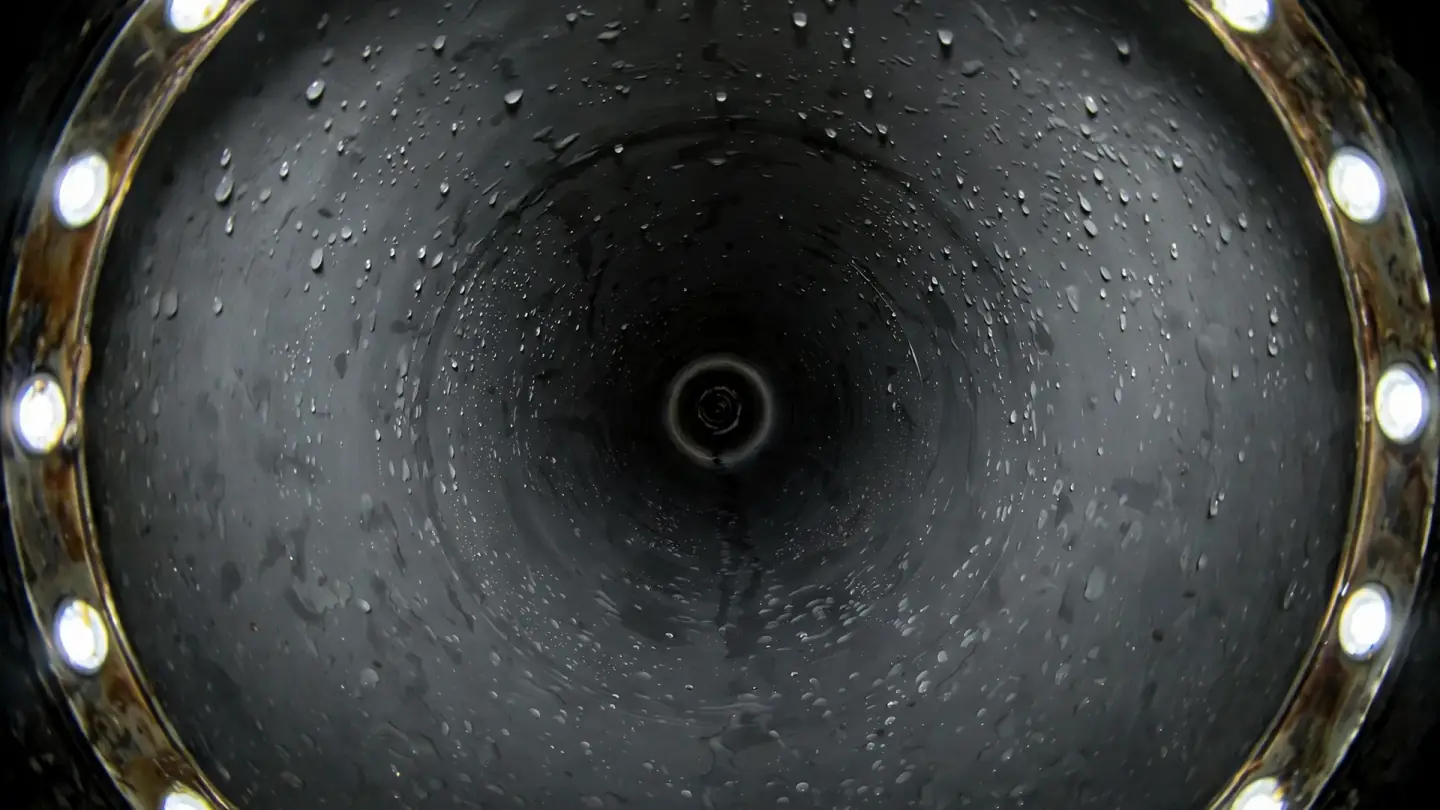
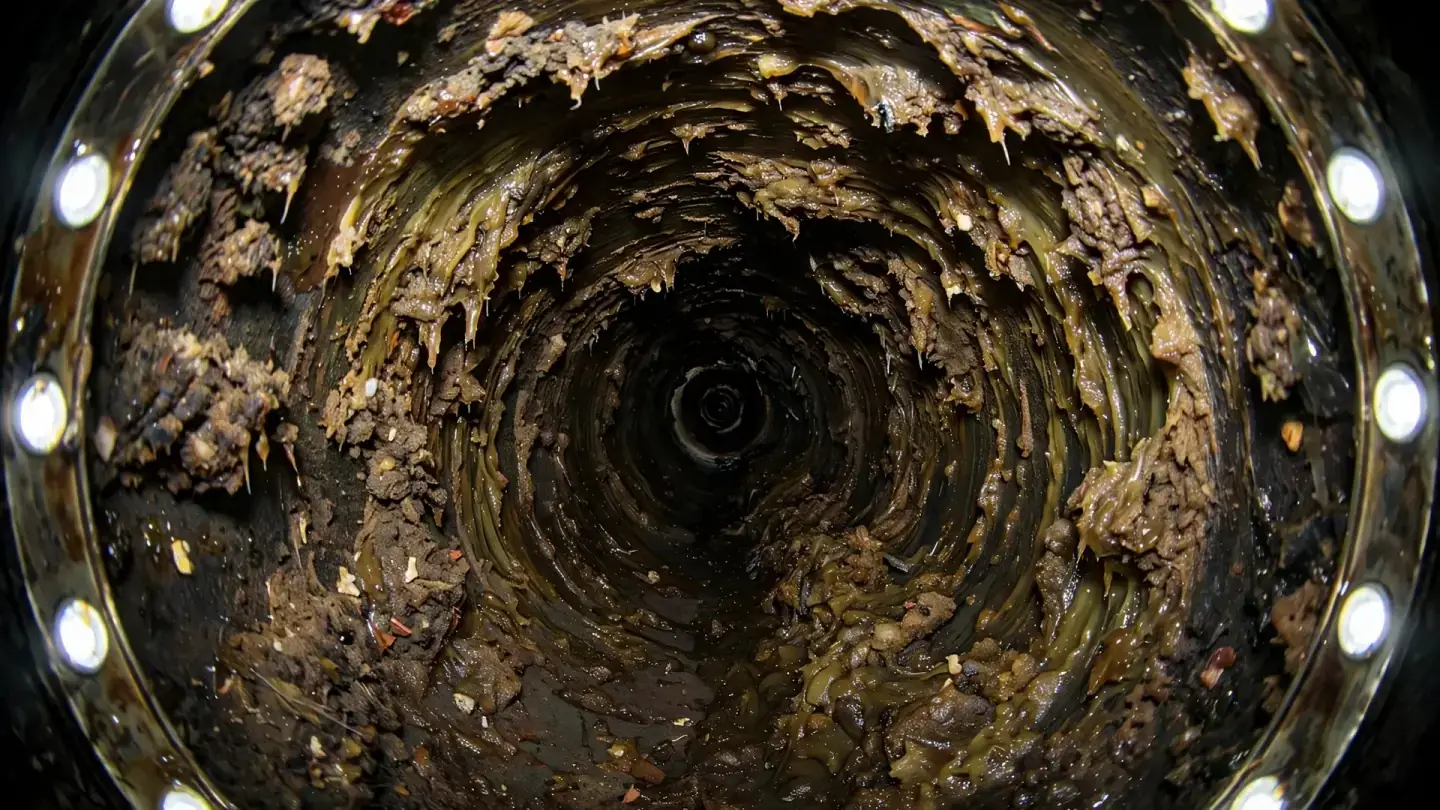
Where an interceptor outlet tends to block
Avoid
What not to do while the interceptor is overflowing
- Don't add enzymes, bacteria products or degreasers; Riverside prohibits them in interceptors [1].
- Don't run hot water to 'melt' the blockage; the grease resets further down the line.
- Don't wash the spill toward the gutter or alley drain.
- Don't keep the dish machine running to finish a rush.
- Don't cable the kitchen line into a full tank; that just pushes more grease through.
When to call
When to call without waiting for the hauler
Call to check emergency availability; you will speak with an independent local drain contractor who can work on the interceptor lines.
- Wastewater is leaving the lid or a cleanout and heading toward a storm drain.
- The interceptor was pumped recently and the kitchen is still backing up, which points to a blocked inlet or outlet line.
- Restrooms or other drains in the building are now slowing too.
- You can't safely contain the spill with what you have on site.
What happens on an urgent interceptor call?
Two jobs usually run together. A licensed liquid-waste hauler removes the full contents of the interceptor, which Riverside requires at each cleaning rather than skimming the top [1]. The drain contractor works on the pipes: the inlet line from the kitchen, which is often lined with grease, and the outlet line toward the sewer, where escaped grease sets hard. Clearing the lines before the tank is pumped only moves the problem, so the order matters.
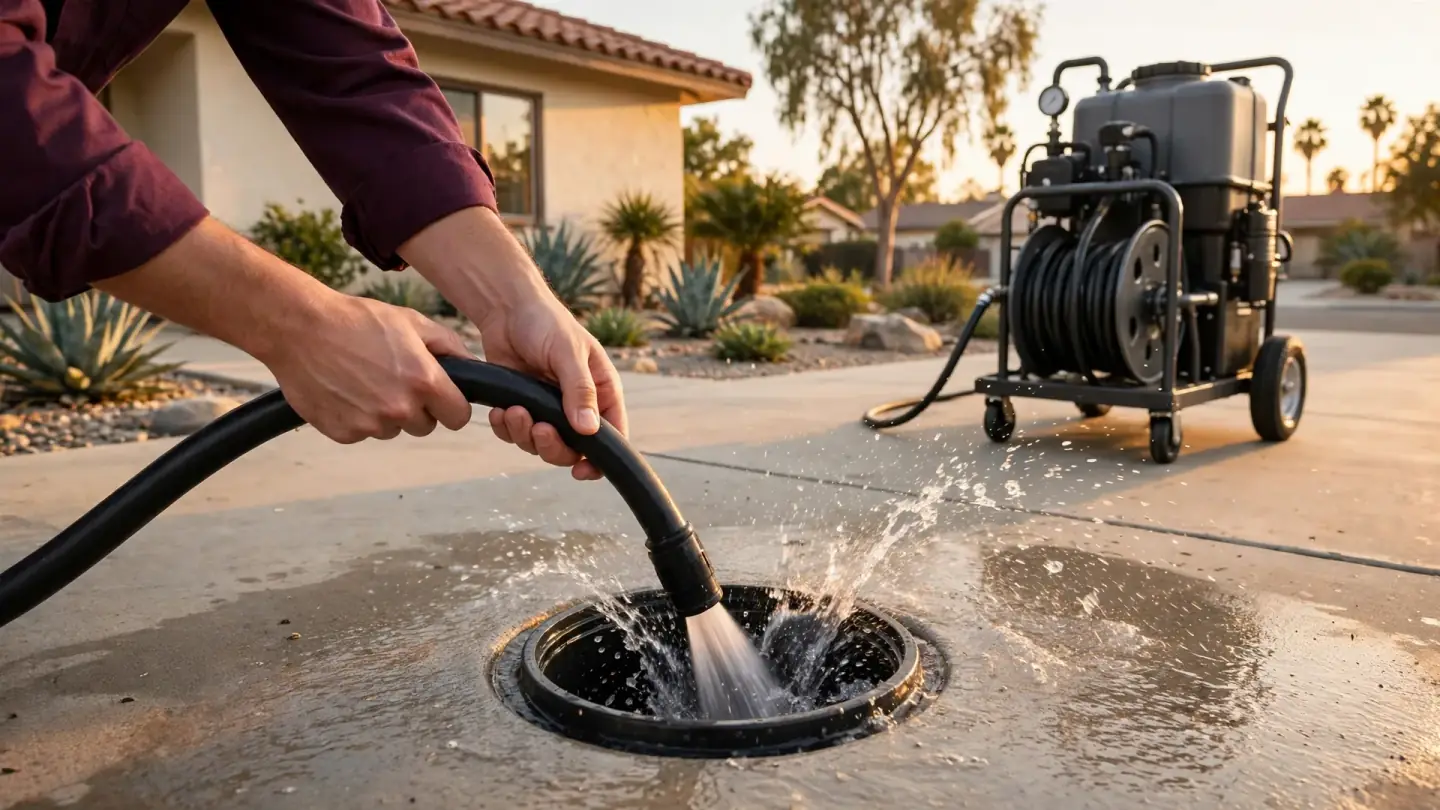
Most contractors open the outlet first from a downstream cleanout, using a cable to restore flow and then jetting to scour the grease from the pipe wall. Once the tank is empty they inspect the baffles or tees, because a broken baffle lets grease skip straight to the outlet. If the outlet keeps blocking, a camera run shows whether a sag or damaged section is catching grease. The commercial drain cleaning page explains how that follow-up work is planned.
Riverside rules that apply after an overflow
The City of Riverside's Environmental Compliance Section enforces Municipal Code Chapter 14.12, and its restaurant requirements say interceptor overflows must be reported [1]. Keep the hauler's pump receipt and waste manifest from this visit in the on-site binder with your other records; inspectors look for a matching pump-out after an overflow.
The city cares because grease leaving one kitchen collects in the public sewer, which is why its sewer system management plan addresses fats, oils and grease as part of preventing overflows [2]. Spills that reach the gutter are a separate problem: many storm drain systems carry water untreated to rivers and streams [3]. Mention on the call if the interceptor sits outside near a catch basin so the contractor brings containment material.
Getting the kitchen running again
Once the tank is empty and both lines are open, run water from each fixture in turn while someone watches the interceptor inlet. Restart the dish machine last. Ask the contractor to note what they found, such as a grease plug at the outlet tee or solids packed in the inlet, because that tells you whether the pump-out interval or kitchen habits need to change.
If this is the second overflow in a short period, the emergency commercial drain cleaning page covers building-wide backups, and the general emergency drain cleaning page covers anything that spreads beyond the kitchen. All urgent pages are listed on the emergency hub.
FAQ
Interceptor overflow questions
What do I do when the grease interceptor is overflowing during dinner service?
Stop all kitchen discharge right away: dish machine, prep sinks and floor-sink pours. Contain the spill with absorbent, keep it away from storm drains, and call to check emergency availability. Continuing service only adds water to a full tank and spreads the overflow further.
Can I keep the restaurant open while the interceptor is backed up?
Front-of-house may stay open only if the kitchen can work without sending water to the drains, which is rarely practical. Most kitchens pause dishwashing and cooking until the tank is pumped and the lines are clear. Check with your health inspector's guidance if wastewater has reached food areas.
Who pumps a grease interceptor in an emergency in Riverside?
A licensed liquid-waste hauler pumps the interceptor and issues a manifest for your records. The drain contractor clears and jets the inlet and outlet lines. Many contractors work alongside a hauler, so ask on the call whether they can coordinate the pump-out or whether you should call your usual hauler.
Do I have to tell the city about a grease interceptor overflow?
Yes. Riverside's restaurant rules require interceptor overflows to be reported to the city, and spills reaching a gutter or catch basin are especially important. Report it promptly, describe what you did to contain it and keep the pump receipt that follows.
Why did my grease interceptor back up right after it was pumped?
An interceptor that backs up right after pumping usually has a blocked inlet or outlet pipe, not a full tank. Grease that escaped earlier can harden in the outlet line, and the kitchen line can be coated thick. Both need cabling and jetting, and a camera shows if a sag is catching grease.
Is it safe to open the grease interceptor lid myself?
Opening an interceptor lid is not recommended for kitchen staff. Lids are heavy, the tank can hold hydrogen sulphide and other gases, and an open hole in the floor is a fall risk. Leave it closed and let the hauler or drain contractor open it with proper procedures.