
Key facts: Sewer scope before buying
- In Riverside the owner is responsible for the lateral and cleanout from the house to the property line [1].
- Where a property-line cleanout exists, the city maintains the lateral from it to the main; without one, more of the line falls to the owner [2].
- Camera inspection reveals root intrusion, corroded cast iron and damaged clay pipe that can't be seen from the surface [3].
- Riverside's Wood Streets are almost entirely pre-war, while Orangecrest was developed from 1984, so pipe materials differ widely [4][5].
Is a sewer scope worth it when buying a house?
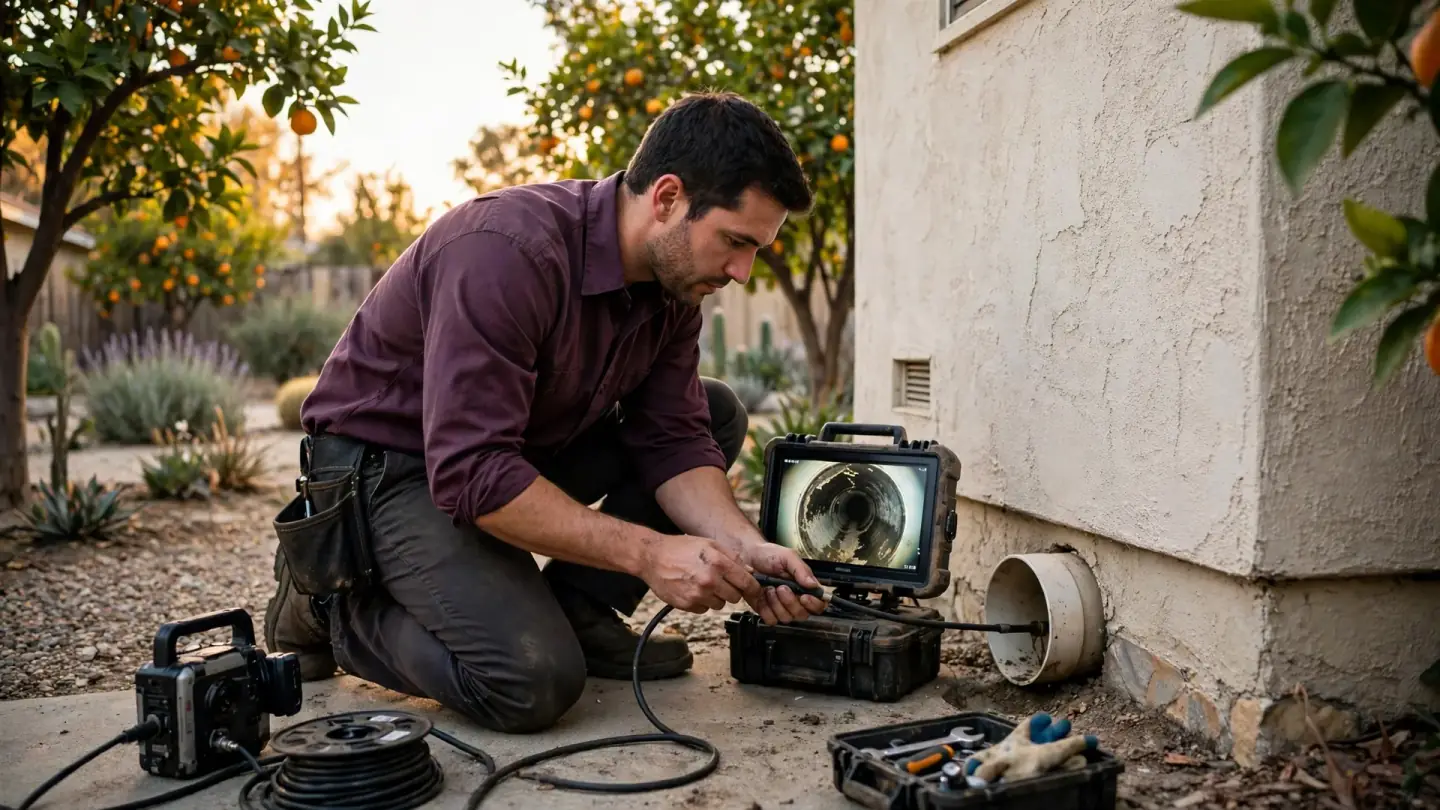
For most Riverside purchases, yes. The lateral is buried, the general home inspector usually only runs water and watches it drain, and a line that's half full of roots can pass that test. A sewer scope puts a camera through the cleanout and records the pipe from the house toward the street, so you see what you're buying [3].
It matters more here because of how responsibility is split. The City of Riverside places the lateral and its cleanout from the house to the property line in the owner's hands [1]. Once you close, roots, cracks or a collapsed section in that run are yours to deal with. The time to find them is while your inspection period is still open.
Symptom table
What a sewer scope may find
| What you see | Likely cause | What to do |
|---|---|---|
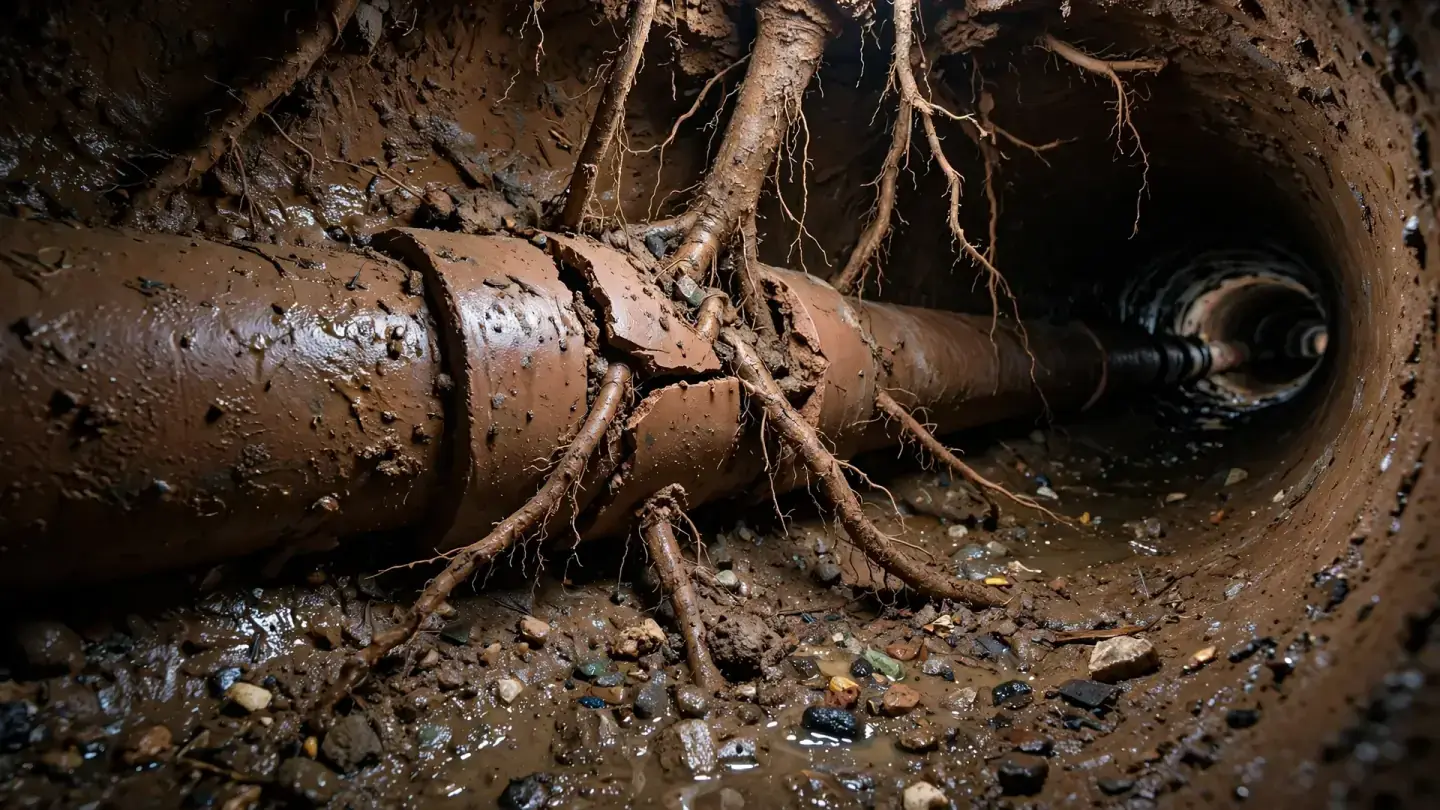
| Roots at one or two joints | Leaking joint near a tree | Ask about cleaning and repair options |
| Roots at many joints | Ageing clay lateral | Get a repair opinion before closing |
| Standing water in a section | Belly or sag | Ask for length and depth |
| Scale and flaking in cast iron | Corrosion of older pipe | Ask how much life it has left |
| Offset or separated joint | Settlement or root pressure | Locate it; discuss repair |
| Camera can't pass a point | Blockage or collapse | Clear and re-scope before deciding |
Roots seen on a pre-purchase scope
Safe checks
Before booking the scope
- Check your inspection contingency dates and book the scope early in that window.
- Ask the seller or listing agent where the cleanout is and whether it's accessible.
- Ask whether the line has had root cutting, repairs or backups, and for any old footage.
- Find out whether there's a property-line cleanout near the street.
- Ask the inspector to record video, not just take still photos.
- Plan to attend so you can ask questions while the camera is in the pipe.
What does a sewer scope show in different Riverside homes?
House age is the best predictor of what the camera will find. The Wood Streets, one of the city's historic districts, are almost entirely pre-war [4]; laterals there are often clay with many joints, and roots from mature street and yard trees are a regular finding. Postwar neighbourhoods built on slabs frequently have cast iron under the house and clay or other older material in the yard, so scale, corrosion and transitions between materials are worth watching for.
Orangecrest, developed as a master-planned community from 1984 [5], and other newer tracts mostly have plastic drain lines with sealed joints. Scopes there more often show construction debris, a sag where soil settled, or damage from later landscaping than roots or corrosion. Each era has its own typical weak points, so ask the inspector what they normally see in homes of that age.
Reading the report and the footage
A useful report gives the distance from the cleanout to each finding, the pipe material in each section, and a clear description of what was seen: roots, cracks, offsets, sags, scale or debris. Distance matters because it tells you whether a defect is under the house, in the yard or near the property line, which changes both access and responsibility.
Ask whether the camera reached the city connection or stopped short, and why. A line full of debris may need cleaning first and a second camera run to see the pipe properly. The sewer line inspection page explains common lateral defects in more detail, and the drain camera inspection page covers locating and marking findings.
Who owns what after you close
Riverside's brochure says the owner maintains the lateral and cleanout up to the property line and must install a property-line cleanout if there isn't one [1]. Where that cleanout exists, the city maintains the section from it to the main [2]. If the scope shows the house has no property-line cleanout, factor that into your plans, because without one the owner's practical responsibility runs further.
If the scope finds a defect, talk to your agent about how to handle it within your contract. Some buyers ask for a repair before closing, some ask for the work to be documented, and some simply plan maintenance. The decision is yours; the footage and a contractor's written opinion make it an informed one. The citrus and palm roots guide helps if roots are the main finding.
Diagnosis
How a pre-purchase scope is done
- 1
Find and open the cleanout
The main outdoor cleanout is the usual entry; a toilet may be pulled if there isn't one.
- 2
Run water first
Flow through the line shows low spots where water stands.
- 3
Push the camera to the street
The camera travels the lateral, recording footage and distance.
- 4
Locate any defects
A transmitter on the camera head marks the position of each finding above ground.
- 5
Film toward the house if possible
A two-way cleanout allows the building drain under the slab to be seen too.
- 6
Deliver the footage and notes
You receive the video and a written list of findings with distances.
Prevention
After closing: protecting the line
- Keep a copy of the scope footage with your house documents.
- Mark the cleanout so it stays accessible.
- Plant trees away from the lateral route found on the scope.
- If roots were found, book cleaning before they cause a backup.
- Re-scope after a few years to compare with the original footage.
Tell the pro
What to tell the inspector or contractor
- Your contingency deadline.
- The year the house was built and any known remodels or additions.
- Where the cleanout is, if the seller told you.
- Large trees near the front or side of the lot.
- Whether you want the line cleaned and re-filmed if the camera is blocked.
FAQ
Home buyer sewer scope questions
Does a regular home inspection include the sewer line?
A regular home inspection usually doesn't include a camera look at the sewer line. The inspector may run water and check that drains empty, which a partly blocked lateral can still pass. A sewer scope is normally a separate service you book alongside the general inspection.
When should I schedule a sewer scope during escrow?
Schedule the sewer scope early in your inspection contingency period. That leaves time to clean and re-scope a blocked line, get a contractor's opinion on any defect and talk to your agent before the deadline. Booking it at the last minute leaves little room to act on the findings.
Who is responsible for a broken sewer lateral after I buy a house in Riverside?
After you buy, you're responsible for the lateral from the house to the property line, under Riverside's rules. Where a property-line cleanout exists, the city maintains the section from it to the main. Defects the scope finds on your side become yours at closing.
Can the seller refuse a sewer scope?
Your purchase contract and its inspection terms decide what inspections you can arrange, so talk to your agent. Most sellers allow a scope because it only needs access to a cleanout or a toilet. If there's no accessible cleanout, the inspector can explain other entry points.
What does it mean if the sewer camera couldn't get through?
A camera that can't get through has hit a blockage, a heavy root mass, a collapsed section or a tight bend. It doesn't tell you which. Ask whether the line can be cleared and filmed again before your deadline, because the unseen part may be the most important.
Is a sewer scope needed on a newer Riverside home?
A sewer scope on a newer home is optional but still useful. Plastic lines resist roots, yet scopes on newer tracts can show construction debris, sags where soil settled or damage from landscaping. It also gives you baseline footage to compare against later.
Should I get the sewer line cleaned before the scope?
Cleaning before a pre-purchase scope isn't usually needed, and an uncleaned line shows its real condition, including how much debris builds up. If the camera is blocked or the picture is unclear, cleaning and a second run is the right next step.